Why Can One Name Cost 30 Million Dollars? Domain Names Are the Internet's Most Misunderstood Real Estate
The short answer
A domain name is not the website itself, and it is not merely a magical DNS record. It is closer to an Internet “street address + storefront sign + tradable property”: DNS routes visitors to a destination, registration data and account permissions determine who can manage the address, and trademark and dispute rules determine who may legitimately keep using it.
A good domain can be worth tens of millions of dollars because it combines scarcity, memorability, brand meaning and a trusted entry point. The buyer is not paying for a few characters. The buyer is paying to remove years of naming, advertising and trust friction.
A simple question with an expensive answer
Imagine that you are opening an online store.
You can put it at a long address that people have to spell out every time. Or you can find a short, natural address that someone can remember after hearing it once. The two stores may have identical servers, products and customer support, yet the second one is easier to say in a meeting, easier to put into an advertisement and less likely to make a customer wonder whether they have reached the wrong place.
That is where domain value begins.
When people first learn about domains, they usually learn about DNS: a name is resolved so a browser can reach a service. That is correct, but it explains navigation, not real estate.

Figure 1: Original cover visual. A domain connects an address, a map, a contract and an auction.
As of the second quarter of 2026, the global domain-name base across all top-level domains was about 401.6 million registrations. That scale tells us domains are no longer a niche hobby for protocol enthusiasts. They are infrastructure. Yet among those hundreds of millions of names, the short, clean and globally useful brand positions remain scarce.
DNS is the map, not the deed
The first step is to separate the layers people often merge together.
What is a domain name?
A domain is a human-readable name, such as example.com. ICANN explains that domain names save people from memorizing difficult numeric network addresses; DNS connects the name to the resource that should answer.
Think of a city:
- The domain is the street address, such as “18 Example Street.”
- DNS is the map and navigation system that tells a courier where to go.
- The web server is the building behind the address.
- The website, email and API are the shop, mailbox and offices inside the building.
A map can tell you where a building is, but it cannot prove who owns it. In the same way, a DNS record can send visitors to a server, but it does not by itself prove ownership of a domain.
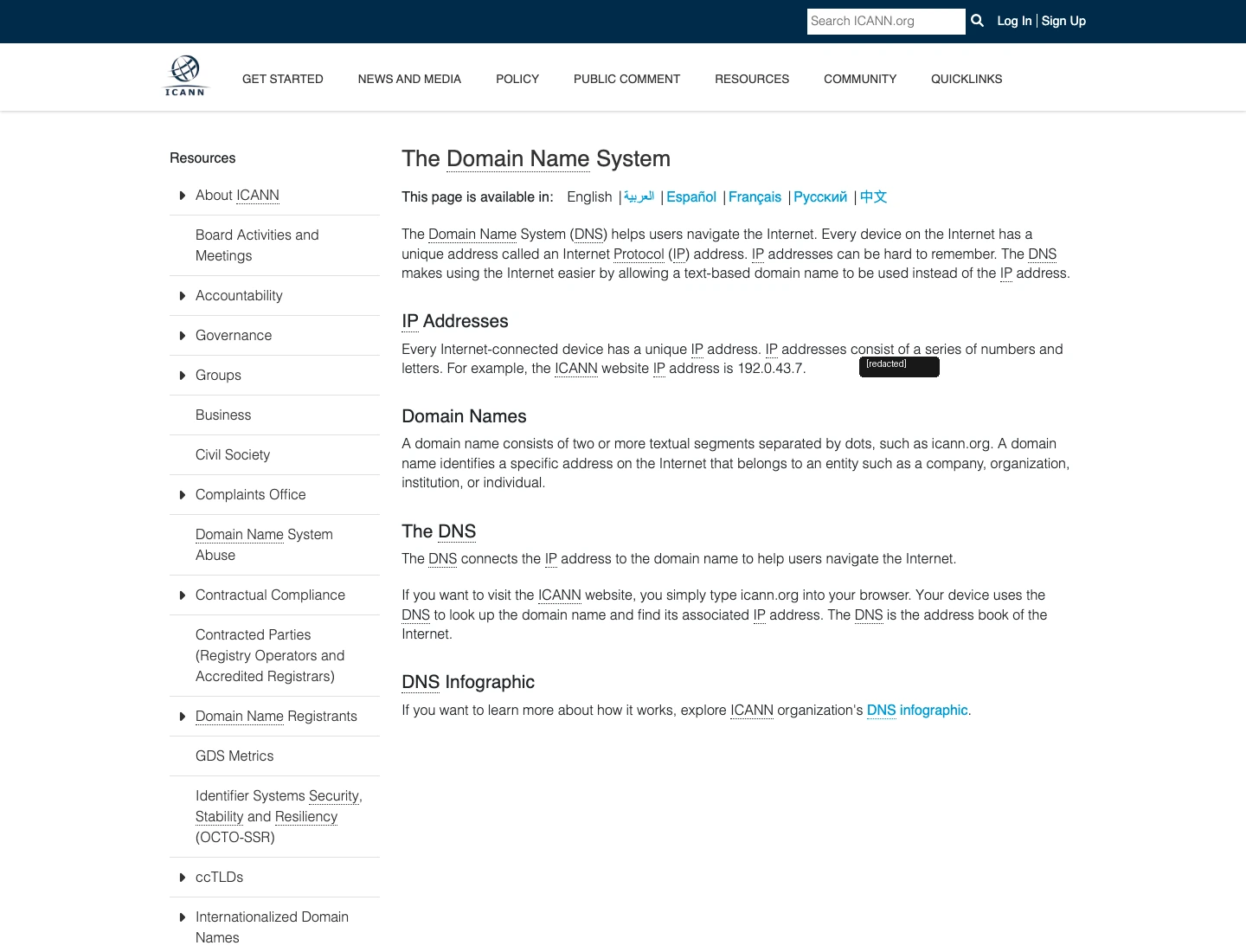
Figure 2: Real screenshot from ICANN. The numerical example in the screenshot has been redacted for privacy.
Who keeps the master directory?
The domain system is not one company storing every name on one computer. It is a stack of responsibilities: root-zone coordination, top-level-domain registries, registrars, registrants, DNS providers and the final web service all do different jobs.
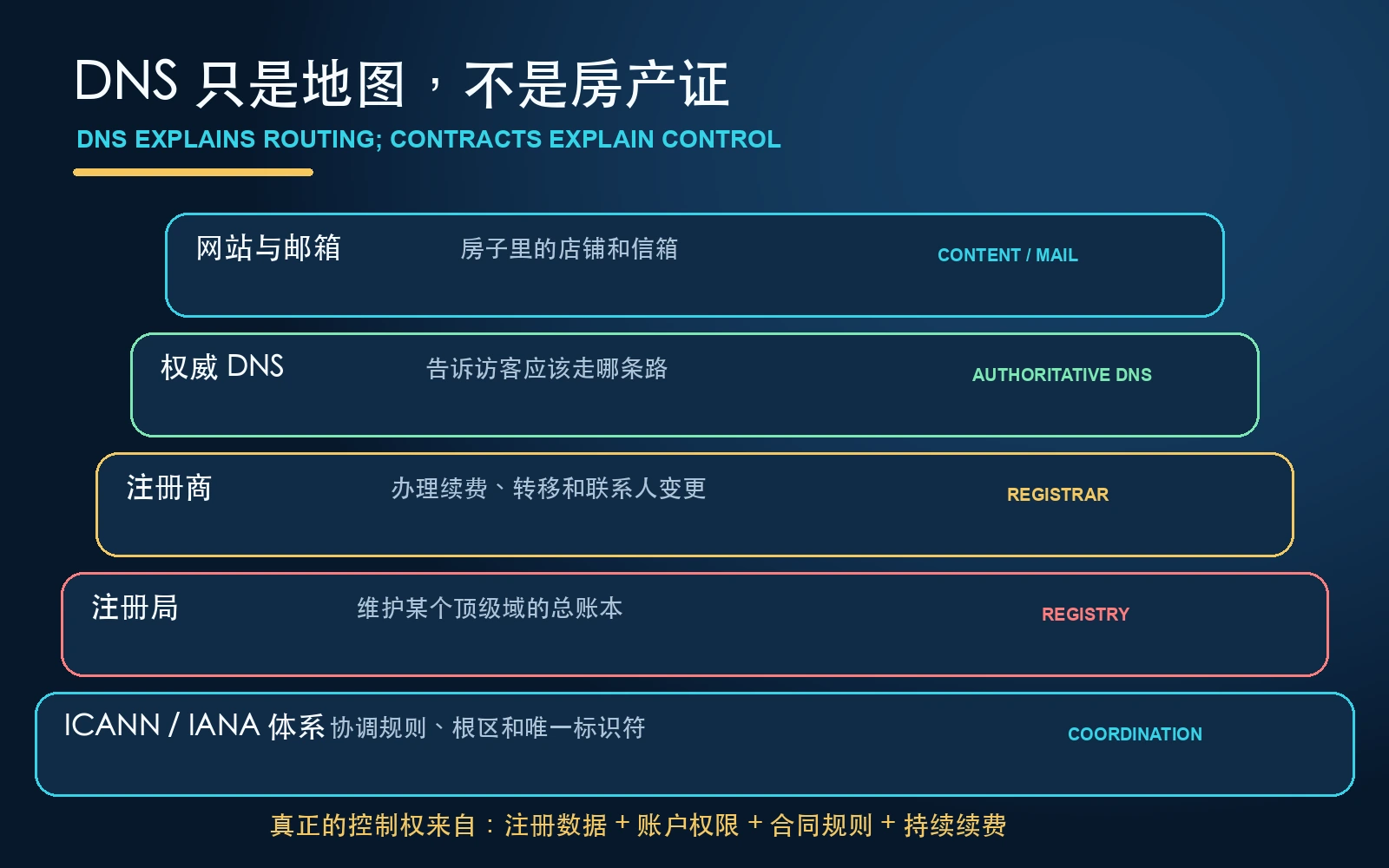
Figure 3: Original infographic. DNS helps visitors find you; control depends on registration, account access and policy.
The IANA root-zone database is like a national directory of streets: it records which top-level domains exist and who operates them. Ordinary users do not edit the root zone directly. They register and manage a particular name through a registrar.
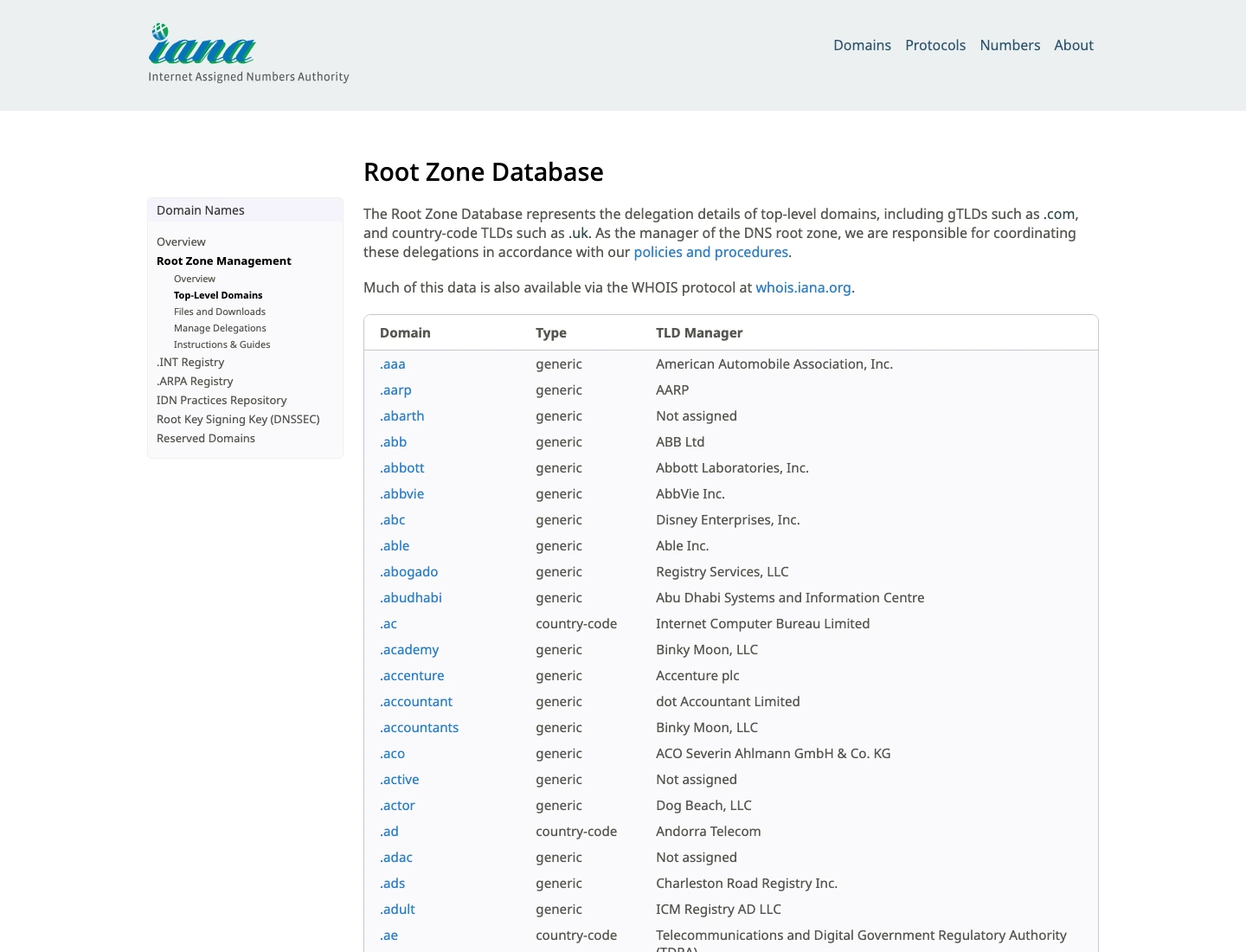
Figure 4: Real screenshot from the IANA Root Zone Database.
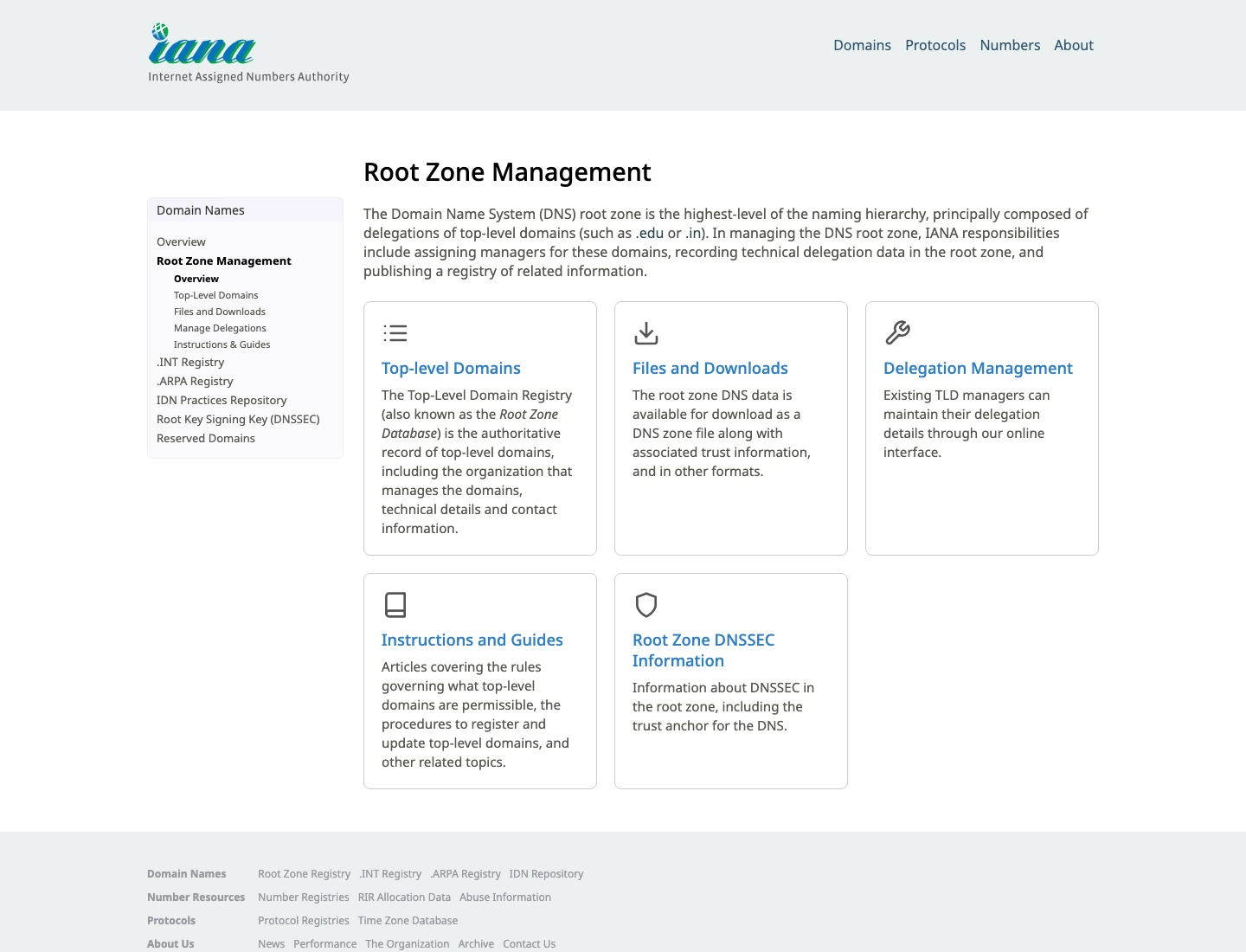
Figure 5: Real screenshot from IANA. The root zone is a coordination layer, not a registrar dashboard.
These statements are therefore not interchangeable:
- “The domain opens” only proves that a DNS and service path worked at that moment.
- “I can edit DNS” proves that an account has a particular permission, possibly temporarily.
- “I paid a registrar” describes a registration relationship that still has an expiry date and policy constraints.
- “I own this brand” is a broader question involving trademarks, contracts, corporate assets and actual use.
Why good domains become absurdly expensive
There is no universal domain-appraisal formula, but the same factors appear again and again: shortness, semantic fit, scarcity, clean history, natural spelling and real buyer demand.
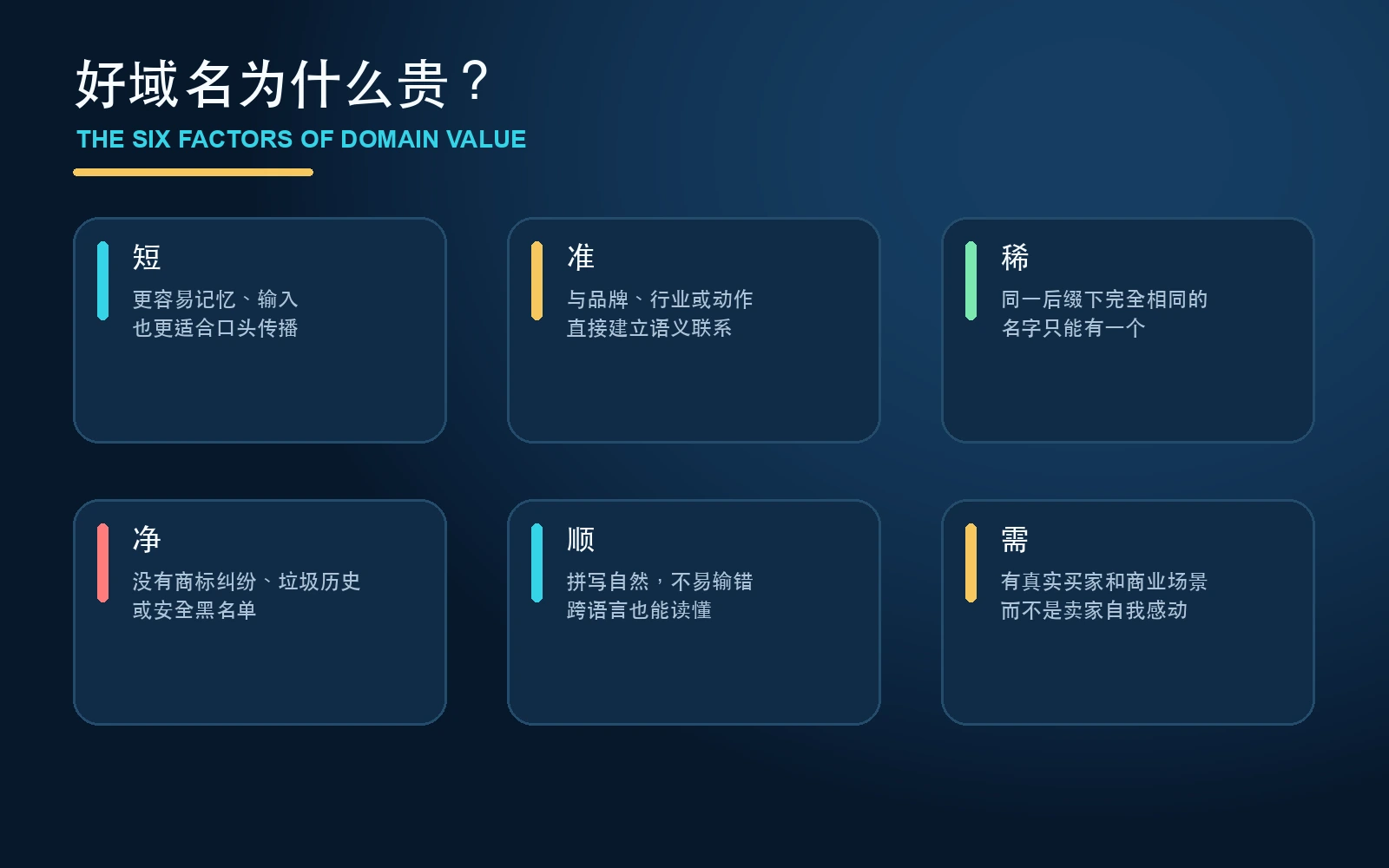
Figure 6: Original infographic. The expensive names usually combine several advantages rather than relying on a single trick.
Short means less explanation
A short name is easier to remember, type and place in an advertisement. In a meeting, a domain that needs to be spelled three times creates friction. A natural name can be understood in an elevator.
That does not mean every short name is valuable. A random four-letter string can be short but meaningless, hard to pronounce and easy to forget. The scarce combination is “short and useful.”
Meaning is an advertisement
A word that matches a business, action or industry tells a customer what the site might offer before the click. It is like a storefront sign on a busy street: the passer-by may not buy immediately, but they know why they should stop.
Scarcity is structural
Within a particular suffix, the exact same name is normally available to only one registrant. It cannot be copied like a software feature, and it cannot be bought in ten identical locations like ad inventory. Once the best position is registered, the next buyer must change the name, choose another suffix or negotiate an acquisition.
A dirty history is hidden maintenance debt
A domain may have been used for spam, malicious redirects, phishing, malware, search-engine manipulation or trademark abuse. It may look attractive in a marketplace listing and still be unable to send reliable email or pass security reviews.
The buyer, not the seller, sets the market ceiling
Domain forums are full of “this name is worth a million” estimates. But a price is not a wish list. It is what a particular buyer will pay for a particular use. A word that is priceless to an insurance company may be nearly useless to a personal blog.
What are you actually buying for 30 million dollars?
In 2019, MicroStrategy disclosed in filings with the U.S. Securities and Exchange Commission that the Voice.com domain name was sold for 30 million dollars in cash. It is easy to misunderstand the transaction as a few characters magically becoming 30 million dollars. A more useful interpretation is that the buyer purchased a global, memorable brand position that could serve as a product entry point, paying up front to avoid years of naming, advertising and migration costs.
The important lesson is evidence. A transaction amount should be supported by a regulatory filing or a statement from the parties, not only by a copied “top domain sales” list. This article does not treat inaccessible news pages as evidence screenshots, because an access-denied page is not a transaction record.
The price can be understood as a business calculation:
- Brand cost: How much would a new name, identity and explanation cost?
- Traffic cost: How much advertising might a natural word save?
- Trust cost: How much doubt disappears when the address looks professional and expected?
- Migration cost: How much would it cost to change links, email, user habits and media recognition later?
- Opportunity cost: What happens if a competitor controls the obvious name first?
The buyer may not be paying for the old registration fee. The buyer is paying to reduce friction for the next decade.
The aftermarket: domain names have a second-hand housing market
The first registration is the primary market. Many large transactions happen in the aftermarket: an existing registrant sells a name through a broker, auction, marketplace or direct negotiation.
A safer transaction pipeline
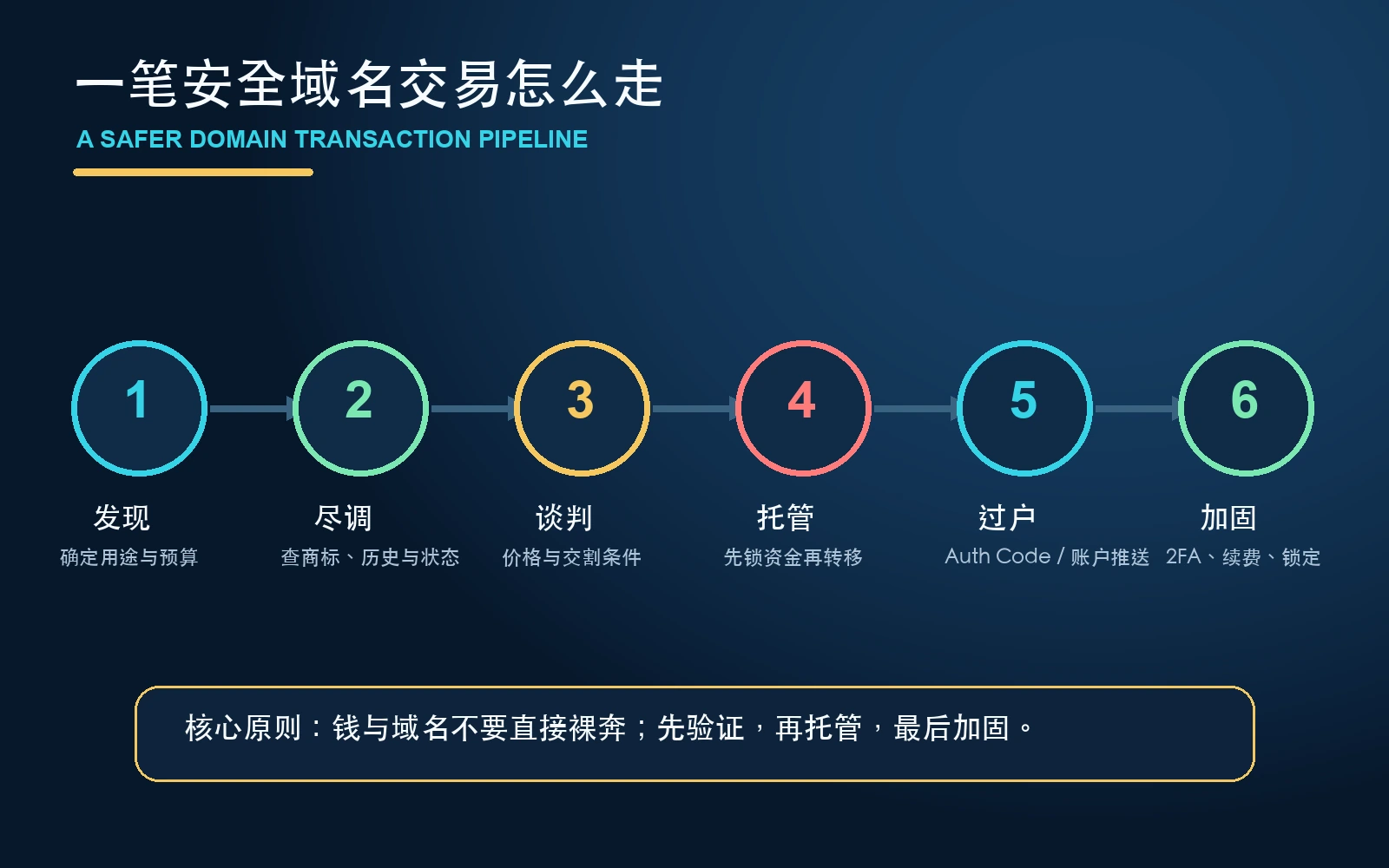
Figure 7: Original infographic. Treat a domain acquisition like a property closing: investigate first, escrow second, transfer third.
First define the use and budget. Are you buying a primary brand domain, a short link, an investment asset or a defensive registration? Each purpose has a different ceiling.
Second perform due diligence. Check the registrar, status, expiry date, historical DNS, archived websites, email reputation, trademark conflicts, security blacklists and whether the seller can actually transfer the name.
Third define what is included. A domain transfer, a registrar push, DNS records, website source code, trademarks, social accounts and an email system are different assets. A contract that merely says “buy the brand” is not precise enough.
Fourth use reliable escrow. A screenshot of an identity document or business license in a chat does not justify sending a large payment directly to a personal account. Escrow is useful because payment and delivery constrain each other.
Fifth harden the asset after transfer: change credentials, enable multi-factor authentication, enable registrar locks, verify recovery contacts, confirm DNS and email settings, and turn on auto-renewal.
Why a cheap domain can be expensive
The low price may hide maintenance debt: old abuse, poisoned mail reputation, trademark complaints, search penalties or an unusually expensive renewal policy. Domain acquisition should be evaluated by total cost of ownership, not only the one-time purchase price.
The cybersquatting neighborhood
The word “squatting” is often used for several different behaviors.
One is ordinary investment: registering a generic term, an invented word or a name without a clear target brand, hoping that a future buyer will find it useful.
Another is bad-faith cybersquatting: targeting someone else’s trademark or a confusing typo, profiting from confusion, blocking the rights holder or demanding an unreasonable ransom when the brand needs the name. More dangerous versions include fake login pages, phishing mail, malware downloads and payment fraud.
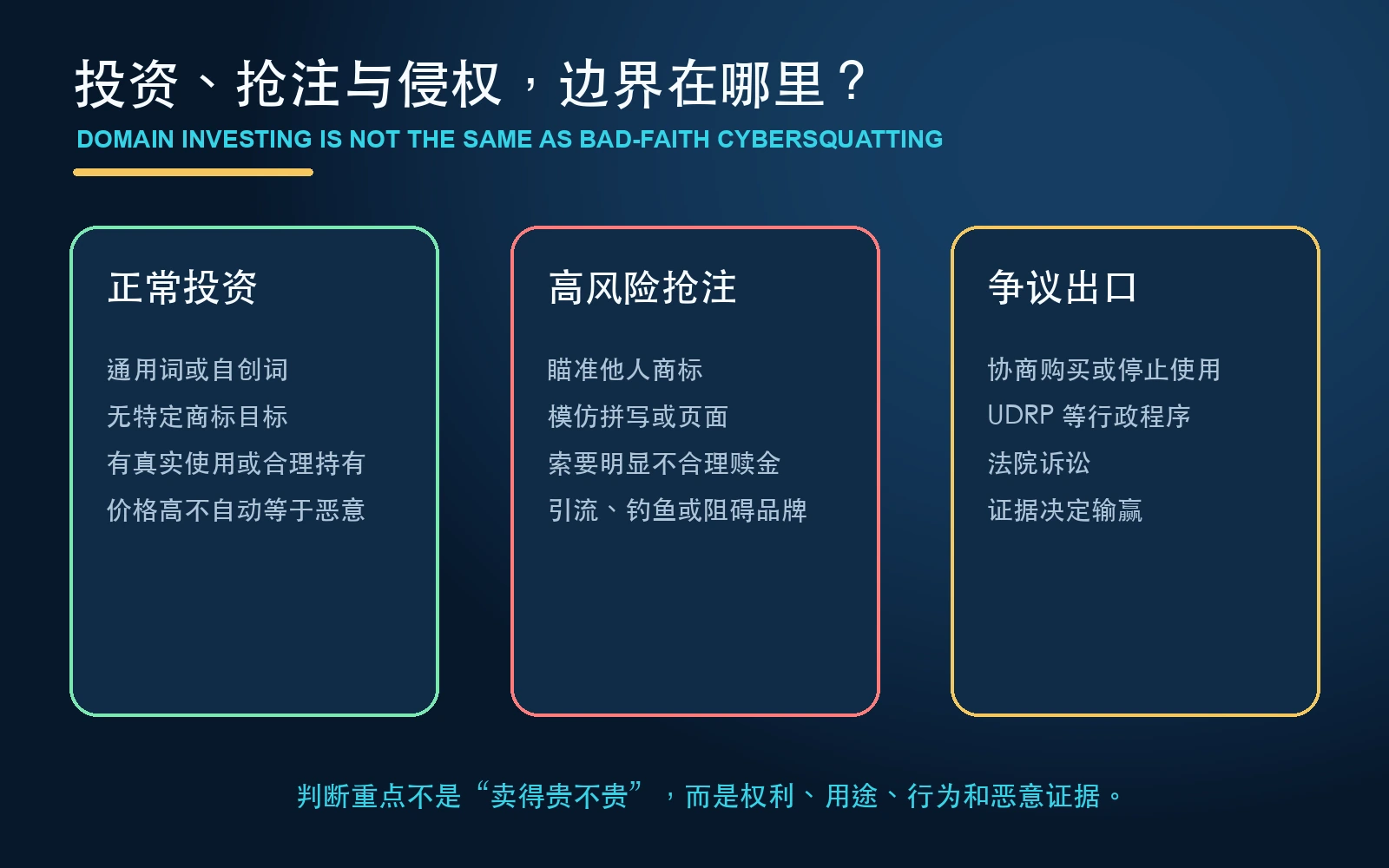
Figure 8: Original infographic. A high price is not automatically bad faith; behavior and evidence matter.
Why a registrant can arrive before a brand
Domain registration is often first-come, first-served. The registration system does not know whether the applicant is launching a legitimate project or imitating someone else. It mainly processes whether the name is available and whether the fee is paid.
That creates a risk window around confidential product launches, new companies, trademark filings and rebrands. Drop-catching services and automated scripts can compete for a name the moment it is released, while a human manually refreshing a page has little chance.
UDRP is not a “who registered first wins forever” button
The Uniform Domain-Name Dispute-Resolution Policy, or UDRP, gives trademark owners a relatively focused administrative route. A complainant generally has to establish three elements:
- the domain is identical or confusingly similar to a trademark;
- the respondent has no rights or legitimate interests in the domain;
- the domain was registered and is being used in bad faith.
“It looks similar to my brand” is not enough. Evidence can include trademark records, registration dates, website captures, email messages, sale offers, historical DNS and the actual use of the name. A respondent may also show a real business, fair use, a personal-name connection or the ordinary meaning of a generic word.
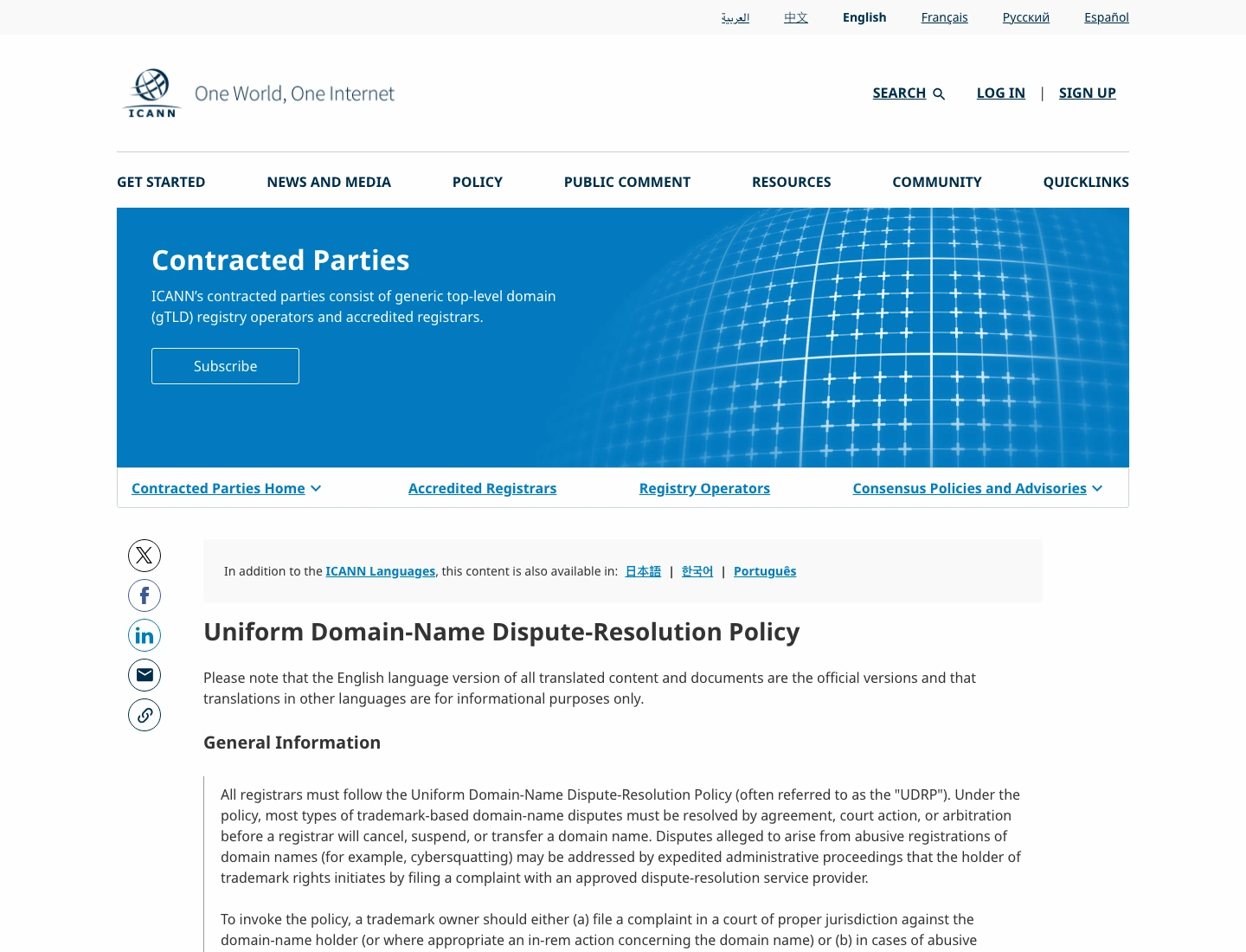
Figure 9: Real screenshot from ICANN’s UDRP guidance page.
WIPO reported a record level of domain-name dispute work in 2025, with more than 6,200 cases handled through its domain-name procedures. This does not mean that every registered domain is a lawsuit. It means that brand confusion, domain names and online impersonation have become a recurring business and legal cost.
Expiration: the quietest high-impact failure
A domain is not permanently purchased once. A failed renewal, expired payment card, inactive notification mailbox or a handover mistake can send it into an expiration process.
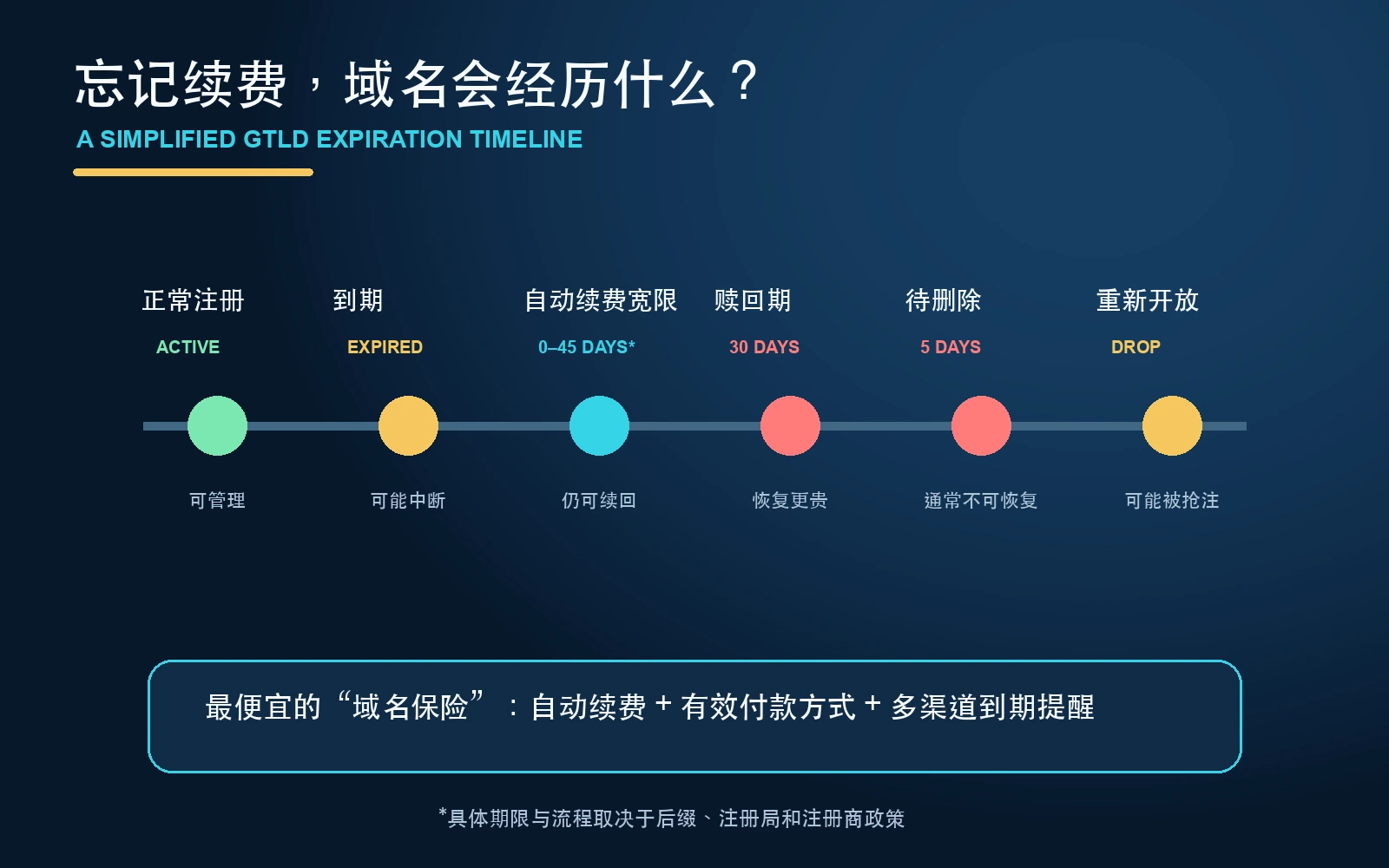
Figure 10: Original infographic. Exact windows depend on the suffix, registry and registrar policy.
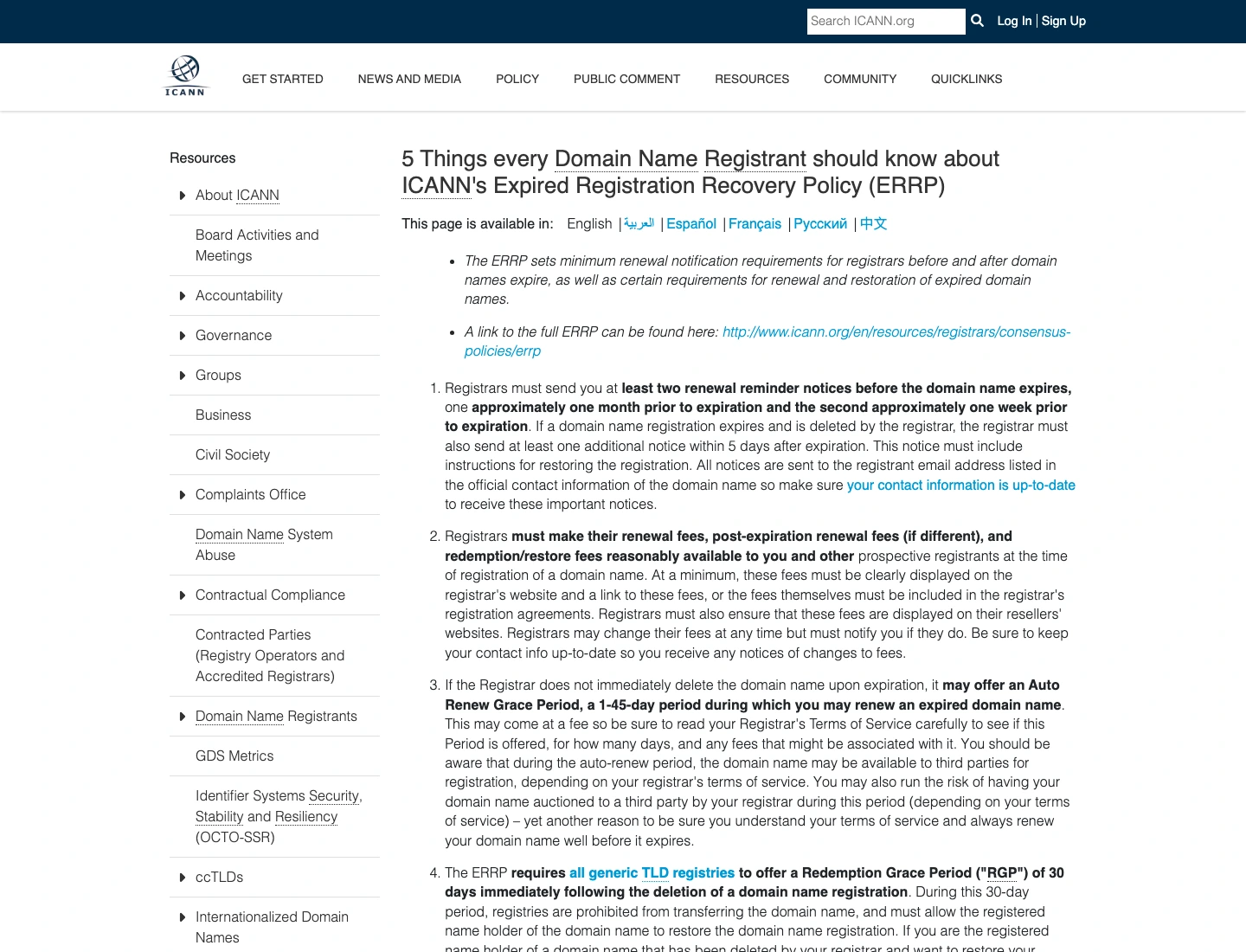
Figure 11: Real screenshot from ICANN. It covers renewal notices, auto-renew grace and redemption concepts.
ICANN’s expired-registration guidance requires registrars to provide renewal notices and disclose arrangements for auto-renew grace and restoration. The exact workflow varies by suffix and registrar. Another company’s “30 days” is not your domain’s insurance policy.
What happens after expiration?
- The site and email may stop working while the name still exists.
- A registrar may offer an auto-renew grace period, with recovery terms depending on policy.
- After deletion, a generic top-level domain may enter a redemption period, usually at a higher cost.
- During pending deletion, the original registrant may no longer be able to restore it.
- When the name becomes available again, automated drop-catching services may compete for it.
For a company, renewal is not clerical housekeeping. A single missed domain can affect the website, email, login callbacks, payment notifications, API allowlists, certificate validation and employee password resets.
A domain due-diligence checklist that is actually useful
Check who controls it now
Use the registrar console and ICANN Lookup/RDAP to confirm the registrar, status, expiry, name servers and publicly visible registration data. RDAP is a structured protocol for registration-data access and is easier for machines to parse than legacy WHOIS, but the visible fields are shaped by privacy policies and applicable law.
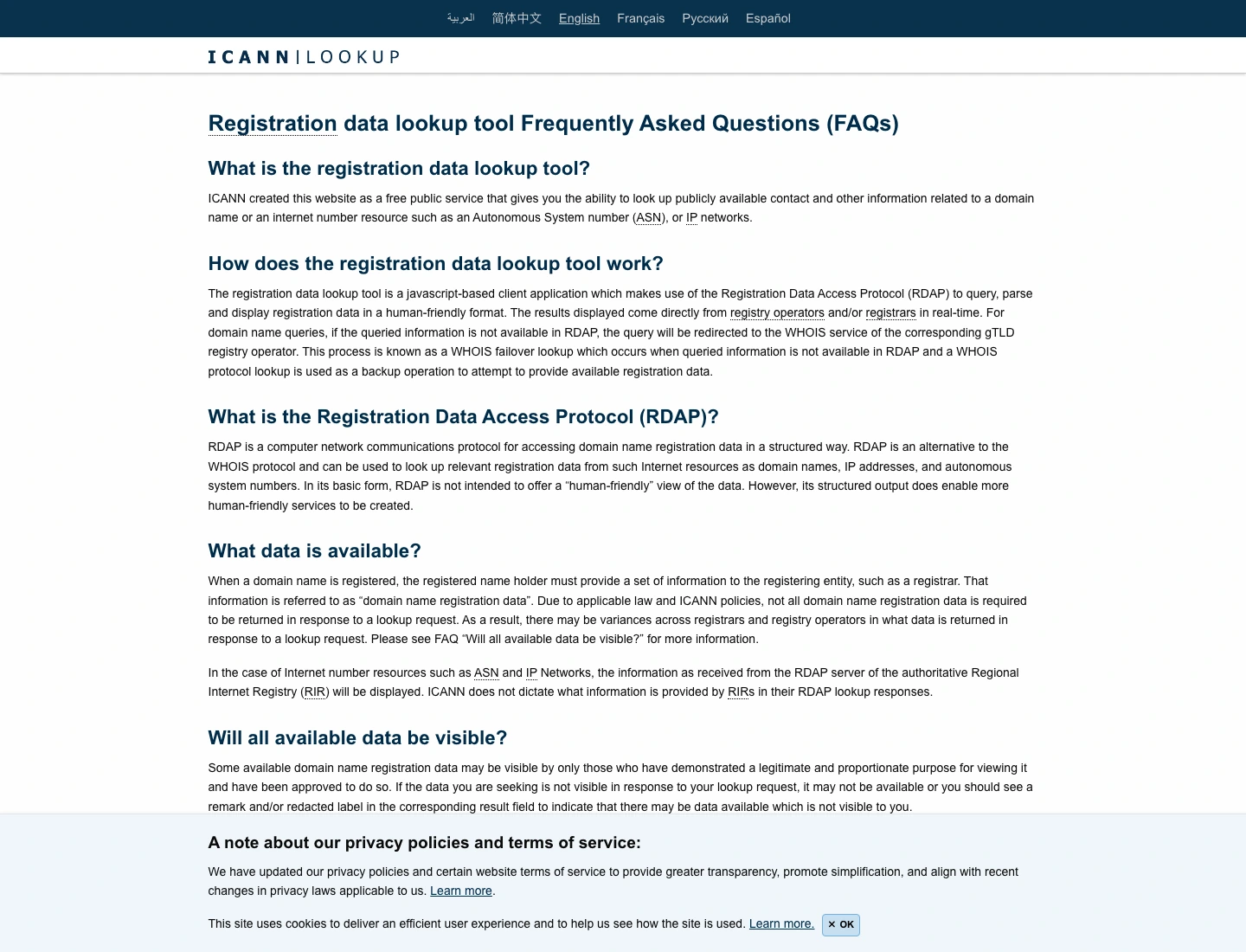
Figure 12: Real screenshot from ICANN Lookup. RDAP exposes registration data; it is not an automatic ownership judge.
Check what happened in the past
Review historical DNS, archived websites, mail-sending reputation, malware intelligence and search-engine status. A clean parking page today does not prove that a domain was clean yesterday.
Check whether the name creates legal risk
Search trademark databases, industry brands, corporate records and obvious spelling variants. “Available to register” does not mean “safe forever.” Registration systems answer an availability question; trademark law answers a commercial-conflict question.
Check whether the deal can close
Confirm the seller’s identity and authority, and write down the delivery time, transfer lock, arrears, privacy service, refund terms, dispute handling and consequences of non-delivery. For a material purchase, use escrow accepted by both parties rather than trusting chat logs.
The minimum security baseline for a domain holder
For a production domain, at minimum:
- Enable multi-factor authentication at the registrar; do not use the same domain mailbox as the only recovery channel.
- Enable registrar lock and expiry alerts, and keep a backup payment method.
- Define who approves DNS changes; do not let every administrator edit production resolution directly.
- Maintain an asset register with the registrar, expiry date, name servers and owner.
- Monitor the website, email and DNS separately; “the homepage opens” is not enough.
- Revoke registrar, DNS, hosting and certificate access when staff or vendors change.
The most neglected part is recovery. If the domain mailbox fails, can you still reset the registrar account? If DNS is changed, do you have a second administrator and an out-of-band support path? If the account is locked, can you produce contracts, payment records and support tickets?
Common misconceptions
“The shorter the domain, the more valuable it is.”
Shortness is one dimension. A confusing, legally risky, historically dirty or expensive-to-renew short name can be worse than a slightly longer name that is clear and clean.
“Buying the domain means buying the brand.”
The domain, trademark, company name, social account, website content and customer base are separate assets. A domain transfer does not automatically transfer trademark rights, search rankings or social handles.
“If DNS resolves, the domain is secure.”
Successful resolution only means that the routing chain works. The registrar account may be compromised, a page may be replaced, email may be hijacked, or certificates and payment callbacks may be wrong.
“UDRP is a free reclaim button.”
Administrative disputes have fees, deadlines and evidentiary requirements, and not every conflict belongs on the same path. For phishing, impersonation or urgent commercial harm, preserve evidence early and consult appropriate legal professionals.
Q&A
Is a domain bought forever, or rented?
Common generic top-level domain registrations are closer to a time-limited registration relationship than an unlimited purchase. You must renew and follow registrar, registry and dispute policies. The exact contract varies by suffix and registrar.
Why can one seller ask a few thousand while another asks tens of millions?
An asking price reflects the seller’s expectation, not a completed sale. The real value depends on the buyer’s use, brand budget, negotiation, evidence, closing terms and alternatives. Domain value is highly buyer-specific.
I registered a domain containing another company’s brand. Is it safe if I do not build a website?
Not necessarily. Registration, offers to sell, parking pages, advertising links, email use and other evidence can all matter. “I have not built a site yet” is not a complete legal analysis.
If a domain is squatted, should I attack the squatter or simply buy it?
Preserve evidence first: registration date, pages, messages, offers, DNS history and trademark records. Then evaluate negotiation, acquisition, administrative complaint or litigation based on value, urgency, conduct and proof. Paying a high ransom can encourage repeat behavior, but waiting can also increase loss.
Which domains should a company protect first?
Start with the production domain, the email domain, obvious brand misspellings, the main suffix and critical geographic suffixes. The protection set should follow business, trademark and security risk, not a desire to register every pleasant-sounding word.
Final takeaway
The surface of a domain is a string. Underneath is an Internet real-estate system:
- DNS is the map: where should visitors go?
- Registration is the deed-like relationship: who may manage the address?
- Account access is the key: who can open the door today?
- Trademark and UDRP rules are the dispute framework: does the name conflict with another commercial identity?
- Renewal and security controls are maintenance and insurance: can the online property stay usable?
Good domains are valuable because they are scarce, not because they are mystical. Cybersquatting is dangerous because a name connects brand, traffic, trust and legal responsibility.
The next time you see a “seven-figure domain,” ask three questions: Who really needs it? What cost does it remove? Is its history and rights boundary clean? Those questions are closer to the real market than character count alone.
Sources
- ICANN: The Domain Name System
- IANA: Root Zone Database
- ICANN: Uniform Domain-Name Dispute-Resolution Policy
- ICANN: Expired Registration Recovery Policy
- ICANN Lookup: Registration Data Access Protocol FAQ
- Verisign / DNIB: Domain Name Industry Brief, Q2 2026
- WIPO: Domain Name Dispute Resolution Statistics
- U.S. SEC EDGAR: MicroStrategy public filings
- RFC 1034: Domain Names - Concepts and Facilities
- RFC 1035: Domain Names - Implementation and Specification