Four Hard Resets in One Weekend—and Two Cards: When Tokens Stop Being Scarce, What Are We Actually Missing?
The short version
Codex users spent the weekend inside a restaurant that would not stop refilling the buffet. There was one hard quota reset early Friday morning Beijing time, two more on Saturday, and another waiting on Monday morning. A bankable reset card also appeared. As Tibo celebrated Codex reaching six million active users, he previewed another card for everyone the following day.
At the same time, the five-hour limit was temporarily removed for Codex subscribers, leaving only the weekly limit. I also had a substantial pool of GLM-5.2 quota expiring on Sunday. The old problem was saving tokens. The new problem was stranger: how do I spend them on work that deserves them?
After a weekend that felt busy, surprising, and slightly absurd, my conclusion is simple: the scarce resource in the AI era may not be tokens. It may be worthwhile questions, distinctive ideas, and the ability to turn those ideas into reality quickly.

Figure 1: Original cover. Machines can keep refilling the cup; humans still decide what the next cup is for.
1. A quota meter on a roller coaster
The sequence began early on Friday, July 10, 2026, Beijing time. Codex had started rolling out the GPT-5.6 family—Sol, Terra, and Luna—and users immediately wanted to compare speed, depth, reliability, and agentic coding performance. The first hard reset gave people room to explore.
Then came Saturday, July 11. Tibo arranged two additional hard resets so users could continue testing the new models. It felt like charging a phone to 100 percent, only for someone to hand you another full battery and insist that you keep going.
On Monday, July 13, I woke up to the fourth hard reset and a bankable reset card. Tibo also celebrated Codex reaching six million active users and previewed another card for all users the next day.
These resets, cards, and limit changes were temporary promotional or account states, not a promise that permanent subscription rules had changed. This article records the weekend as it happened; current product UI and official notices remain the source of truth.
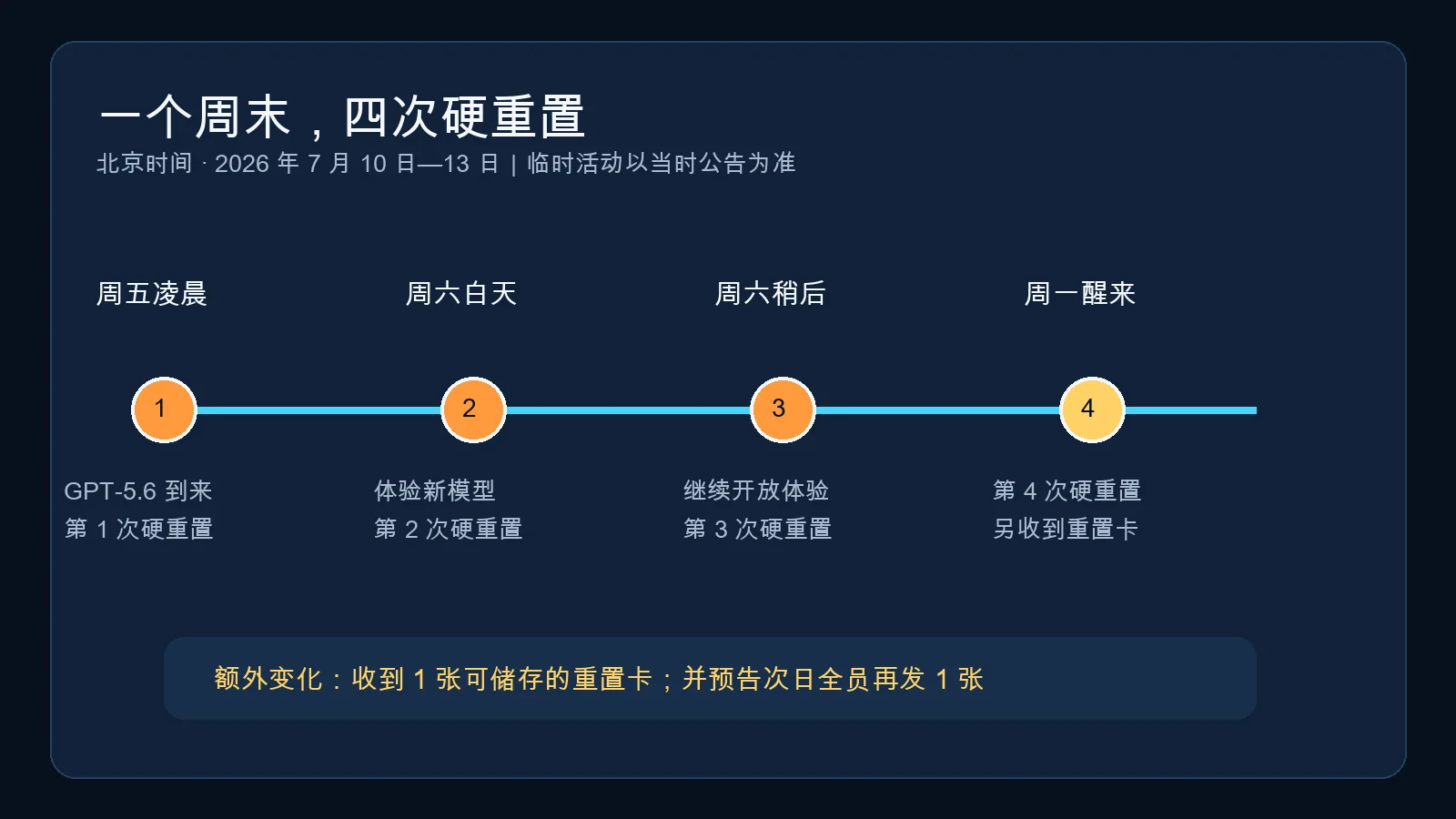
Figure 2: Four hard resets landed in one weekend, followed by a bankable card and a preview of another.
2. Hard reset versus reset card
Imagine a wristband at an amusement park.
- A hard reset refills the rides available on your wristband immediately.
- A reset card is a refill voucher you can keep in your pocket and redeem later.
The first is like a restaurant replacing your empty plate with a full one right now. The second is a buffet coupon for another day. The difference is not only quantity; it is control over timing.
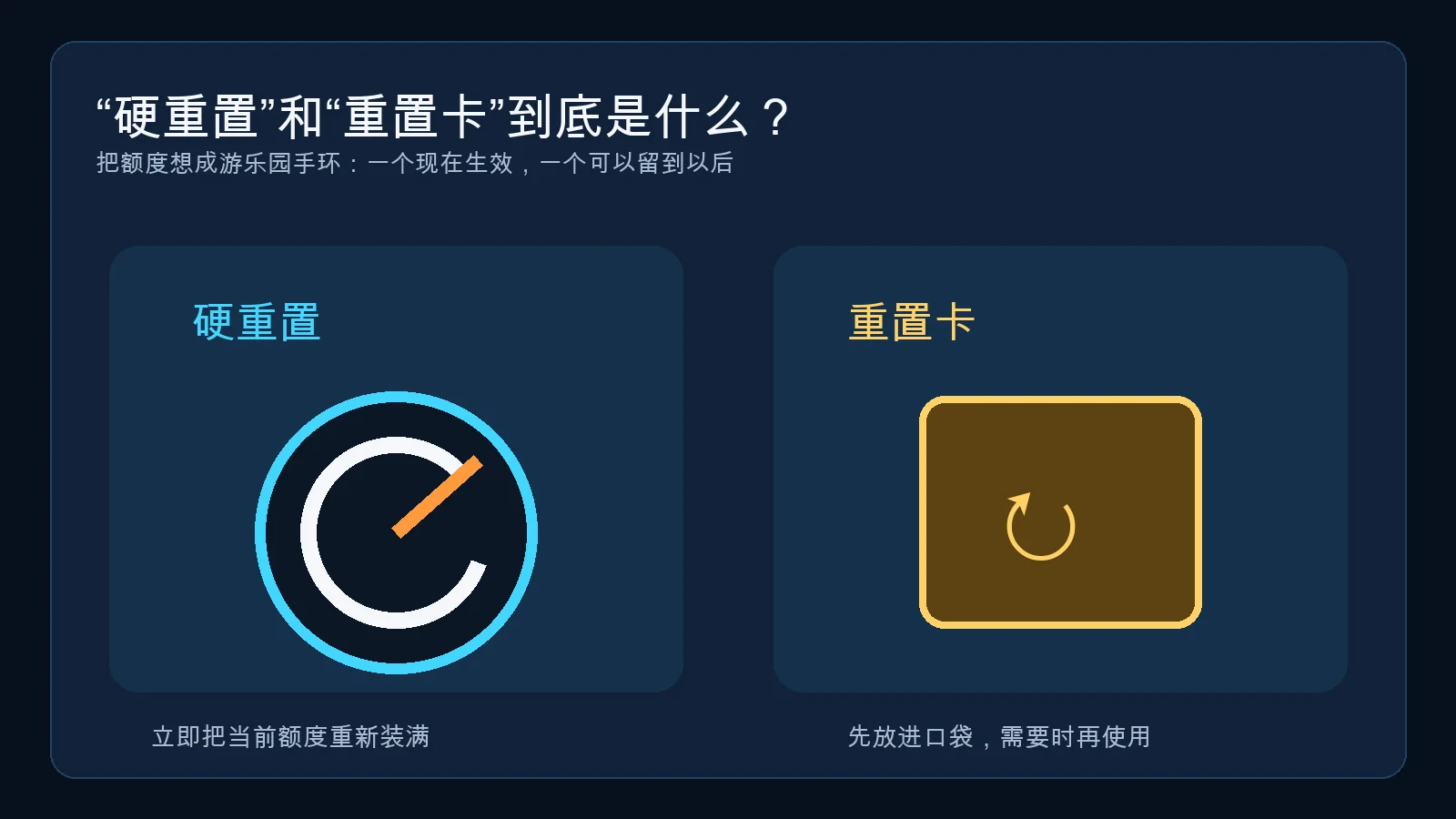
Figure 3: One applies immediately; the other can be saved until it is useful.
3. The five-hour limit temporarily disappeared
For heavy Codex users, the more consequential change was the temporary removal of the five-hour rolling limit. Only the weekly limit remained visible.
Think of the normal arrangement as a household water system. The five-hour window limits short bursts of flow, while the weekly window limits total consumption. Removing the short window means that, while weekly capacity remains, a user can concentrate much more work into one session.
That matters for long agent runs, large refactors, parallel experiments, document analysis, and end-to-end validation. Instead of stopping halfway and waiting for the pipe to reopen, you can finish an entire experiment in one sitting.
Figure 4: Real browser capture. Fast-moving model launches and temporary promotions are not always indexed immediately, so temporary states should not be mistaken for permanent policy.
Figure 5: Real browser capture. Community news often moves faster than search indexes; the account UI and contemporaneous announcement matter most.
Figure 6: Real browser capture. Usage limits are dynamic information, not timeless documentation.
4. The absurd part: trying to burn tokens
At exactly the same time, a large portion of my GLM-5.2 allowance was due to expire on Sunday.
So I stopped asking how to conserve tokens and started asking what useful work could consume them. I assigned different models to different tasks, organized neglected material, asked agents to review old projects, revisited scripts and automation, and ran comparisons I had previously avoided because of cost.
Preventing quota from expiring required effort: designing tasks, supplying context, checking results, and deciding what was worth doing. The comedy revealed a serious shift. When a production input becomes abundant, the bottleneck moves.
The limiting questions became:
- What problem do I actually want to solve?
- Is it worth solving?
- Can I define a goal better than “write me some code”?
- Can I judge whether the output is good?
- Can the result survive contact with the real world?
5. Tokens are water; creativity decides what to grow
Tokens are becoming like tap water. When every household had one bucket, efficiency dominated every conversation. Once the pipes arrive, the water supply can increase by ten or one hundred times—but the pipes still cannot decide whether you should plant an apple tree, build a pool, or restore a wetland.
AI dramatically amplifies execution. It does not automatically decide:
- what deserves to exist;
- which problem genuinely helps someone;
- which option fits your values;
- which consequences you are willing to own;
- which things should not be built, even if they can be.
AI can participate in creativity. It can combine concepts, generate variants, challenge assumptions, and suggest surprising directions. But valuable creativity is not merely a sentence that has never appeared before. It includes observation, context, judgment, and a human willing to be responsible for the choice.
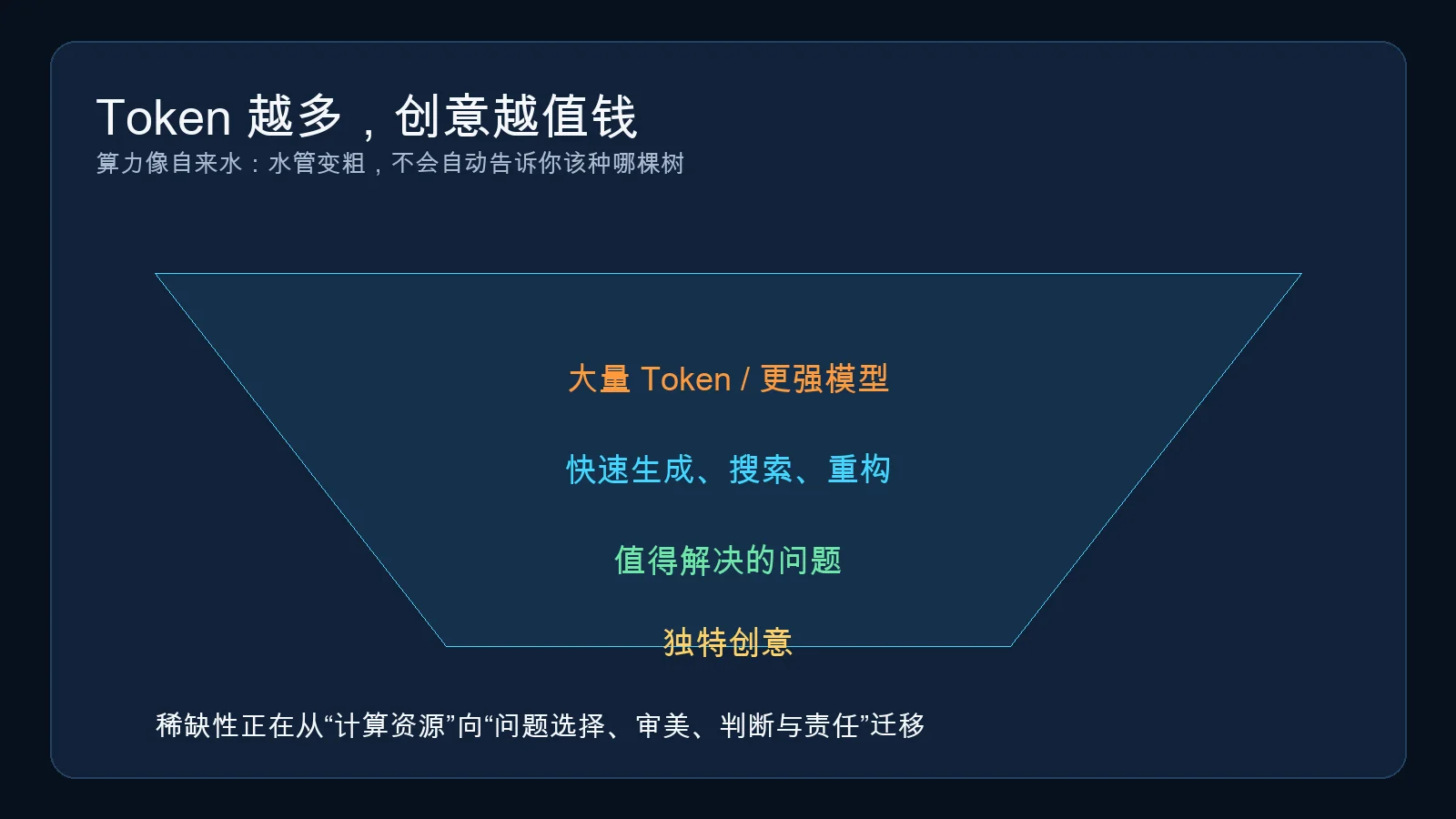
Figure 7: As models and quota become widely available, the differentiator is no longer access to AI. It is deciding what the AI should do.
6. What AI cannot replace is your difference
If everyone gives the same model the same prompt and asks for the same article, application, or video, output explodes while differentiation collapses.
Imagine every student receiving an extraordinarily fast printer. The printer can produce one hundred pages per minute, but it cannot make every essay distinctive. The memorable work still comes from the person who noticed something different, experienced something different, or asked a better question.
The valuable combination is therefore:
Notice an overlooked problem + propose a different angle + implement it quickly with AI + verify it personally.
Ideas without implementation remain private fantasies. Execution without distinctive ideas pushes everyone toward the same average. Combining the two creates leverage.
7. Education for children needs a new target
Traditional education grew around a stable assumption: knowledge changed slowly enough that memorizing standard answers and following established procedures created a reliable worker.
AI is rapidly absorbing standardized tasks. Memorization, templates, and repetition alone will provide less advantage.
This does not mean children should stop learning language, mathematics, or science. Without foundational knowledge, they cannot detect when a model is wrong or formulate strong questions. The goal must expand beyond remembering answers:
- ask original questions;
- break large problems into smaller ones;
- gather evidence from AI, books, experiments, and people;
- judge reliability;
- turn an idea into something visible and useful;
- learn from failure and revise.
A child can still learn that plants need light and water. The deeper lesson is to ask what happens when identical seeds receive different amounts of light, design an experiment, record observations, use AI to plot the data, and then check whether the AI’s explanation matches reality.
AI becomes a microscope, calculator, and laboratory assistant. The steering wheel stays with the human.
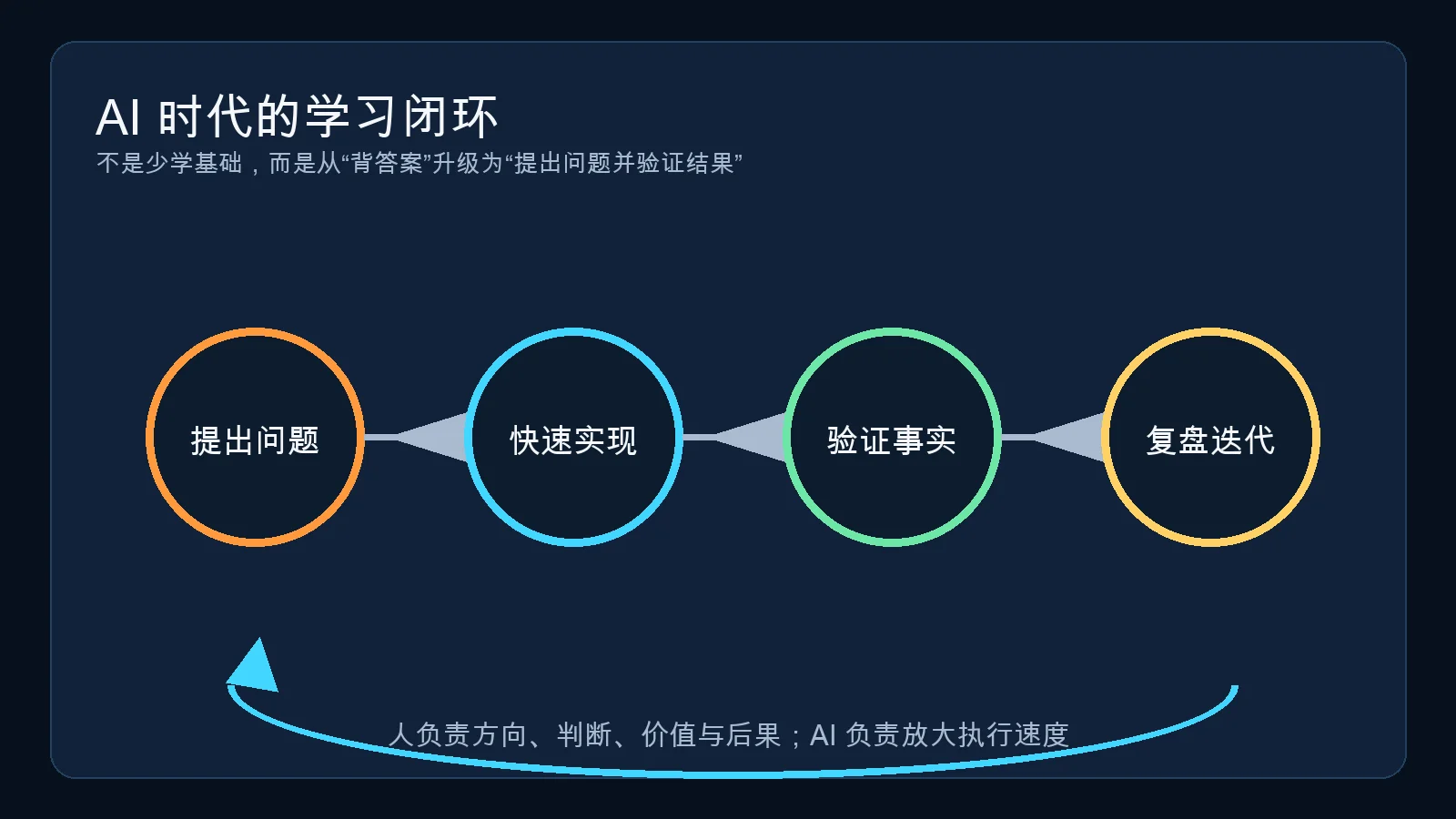
Figure 8: The future is not a contest over who answers standard questions faster. It rewards people who can ask, build, verify, and iterate.
8. Adults need to go back to school too
This shift is not only about children. Experienced adults may be more exposed because we carry a large collection of strategies that worked in the previous era.
The old path was to master one tool and defend the advantage through repetition. Now tools change every few months and model capabilities redraw job boundaries every cycle. The durable skills are faster learning, clear evaluation criteria, complex task design, AI collaboration, fact verification, and decision-making under uncertainty.
My working checklist is:
- Solve one real problem every week. Use AI inside an actual workflow, not only for demonstrations.
- Save questions, not just answers. Good questions keep producing value; answers expire.
- Demand evidence. Run the program, compare the outputs, inspect the logs, and do not accept “it should work.”
- Develop taste and trade-offs. AI can produce ten versions; you still need a reason to choose one.
- Practice rapid implementation. Turn a sentence into a prototype and a prototype into a useful tool.
- Keep human responsibility. Models can advise, but they cannot own the consequences of publication or decisions.
9. Root cause: scarcity habits in an abundant environment
Why can more quota create more anxiety?
The problem is not excessive tokens. It is the habit of treating every available resource as something that must be consumed. Expiring quota triggers the same instinct as overeating at a buffet because leaving food feels wasteful.
But tokens are a means, not the goal. The quantity to optimize is not token consumption; it is value created per unit of human attention.
One million tokens spent on a meaningless task produce a larger pile of meaningless output. A few thousand tokens applied to the right question may save days, reveal a risk, or complete a useful work.
Before the next reset, the better question is:
If AI could complete only one task for me today, which task would matter most?
That may be more important than the remaining percentage on a quota meter.
10. Q&A
Was the five-hour limit permanently removed?
No. This article records a temporary state observed during the July 2026 weekend. Usage limits can change dynamically; always check the current account interface and official documentation.
Does unused quota stack after a hard reset?
A hard reset normally means the active window is refilled, not that capacity stacks without limit. Exact mechanics depend on the event and account UI. A reset card is valuable because it can be redeemed later.
Should I burn every token before it expires?
No. Spending attention on low-value work is more wasteful than letting quota expire. Maintain a backlog of expensive but useful experiments: multi-option comparisons, large code reviews, document structuring, and real prototypes.
Can AI be creative?
AI can generate novel combinations and help humans escape familiar patterns. Valuable creativity also requires goals, context, judgment, and responsibility. The practical skill is combining human experience with machine generation.
Do children still need to memorize knowledge?
They need a foundation. Without it, they cannot evaluate AI. But education must continue into questioning, experimentation, verification, communication, collaboration, and creation.
How do we avoid being replaced by “silicon life”?
Do not compete with machines at being machine-like. Repetitive and predictable work is where machines improve fastest. Invest in understanding needs, connecting fields, exercising judgment, building relationships, taking responsibility, and expressing something distinctive—then use AI to amplify those abilities.
Conclusion: prepare the question before the next reset
The weekend was busy, surprising, and a little helplessly funny.
Four hard resets, one card already delivered, another previewed, and a temporarily absent five-hour limit turned tokens from a scarce resource into something that could create anxiety simply by remaining unused.
That abundance made the larger lesson clearer. As AI capability becomes easier to access, the winner is not the person who presses Generate most often. It is the person who notices an overlooked problem, proposes a different idea, implements it quickly, verifies the result, and accepts responsibility for the outcome.
History is not useless, but it is no longer a map we can follow without modification. Children and adults must learn how to ask, judge, create, and remain directed in a world shared with silicon intelligence.
When the next reset arrives, I hope tokens are not the thing we lack.
More importantly, I hope we already have a question worth answering.