Can You Still Buy a Coding Plan? A July 2026 Reality Check on Limits, Quotas, and Lockouts
Short answer: as of July 20, 2026, most mainstream AI coding plans are still purchasable. The confusing part is that “available to buy,” “available in my region,” and “available for heavy coding” are no longer the same statement. Some products have a live checkout but tight quotas; others are visible in marketing pages but not offered to every account; some individual coding experiences have been paused or reshaped during product transitions.
1. Why developers keep asking this question
Buying a software subscription used to feel like buying a bottle of water: see the price, pay, and take it home. Modern coding plans are more like an amusement-park wristband. The wristband may be available, but every ride can have a queue, a height restriction, a daily limit, or a separate ticket.
That is why developers report apparently contradictory experiences:
- The pricing page loads, but checkout is disabled.
- The subscription succeeds, but the coding agent immediately reports a quota limit.
- A plan advertises “coding included,” while advanced models consume a separate credit pool.
- Two users in different regions see different plans, currencies, or payment options.
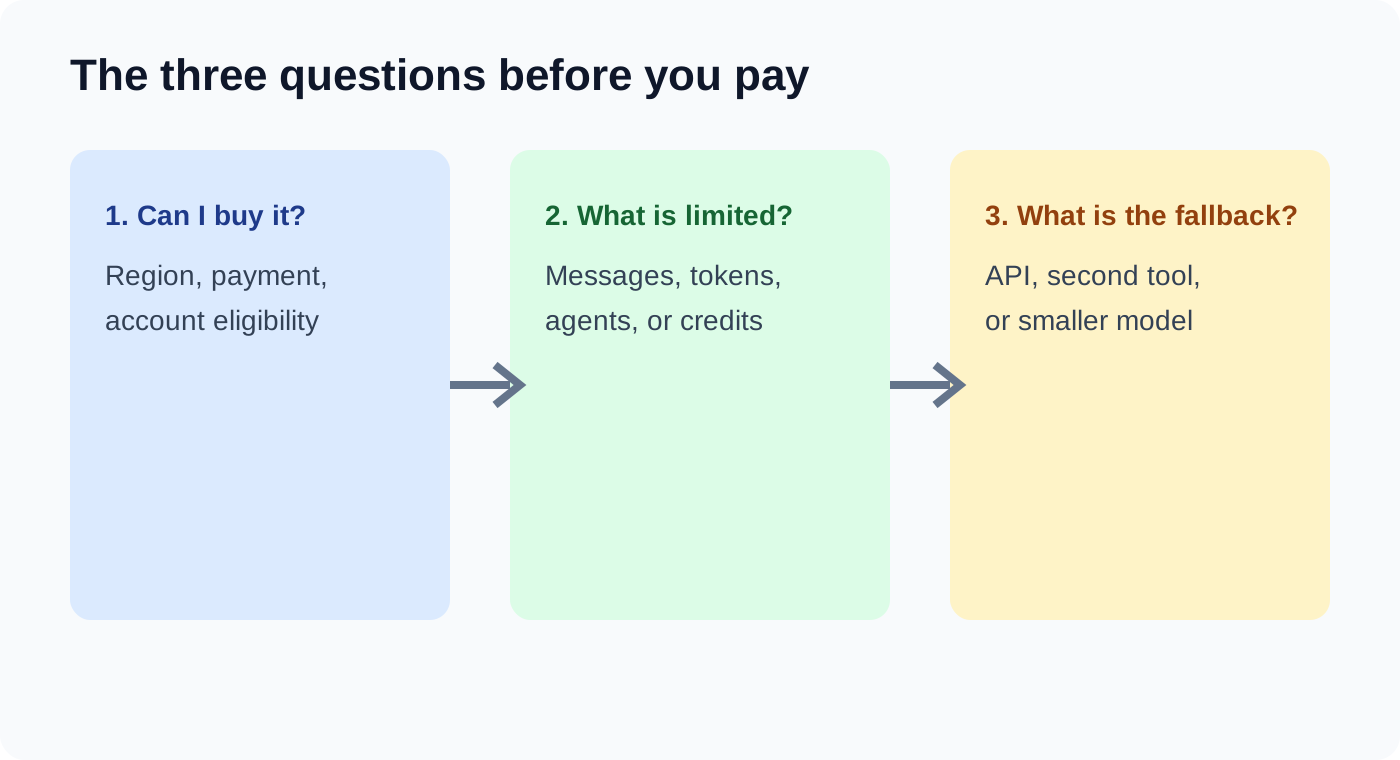
The useful question is therefore not simply “Which provider is cheapest?” It is: Which provider can my account buy today, and which one can I use predictably for my real workload?
2. Three words that must not be mixed up
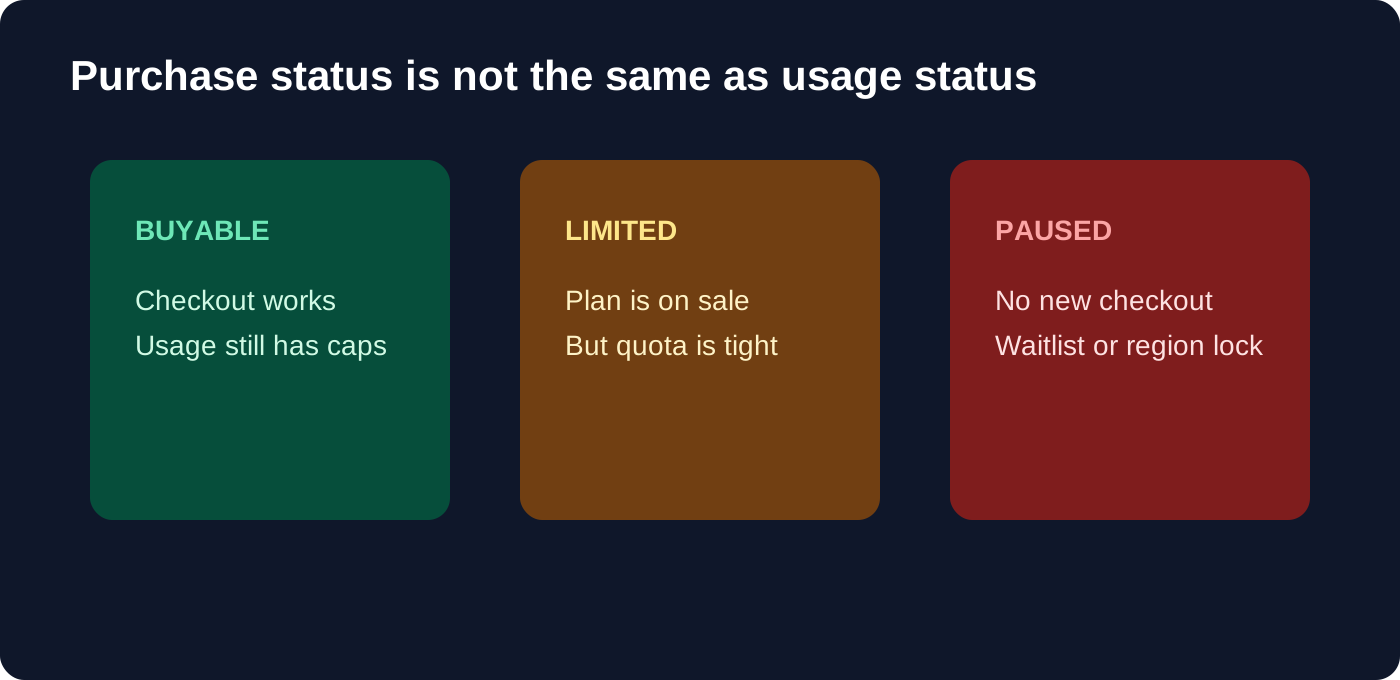
Buyable
The official account page offers a checkout path and the subscription can activate. This says nothing about unlimited use.
Limited
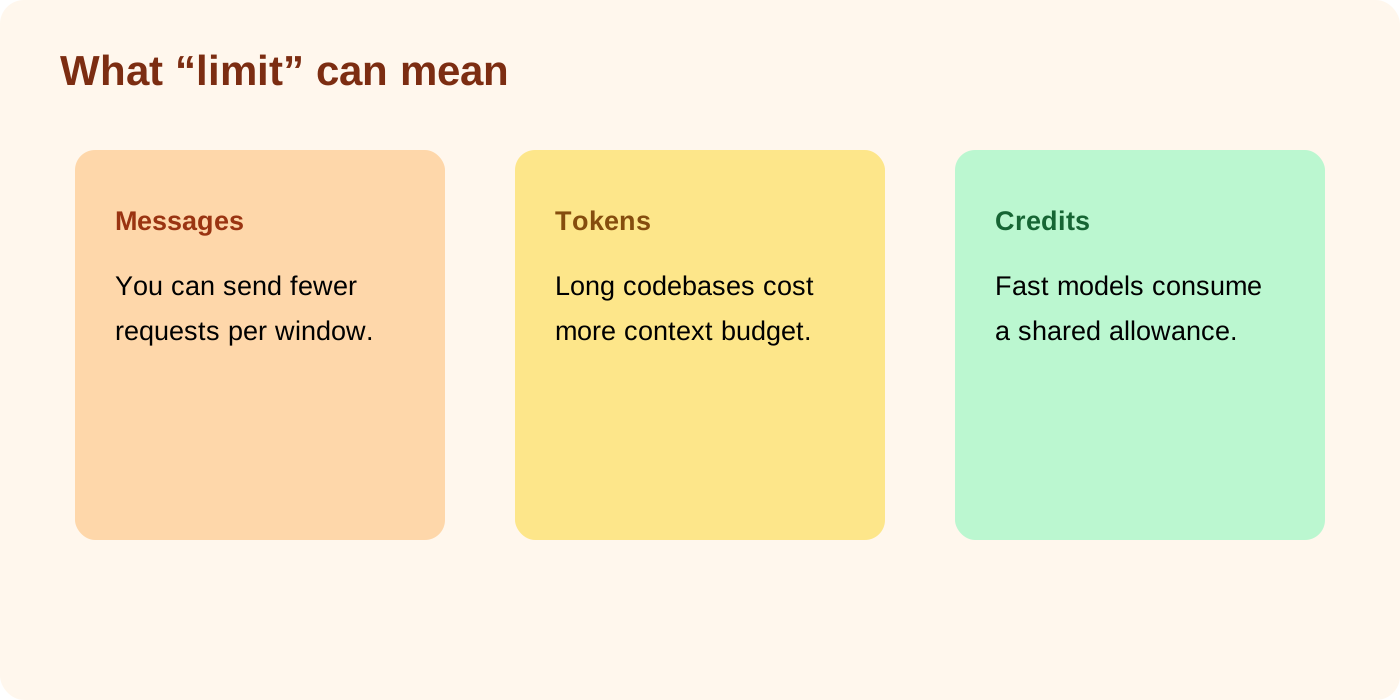
The plan is still sold, but usage is measured through messages, tokens, context size, agent runs, premium requests, credits, or concurrency. A limit may reset every few hours, every day, every week, or every month.
Paused or region-limited
A product or tier is not accepting new subscribers, or it is only available in selected countries and account cohorts. Repeatedly refreshing the same pricing page will not fix this; you need a supported region, a team plan, or a different tool.
3. The current market map
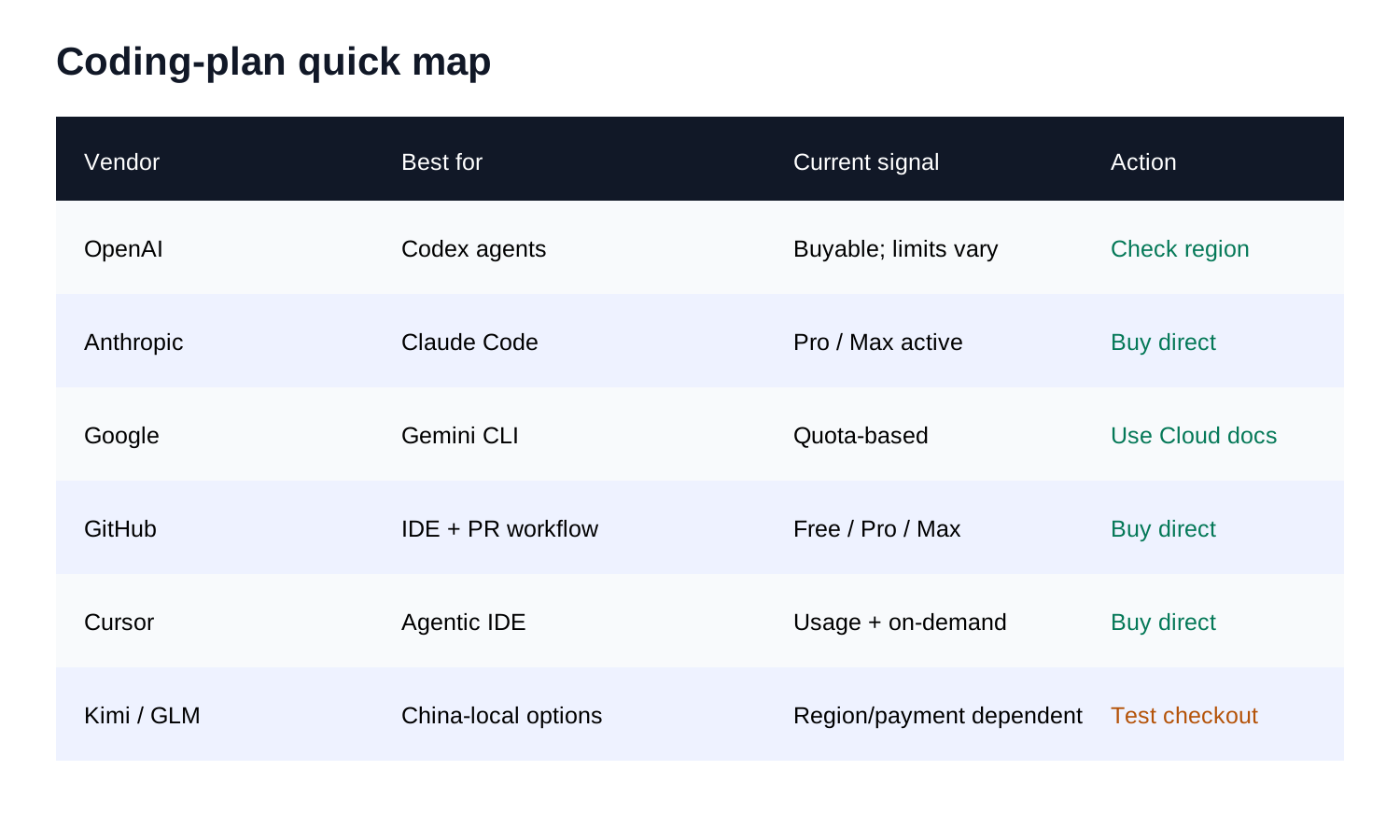
The table below is a practical snapshot based on public vendor pricing pages, help centers, product pages, and quota documentation checked on 2026-07-20. “Buyable” means that the vendor still exposes a purchase or subscription route. It does not guarantee that every country, card, or account will pass checkout.
OpenAI: strong for agentic coding, but ChatGPT is not an unlimited API wallet
OpenAI coding workflows are commonly accessed through ChatGPT and Codex surfaces. Individual users typically look at personal or higher-tier ChatGPT plans; organizations look at Business or Enterprise capabilities and controls.
Status: generally buyable, with dynamic usage limits.
The important distinction is between a ChatGPT subscription and API billing. A subscription does not automatically mean unlimited API usage. Codex usage can also vary with the selected model, context length, task complexity, and peak-time scheduling.
Think of a higher tier as adding lanes to a highway, not removing the speed limit. For small scripts and focused fixes, a personal tier may be sufficient. For large migrations, long-running reviews, and parallel agents, keep a second tool or an API budget available.

Anthropic: Claude Code remains one of the clearest coding subscriptions
Anthropic’s Claude Code is designed around the terminal and repository workflow. Pro targets normal development; Max targets heavier individual usage; team and enterprise plans add administration, security, and organizational controls.
Status: Pro and Max remain buyable; heavy workloads still encounter usage ceilings.
A repository-wide task does not cost the same as a short question. A large codebase is like a moving truck: it carries a lot of context and consumes more capacity. A small function fix is like a bicycle. Splitting work into scan, plan, small edits, and tests usually produces more reliable results and stretches the allowance further.


Google: Gemini Code Assist and CLI are quota products, not simply membership perks
Google’s coding tools span IDE, command-line, and Google Cloud workflows. Individual and paid Google identities may be related, but their coding quotas, Cloud project billing, and consumer chat entitlements should not be assumed to be identical.
Status: official coding entry points remain available, but quota rules are explicit and product availability can vary by region and service transition.
This is one of the easiest places to make a wrong assumption. A Google AI membership name does not automatically prove unlimited Gemini CLI usage. Confirm whether the request is billed through a personal account, a Cloud project, or an organization’s Vertex AI quota.
GitHub Copilot: stable purchase paths and excellent repository integration
GitHub Copilot continues to offer free, individual paid, team, and enterprise routes. Its strength is not that every request always uses the most powerful model. Its strength is the connection to IDEs, pull requests, code review, repository permissions, and team policy.
Status: personal, team, and enterprise plans remain buyable; advanced models and agent features are commonly measured through premium requests or equivalent counters.
For daily completion, explanation, and pull-request work, Copilot remains easy to justify. If you ask an agent to modify dozens of files for half an hour, inspect the premium-request rules first.

Cursor: a mature agent IDE, with usage that behaves increasingly like metering
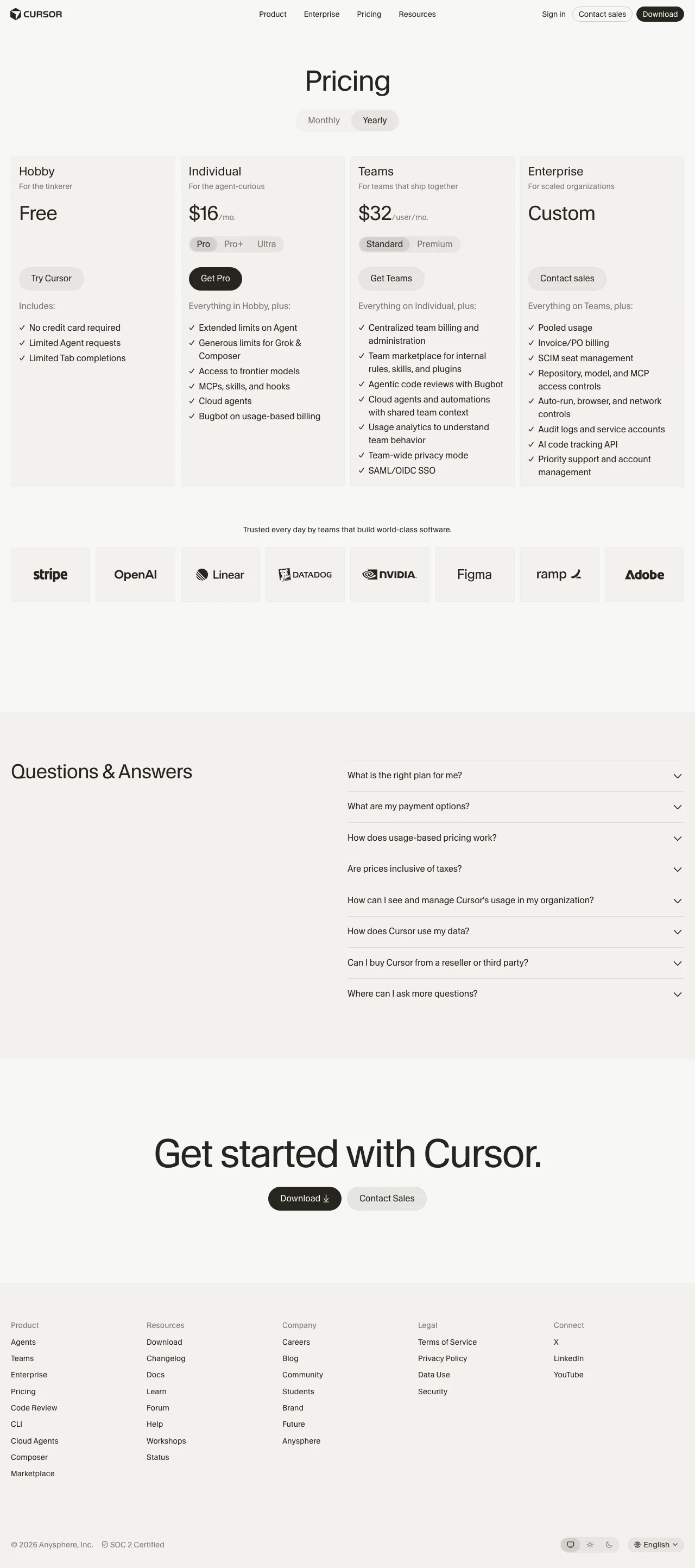
Cursor combines an editor, codebase indexing, and agents. Individual subscriptions remain available, while team plans add centralized management. The actual experience depends heavily on model choice, long context, indexing scope, and whether the agent can execute commands.
Status: buyable; the main risk is that included usage can be consumed quickly by large agentic tasks.
Think of Cursor as a taxi. A basic plan gives you a certain amount of included mileage. Short trips are economical; driving a huge monorepo around all day makes the meter turn quickly. Limit indexing scope, define the files an agent may touch, and require checkpoints.
Windsurf: available, but understand credits and model multipliers
Windsurf follows the agent-IDE model. Before paying, confirm whether the plan measures messages, credits, model calls, or a “flow” allowance. Different models may have different consumption multipliers, so the same monthly number can represent very different amounts of work.
Status: public subscription routes remain available; treat it as an IDE plan with metered usage, not an unlimited model bundle.
Kimi, GLM, and other localized plans: region and payment rails matter
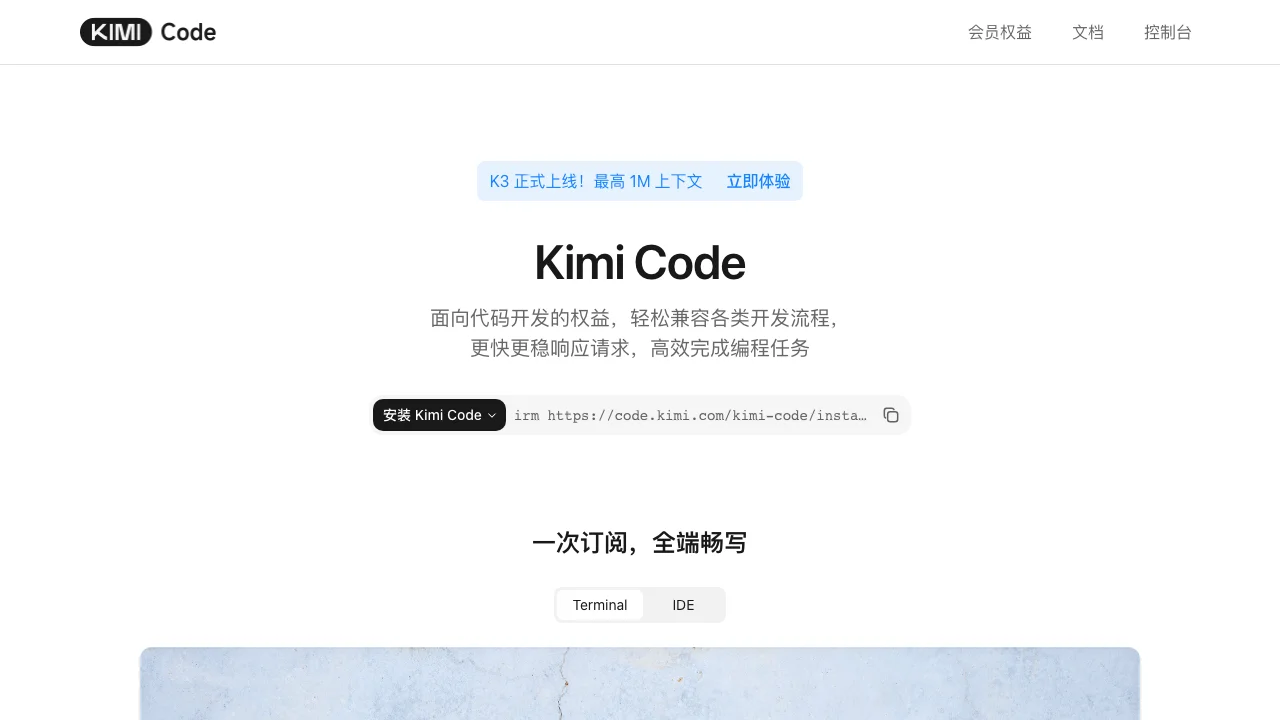
Localized coding plans can offer strong Chinese-language interaction, regional network performance, and local payment options. Their downside is a faster product cadence: names change, invitation programs appear and disappear, and promotional credits can be confused with normal monthly allowance.
Status: some remain purchasable or have invitation paths; account-level checkout is the only reliable answer.
Do not trust a social-media screenshot as proof. The evidence chain should be: official product page, account sees the plan, checkout succeeds, coding allowance appears, and a small real task completes.
DeepSeek and similar providers: useful API fallbacks, not automatically Coding Plans
Some providers are primarily consumed through APIs. They can power an IDE or an agent, but an API balance is not the same product as an official coding subscription. Evaluate balance, unit price, rate limits, and uptime separately.
Status: do not label an API-only offering as a Coding Plan without checking the actual product and billing model.
4. What “limited” can mean
- True purchase restriction: new users cannot subscribe, or a premium tier is only available to selected accounts.
- Regional restriction: the product is marketed globally, but your country or payment method is unsupported.
- Usage restriction: checkout works, but heavy coding hits the ceiling quickly.
- Peak-time throttling: normal tasks work at quiet hours; popular models slow down or temporarily switch behavior during demand spikes.
These are like parking rules. A parking garage can be open while every space is occupied. Separate “the service exists,” “my account can pay,” and “I can use it heavily,” and the market becomes much easier to understand.
5. My practical recommendations
Individual developers
Choose one plan that works in your region and inside your main IDE. Keep one low-cost backup. Opening five subscriptions at once usually creates five confusing quota counters rather than five times the productivity.
Heavy agent users
Separate your fixed subscription budget from your variable usage budget. Let the subscription handle normal work; use an API or second provider for large one-off tasks. Once a week, record completed tasks, allowance consumed, waiting time, and failure rate.
Teams and companies
Check administration, auditability, data handling, SSO, policy controls, and offboarding before comparing model names. A cheap plan that cannot be governed can cost more than a slightly more expensive enterprise plan.
6. How to verify whether a plan is buyable today
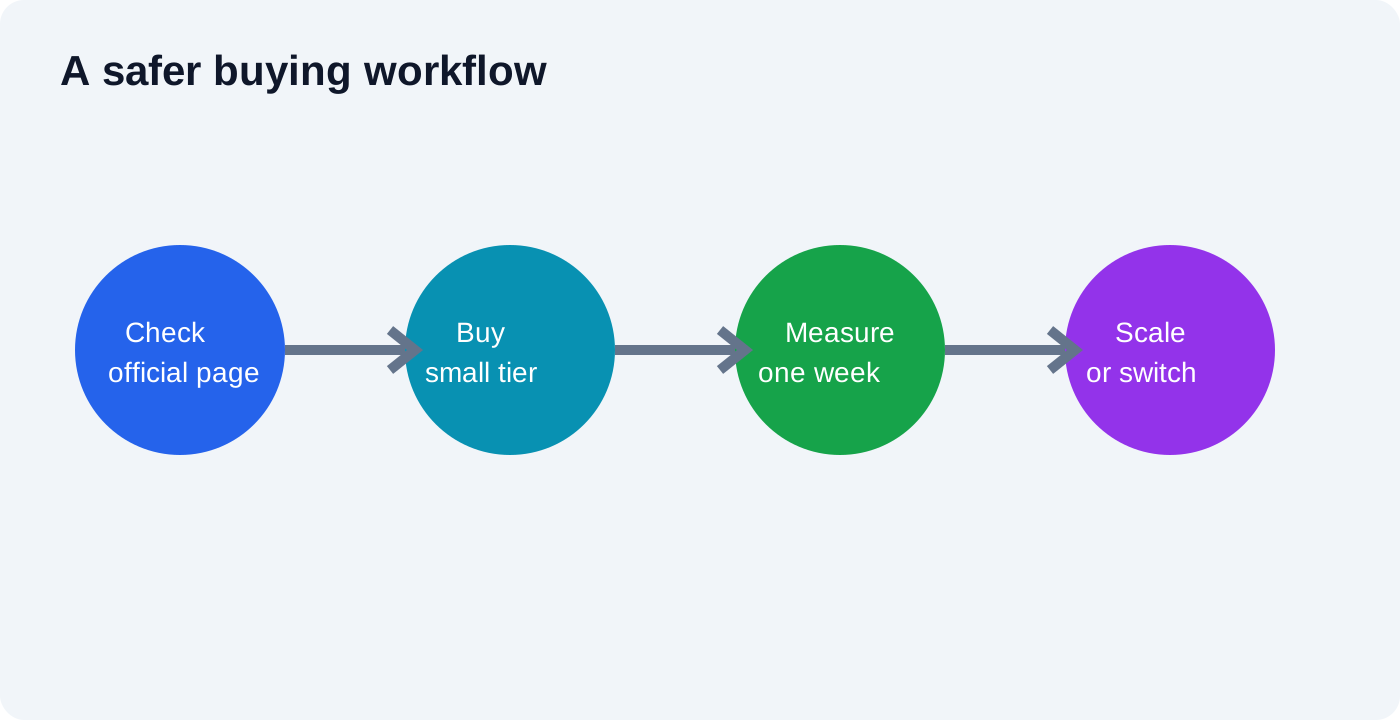
- Start from the vendor’s official pricing page or account console.
- Confirm country, currency, payment method, and account type.
- Read which models are included and how advanced usage is metered.
- After checkout, run a small reversible coding task.
- Record start time, task type, remaining allowance, and exact error text.
- If a quota is reached, stop retrying blindly; wait for reset or switch to a prepared fallback.
The final authority is always the official page visible to your account on the day you buy. Prices, quotas, regional availability, and model names can change after this article is published.
7. Q&A
Why can my friend buy it while I cannot?
The usual causes are region, payment card, account type, enterprise policy, or a gradual rollout. Compare the two account-level checkout pages, not search-engine snippets.
Does a high-tier plan remove throttling?
No. Higher tiers generally raise allowances, expose faster models, or unlock more agent capability. They do not remove finite compute. Long-context tasks and autonomous execution consume capacity faster.
Should I buy a year immediately?
Not during a fast-moving product cycle. Start monthly, test at least one week of real work, then decide whether the workflow is stable enough for a longer commitment.
Is a Coding Plan cheaper than API billing?
For predictable daily coding, a subscription is simpler. For automation, batch jobs, and self-hosted agents, API billing is more flexible. A subscription is a bus pass; an API is a taxi meter.
What if the price changes after publication?
Use the date in this article as a snapshot, not a promise. Re-check the official vendor page before buying, and keep price, quota, and purchase availability as separate fields in your own notes.
Conclusion: predictability is now the scarce resource
The 2026 Coding Plan market is no longer only a contest for the strongest model. It is a contest for predictable completion: transparent quotas, usable fallbacks, sensible administration, and bills that do not surprise the developer.
If you do only one thing today, do not buy the most expensive tier first. Use the official checkout, subscribe to the smallest reasonable plan, run one reversible task, and record the result. That small experiment will tell you more than any ranking list.
A note about evidence and privacy
Screenshots in this post are captured from public vendor pages and are used as visual evidence, not as a guarantee of a price for every reader. Account-specific checkout, region, tax, currency, and payment support remain decisive. No private account identifiers, internal network details, or machine names are included. When you compare plans, record only the public facts that matter: date checked, plan name, included model family, quota unit, reset period, and whether checkout completed.
That habit sounds boring, but it prevents a common operational mistake: forwarding an old screenshot as if it were a current contract. A coding plan is a moving service, not a static product box. Treat your notes like a small change log, and the next price or quota change will be much easier to understand.
References
- OpenAI ChatGPT Pricing: https://chatgpt.com/pricing/
- Anthropic Pricing: https://www.anthropic.com/pricing
- Claude Code: https://www.anthropic.com/claude-code
- Google Gemini Code Assist Quotas: https://developers.google.com/gemini-code-assist/resources/quotas
- GitHub Copilot Plans: https://github.com/features/copilot/plans
- Cursor Pricing: https://cursor.com/pricing
- Kimi Code: https://www.kimi.com/code