China's Coding Plan Shake-Up: GLM Is Unavailable, Kimi Is Closed—What Is Still Worth Buying?
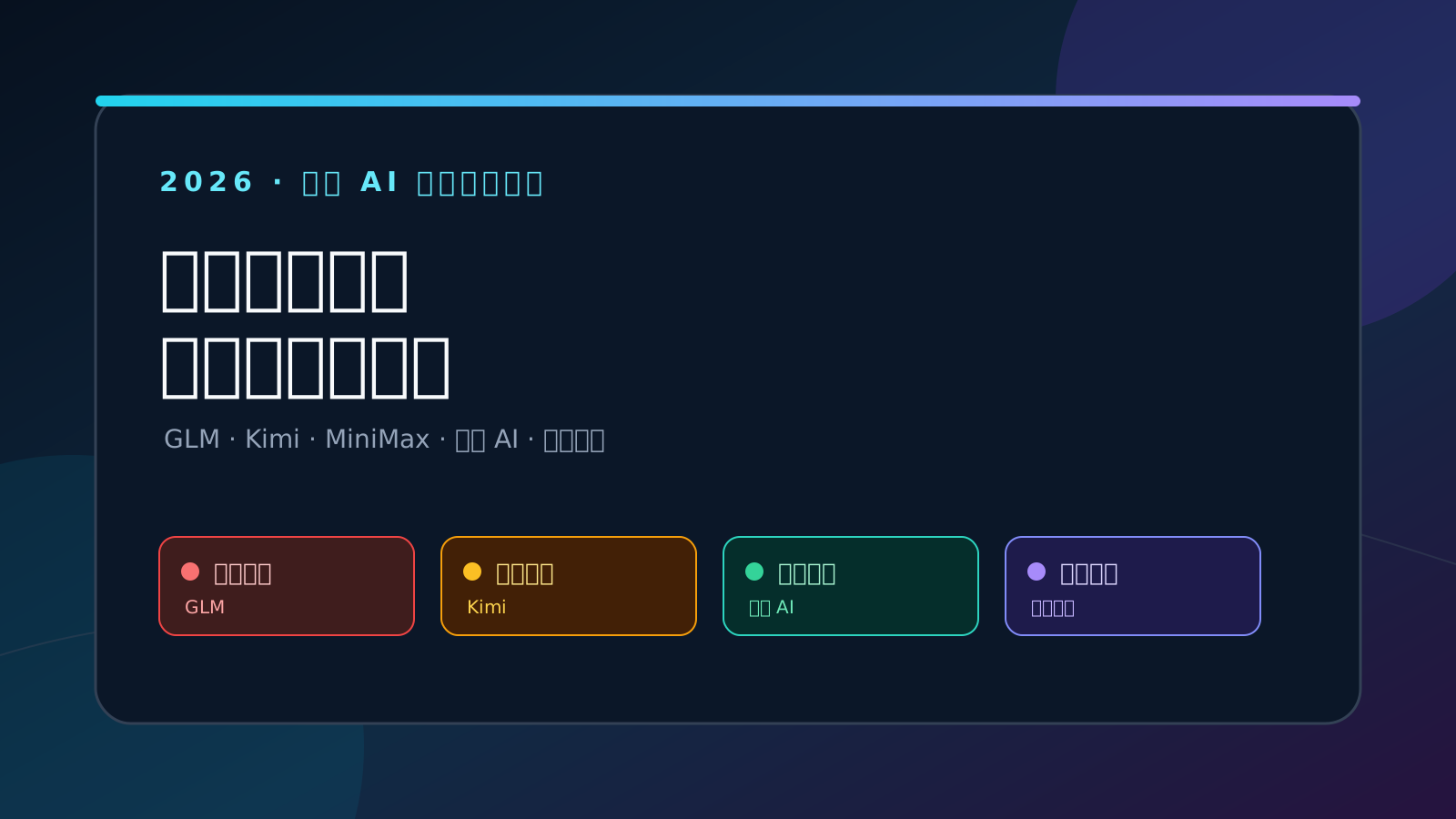
Bottom line: as of July 20, 2026, the market has split sharply: GLM is a timed, limited flash sale that is practically impossible to buy; Kimi has closed the current membership subscription entry; MiniMax TokenPlan is currently buyable without a purchase cap but delivers a weaker coding experience than scarce plans; Qwen AI has just launched qwen3.8, is currently open with usage discounts, and is one of the better choices to try now, although future restrictions remain possible; Volcengine Ark CodingPlan/AgentPlan are limited but still obtainable in some cases.
Scope note: This article records the observable purchase entry, account state, and real-use experience as of the check date. Official docs, product pages, console captures, and public reports can lag behind one another; inventory, qualification, campaigns, and rollout behavior are time-sensitive.
1. Why domestic Coding Plans are easy to misread
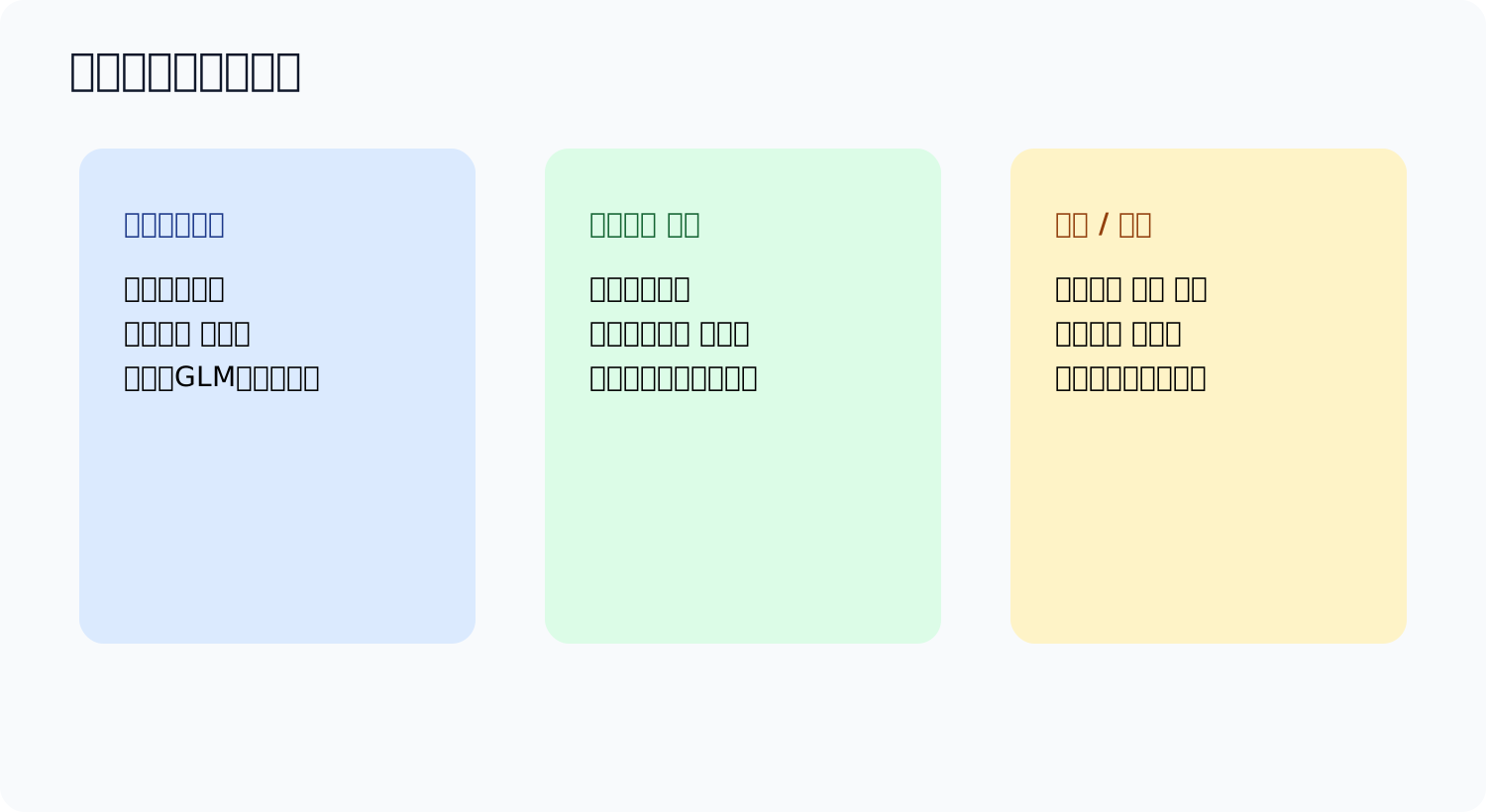
A developer may open a product page and see the words membership, model quota, intelligent coding, and API balance. Those words sound similar, but they describe different products. Think of them as three different transport cards:
- Coding Plan: a time-based coding allowance, often including agents, command-line use, or coding-model quotas.
- IDE Plan: a subscription for completion, chat, code generation, explanation, and agent functions inside an editor.
- API Balance: model calls or tokens that you connect to your own IDE, script, or agent.
All three can write code. They are not the same purchase. This explains why one developer says “the vendor is limiting new purchases,” while another says “I can still use it”: they may be using different products, accounts, or billing systems.
2. The quick market map
| Vendor/product | Product shape | Cross-checked status on 2026-07-21 | Action |
|---|---|---|---|
| Zhipu GLM Coding Plan | Dedicated Coding Plan | Timed daily flash sale; usually sells out immediately | Do not budget as reliably buyable |
| Kimi membership/coding | Membership/agent entry | Current membership subscription entry is closed; old help pages may remain | Wait for official reopening |
| MiniMax Coding Plan | Coding/model entitlement | Must be checked separately by account and entry | Trust the signed-in console |
| Qwen AI | Consumer AI/coding entry | Not the same as Alibaba Cloud Token Plan or Lingma | Check Qwen AI separately |
| Volcengine Ark CodingPlan | Model Coding Plan | Limited, but still has purchase opportunities | Watch official qualification windows |
| Volcengine Ark AgentPlan | Agent plan | Limited, but may still be obtained through eligibility or campaigns | Check qualification and inventory |
| Tencent CodeBuddy | IDE/agent plan | Still usable/subscribable; inspect credits | Test monthly first |
| Comate, Lingma, MarsCode | IDE products | Usable does not prove a standalone Coding Plan is buyable | Evaluate as IDE plans |
| DeepSeek, Qwen API, MiniMax API | API/model platforms | Token/API billing, not automatically Coding Plans | Budget separately |
3. Vendor-by-vendor analysis
Zhipu GLM Coding Plan: a timed flash sale that is practically unavailable
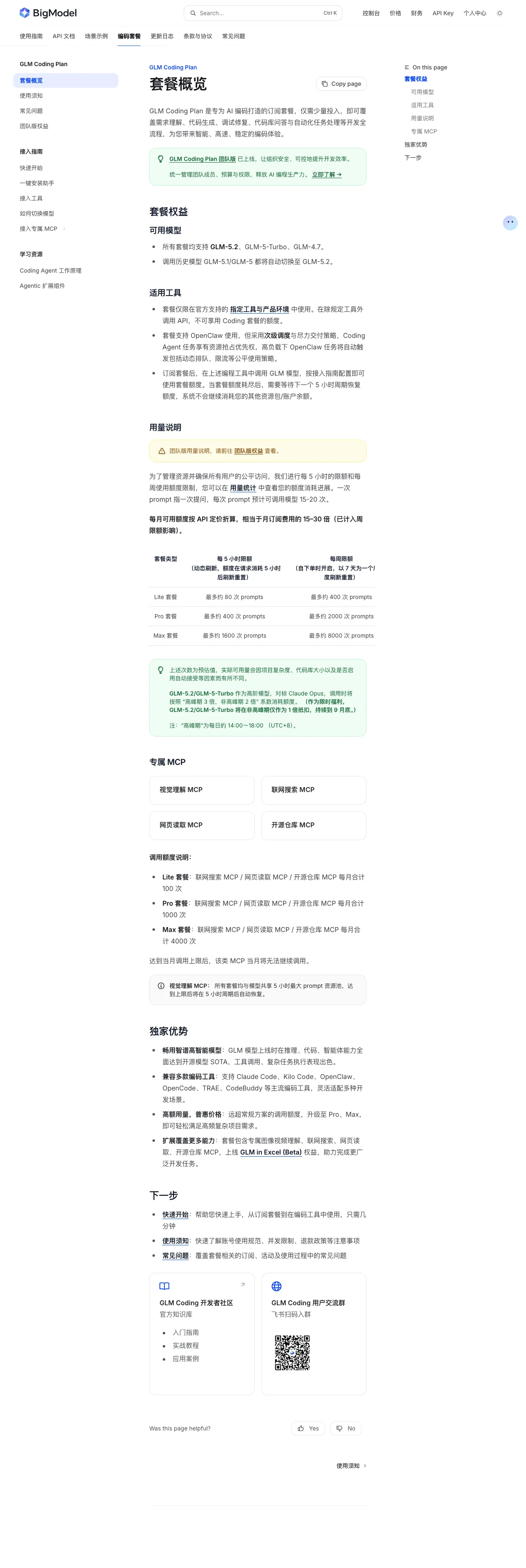
The current purchase state should not be described as a normal buy-now subscription. The official entry still exists, but the purchase mechanism is now a limited daily flash sale. Official limit notices, combined with repeated public reports of immediate sell-outs, make the practical conclusion much harsher: there may be a theoretical purchase window, but an ordinary user should treat it as almost impossible to buy.
Status: not a normally purchasable subscription; a high-frequency limited sale. Do not budget it as a stable procurement option.
This is like a concert ticket window that opens once a day for a tiny inventory. The ticket page exists, but that does not mean you can buy a ticket. If you must try, log in early, confirm eligibility, refresh only through the official channel, and keep a second provider ready.
Kimi: the current membership subscription entry is closed
Kimi help pages, membership documentation, and historical screenshots may still be reachable. That does not prove that a new user can subscribe today. Cross-checking the current entry state with public user reports leads to the more accurate statement: Kimi has closed the current membership subscription entry, so new users cannot complete a normal subscription through the old page.
Status: currently not purchasable; do not treat old prices or old Kimi Code screenshots as current offers.
An old product notice can remain on the wall after the checkout counter stops accepting that product. Existing entitlements, renewal for old users, and new-user signup can be different states.

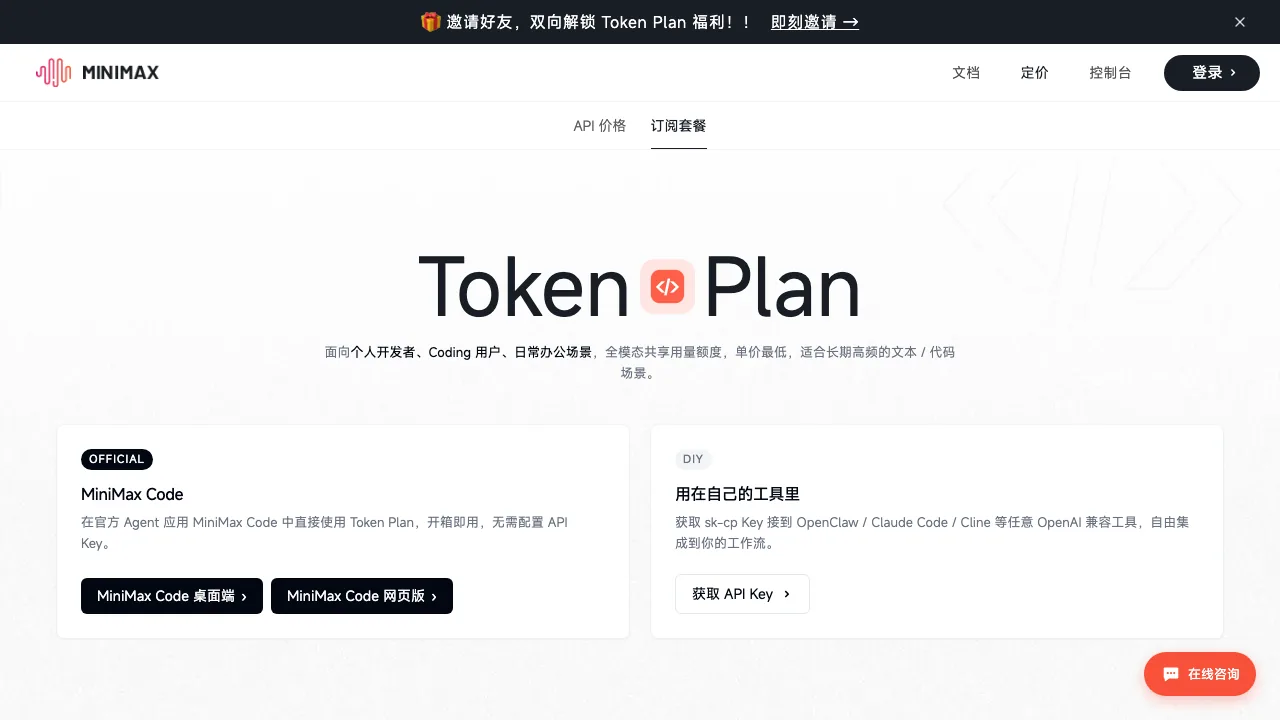
MiniMax TokenPlan: currently uncapped for purchase, but weaker in coding experience
MiniMax TokenPlan is currently available to purchase and is not in the same category as GLM’s timed flash sale or Kimi’s closed membership entry. It is a model-call and coding allowance that can be used by individual developers, coding users, and agents.
Status: currently buyable without a purchase cap; however, its practical coding quality, stability, agent completion rate, and peak-time behavior are weaker than some scarce CodingPlan/AgentPlan products.
The advantage is availability and budget predictability. The trade-off is that the same task may need more turns, retries, or human steering. It is a reasonable value or fallback option, but users who prioritize first-pass completion on complex agents should keep a limited higher-performance plan as a backup.
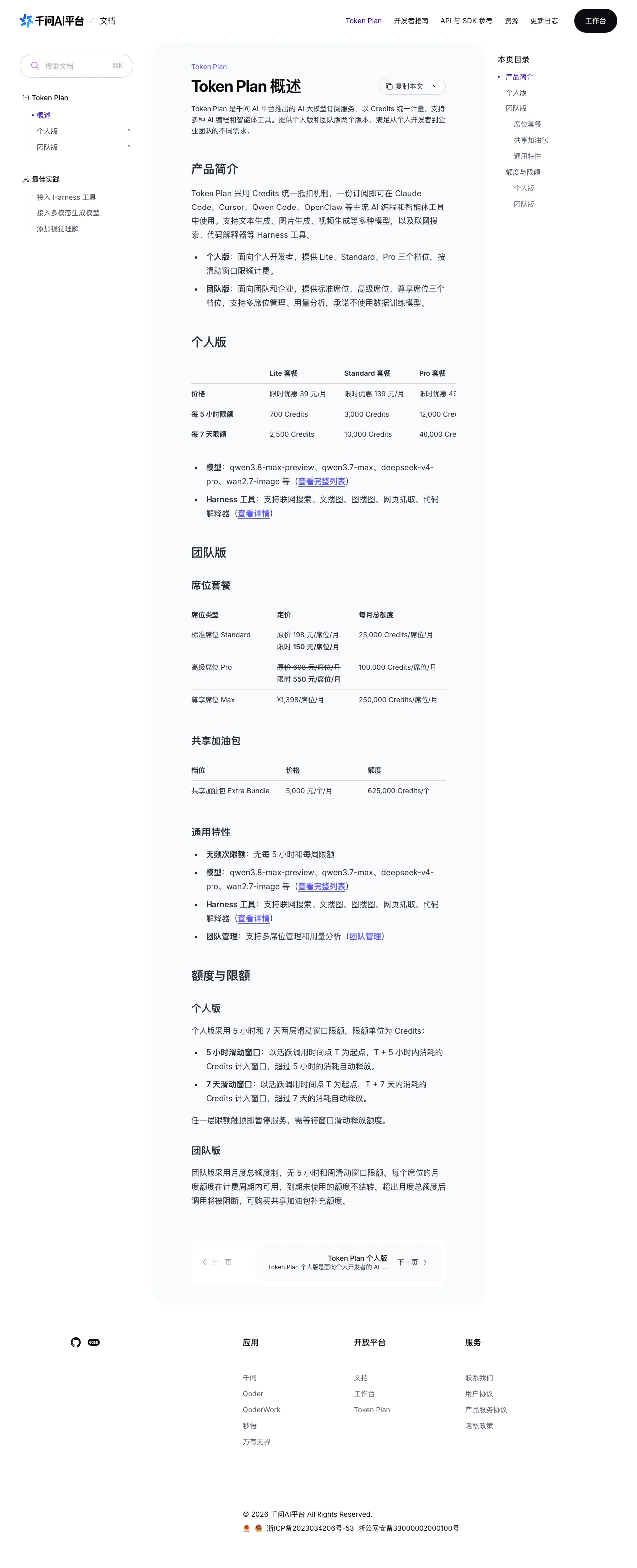
Qwen AI: qwen3.8 is currently open and discounted
Qwen AI must be separated from Alibaba Cloud Token Plan, Lingma, and Qwen API. With the new qwen3.8 launch, the Qwen AI entry is currently open without a purchase cap and includes usage incentives.
Status: currently open and discounted, making it one of the better domestic coding options to try first; later restrictions remain possible as demand and resource pressure change.
Qwen AI membership, Qwen AI’s built-in coding capability, Lingma IDE entitlements, and Qwen API Token Plan are not automatically one balance pool. Confirm that the current entry includes qwen3.8 before testing, and check the API plan separately if a script needs model access.
Use the current open and discounted window for a real task test, but do not interpret today’s unlimited purchase state as a permanent promise.
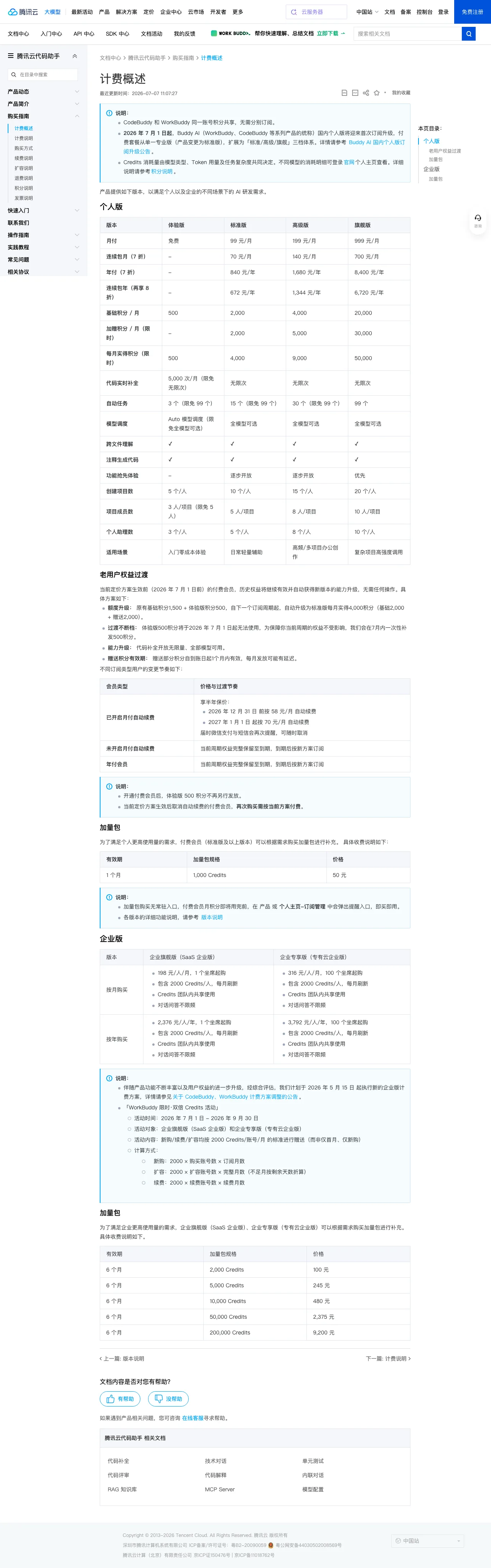
Tencent CodeBuddy: a domestic agent IDE with a credits mindset
Tencent CodeBuddy is positioned as more than chat. It brings completion, questions, code modification, project understanding, and agent workflows into the development environment.
Current reading: the official product and subscription paths remain; the exact cost and included credits depend on the account, version, and current product page.
Treat credits like energy in a game. A normal completion may consume little; a long-context agent changing many files may consume much more. Before paying, check whether free credits are enough, whether extra credits are automatically charged, and whether models have different multipliers.
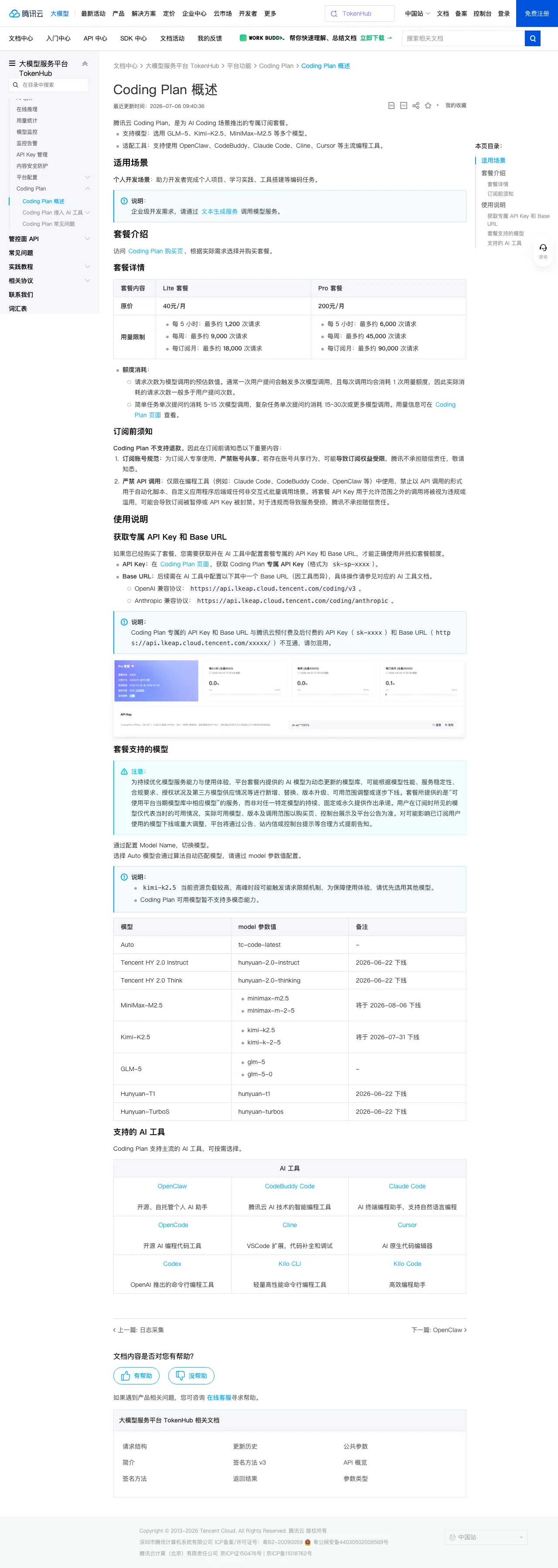
Tencent Cloud coding products: cloud-account and project rules matter
Tencent Cloud also provides coding capabilities and cloud model services. They differ from a personal IDE membership because identity, cloud projects, permissions, enterprise budgets, and API usage may be connected.
Current reading: official enablement and purchase paths remain, but whether a specific Coding Plan is directly purchasable depends on the current console and account permissions.
Enterprise buyers should confirm who pays, which project owns the quota, how permissions are revoked, and whether IDE and API use the same allowance.
Baidu Comate: usable, but more accurately described as an IDE coding assistant
Baidu Comate focuses on completion, generation, explanation, testing, chat, and team workflows inside development tools. It may expose individual, enterprise, or cloud-connected offerings.
Current reading: the product remains usable; whether an account has a dedicated Coding Plan, and which advanced features are paid, must be confirmed in the current account page.
Do not automatically turn “Comate can code” into “Baidu sells a fixed Coding Plan.” The first statement describes capability; the second describes billing. If budget matters, test one real project monthly before committing long term.

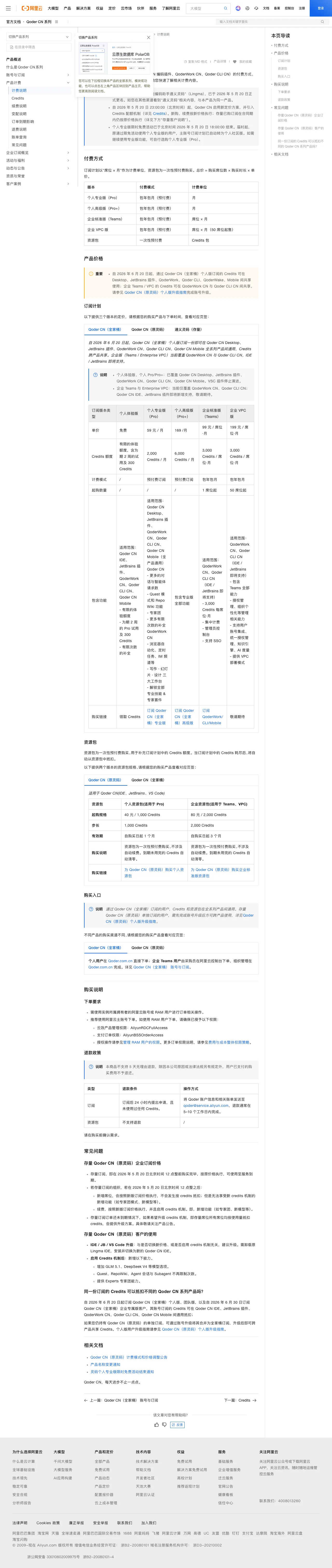
Alibaba Lingma: an IDE subscription is not unlimited Qwen API
Alibaba Lingma is primarily an IDE product for completion, chat, generation, explanation, and some agent capabilities. Alibaba Cloud users must also separate IDE entitlements, enterprise service, and DashScope/Qwen API billing.
Current reading: the product remains available or can be enabled; personal and enterprise versions, free allowances, and advanced features need current-page confirmation.
Think of Lingma as an electric toolbox installed in your editor. Qwen API is like buying separate batteries and electricity. The toolbox does not automatically increase API balance, and API balance does not automatically upgrade an IDE membership.
ByteDance MarsCode: cloud development and IDE access remain, but promotions are not contracts
MarsCode is associated with cloud development, IDE extensions, and model-assisted programming. Its entry points, campaigns, and free quotas can change quickly.
Current reading: official product entry remains; evaluate purchase and quota from the account’s current plan and campaign rules.
Pay special attention to promotional credits, trial periods, campaign models, and normal subscriptions. “Free during an event” does not guarantee the same price or allowance after the event ends.
DeepSeek: an API option, not a single Coding Plan
Several Chinese models are strong at coding but do not expose one stable, developer-facing official Coding Plan. Developers usually access them through an API platform, a third-party IDE, or a self-built agent.
Current reading: do not call API balance a Coding Plan. Evaluate token price, rate limits, concurrency, balance, and service stability separately.
An API is like a taxi meter. It can be flexible and inexpensive for light use, while large automated workloads follow actual call volume. It is excellent for automation and enterprise integration, but you must manage keys, budgets, retries, and fallback providers yourself.
Recommended Purchase Entries
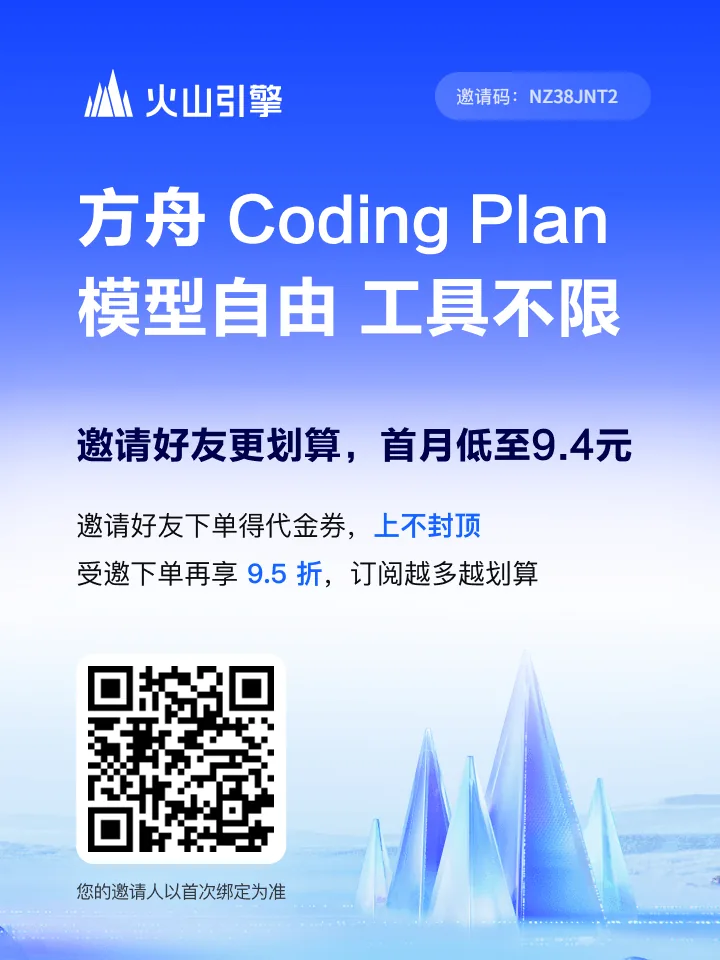
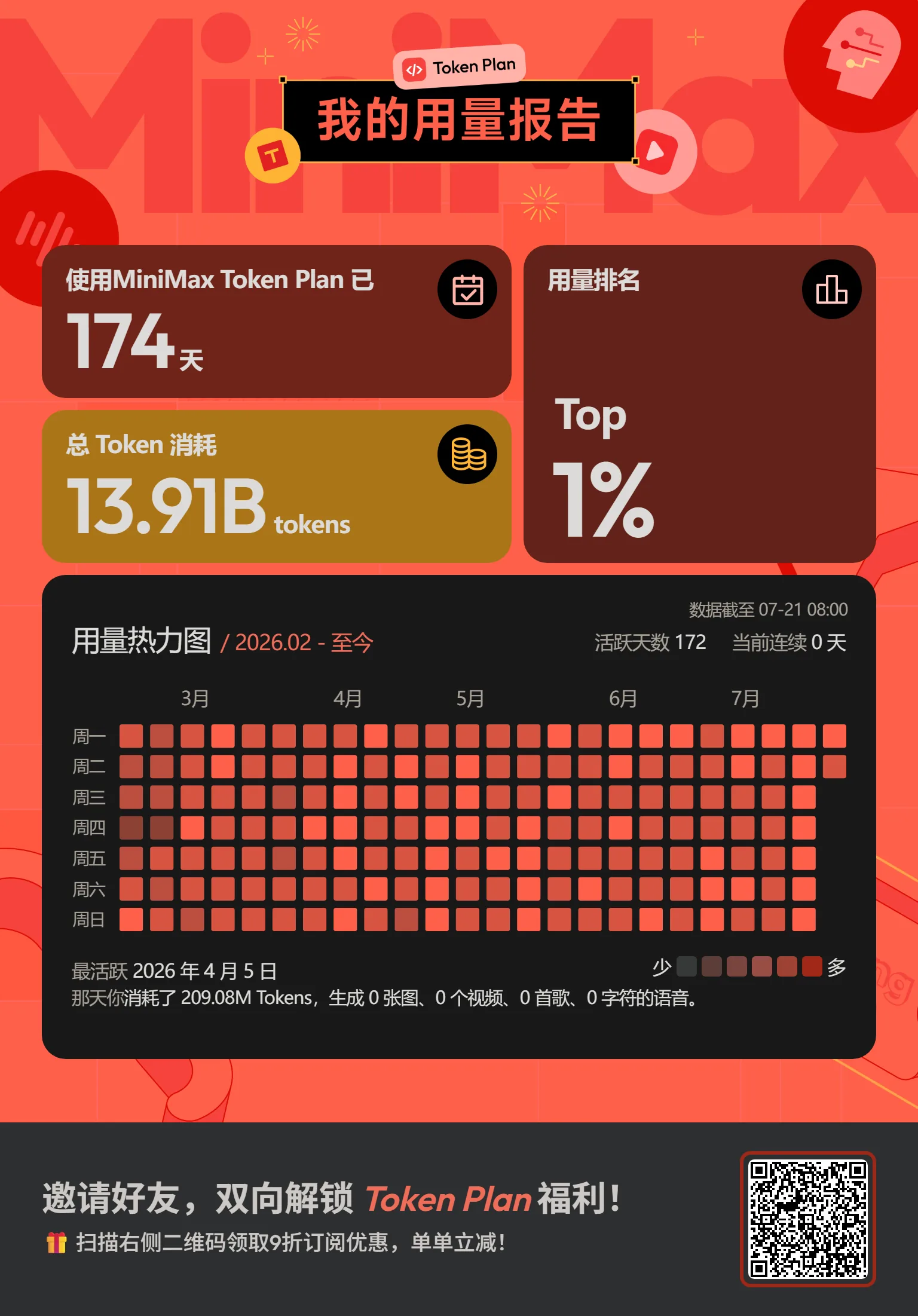
The two images below contain the recommendation QR codes for the corresponding purchase or invitation entries. Before scanning, confirm the plan name, promotion period, and account eligibility. The discount is a channel benefit and the final checkout page is authoritative.
Volcengine Ark: CodingPlan and AgentPlan
The recommendation entry currently provides 5% off, or 9.5 times the normal price. CodingPlan and AgentPlan still have purchase and qualification limits; the recommendation entry does not guarantee inventory, but it can reduce the cost when an account is eligible to buy.
MiniMax TokenPlan: currently uncapped with a 10% recommendation discount
MiniMax TokenPlan is currently purchasable without a purchase cap. The recommendation entry currently provides 10% off, or 9 times the normal price. Its coding experience is weaker than some scarce plans, so it is best treated as a value option or fallback.
Volcengine Ark CodingPlan: limited, but not completely closed
Volcengine Ark CodingPlan should not be labeled “fully unavailable.” It has purchase limits, stock or account-qualification constraints, but there can still be opportunities through official campaigns, console eligibility, or a specific time window.
Status: limited, but still potentially purchasable.
Treat it like a limited ticket release, not a permanently delisted product. Use only official Ark channels and do not buy resold qualifications.
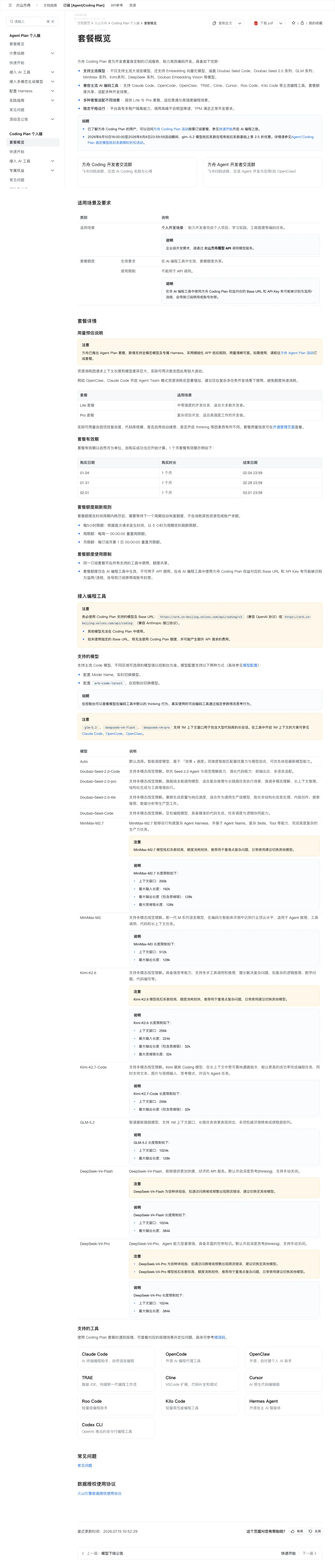
Volcengine Ark AgentPlan: limited, but eligibility can still open a path
AgentPlan is more focused on agent orchestration, tool calls, and complex tasks. It is also limited, but not every official path is permanently closed. Campaigns, invitations, account eligibility, and special enablement routes may still matter.
Status: limited and qualification-sensitive, but not correctly described as fully discontinued.
Confirm the quota unit, whether it is shared with CodingPlan, whether failed retries consume credits, and whether auto-renewal is enabled.
4. What “purchase restriction” means in the domestic market
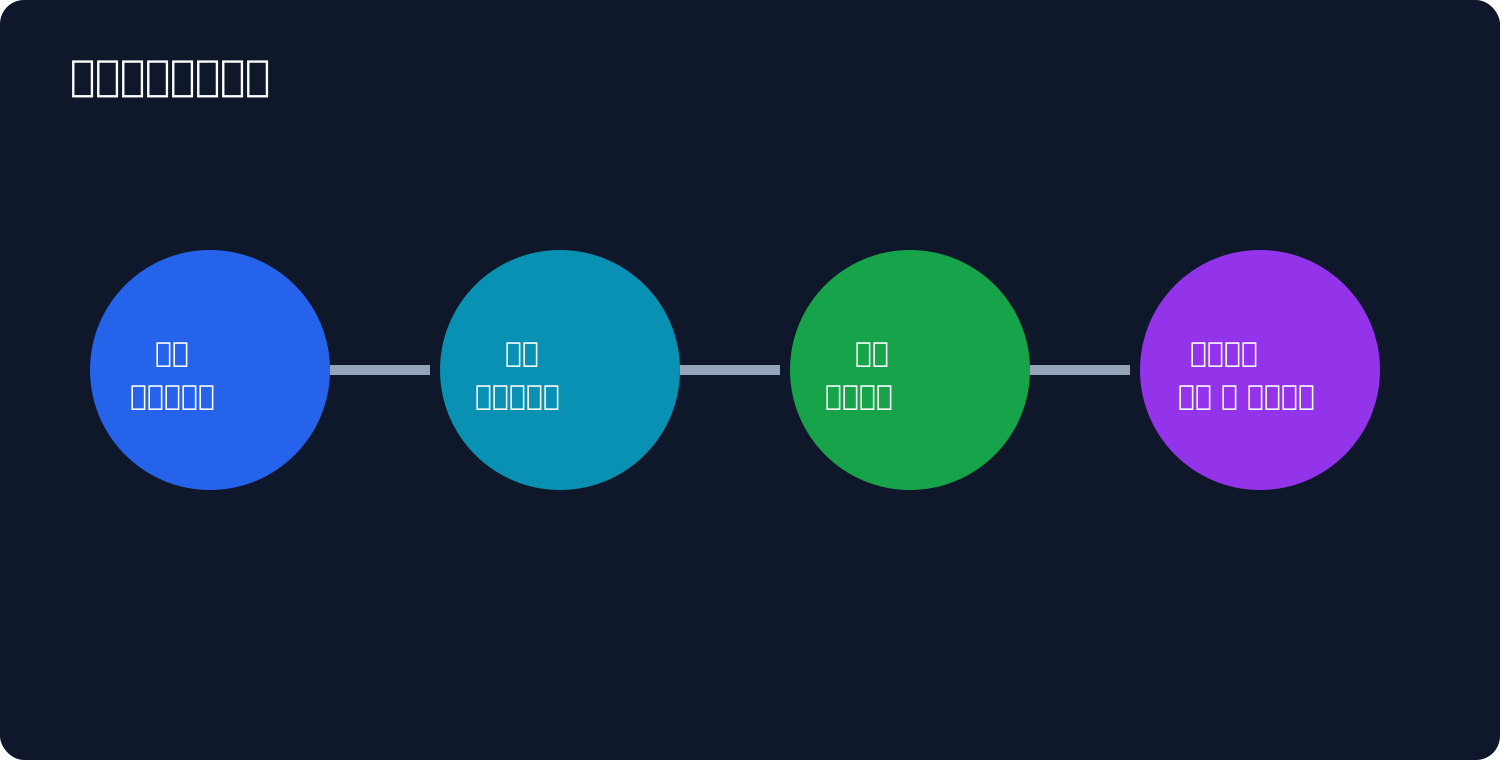
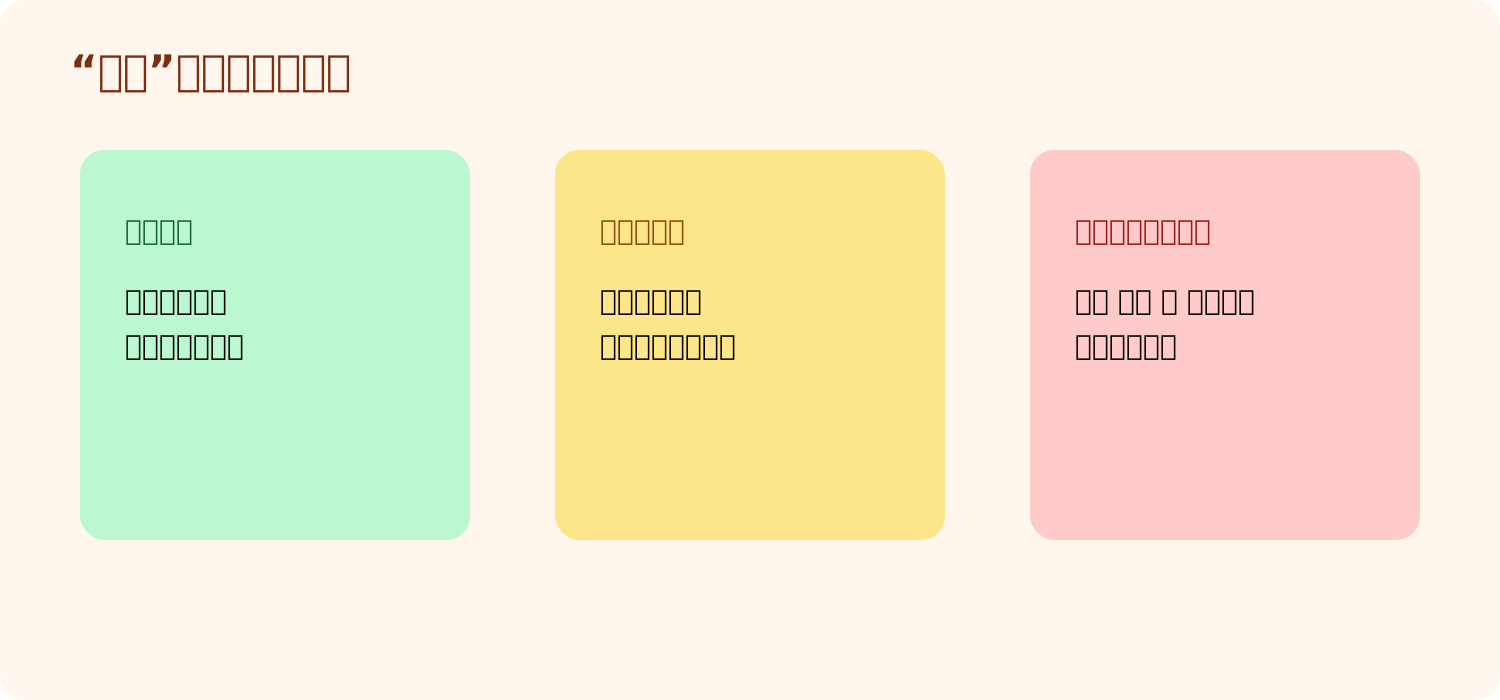
Restrictions commonly appear in six forms:
- New users cannot enable the plan; only existing or invited users can.
- The tier is purchasable, but advanced models consume extra credits.
- Individual use is available, while enterprise access requires sales or a contract.
- Free quota remains while paid tiers are being adjusted or withdrawn.
- One account can buy only one cycle and cannot stack entitlements.
- API, IDE, and agent systems bill separately and cannot offset one another.
So “limited” is not one button. It is a chain: can I log in, can I see the plan, can I pay, did the quota arrive, and can a real task finish?
5. Recommended buying order
Individual developers
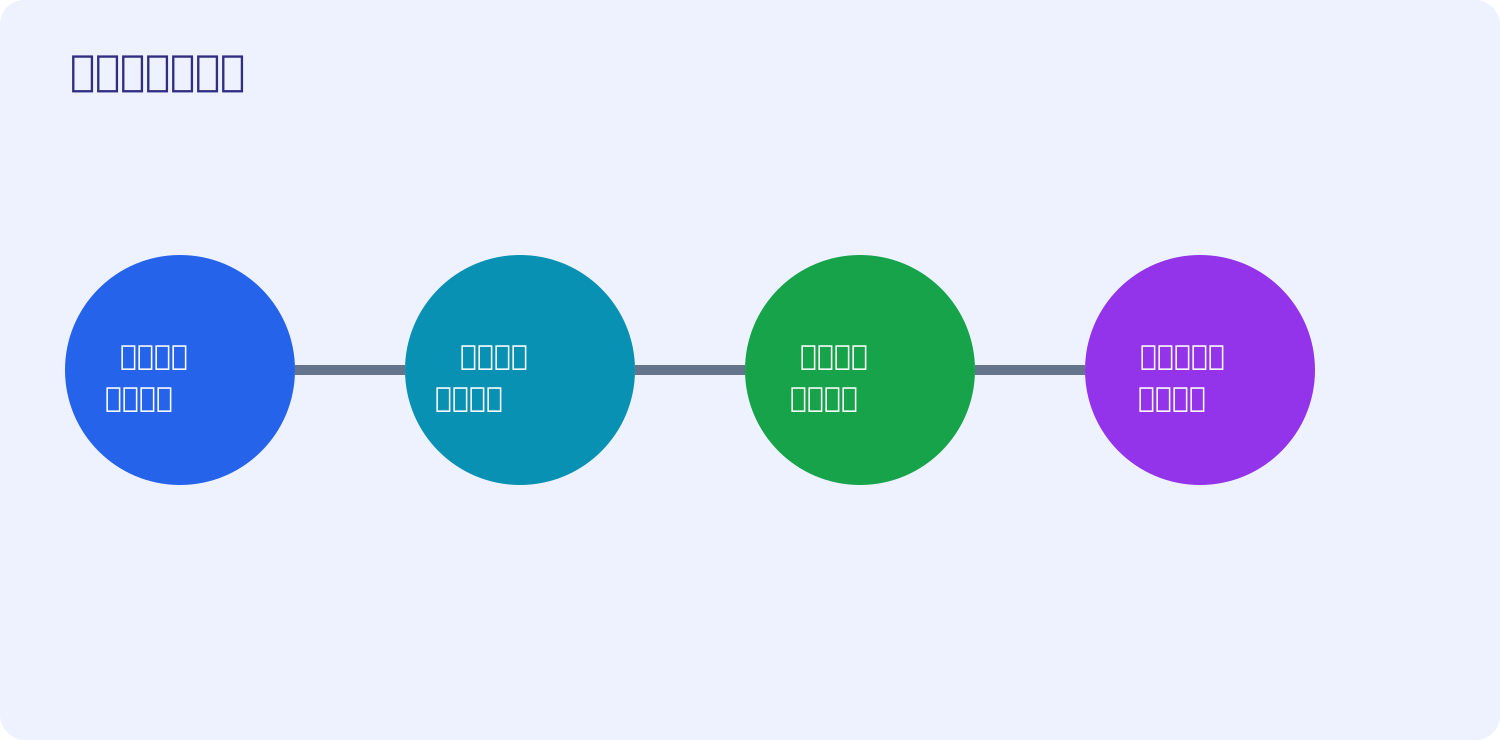
Choose based on how you work. Terminal-agent users can try the currently open and discounted Qwen AI first, then keep MiniMax TokenPlan as a buyable lower-performance fallback. GLM is a timed flash sale and Kimi’s current subscription entry is closed. Ark AgentPlan remains a limited higher-end alternative. Do not open five subscriptions at once; use one real project for a week and record quota, speed, and failure rate.
Heavy agent users
Separate fixed monthly subscriptions from an API budget. Let the subscription handle normal work; use an API or second vendor for large refactors, batch jobs, and emergencies. A fallback prevents one vendor’s quota event from stopping the entire workflow.
Teams and companies
Prioritize administration, data handling, audit, member revocation, invoices, quota ownership, auto-renewal, and offboarding. Model names matter, but governance boundaries matter more.
6. A five-minute purchase verification
- Enter through the official product page and sign in; do not pay from a group-chat screenshot or reseller link.
- Save the current plan name, price, quota unit, and reset period.
- Confirm whether premium models consume separate credits.
- After payment, run a small reversible task such as adding one test function.
- Check whether the allowance arrived and record the first task’s consumption.
7. Q&A
Can a China-based Coding Plan disappear suddenly?
Product changes can move faster than traditional software updates. Avoid committing to an annual plan immediately. Test monthly first, then consider a longer commitment after the model, quota, and editor experience remain stable.
How should I choose between GLM, Kimi, and CodeBuddy?
GLM is a daily limited flash sale, not stable procurement. Kimi’s current membership entry is closed. Qwen AI with qwen3.8 is currently open and discounted; MiniMax TokenPlan is also buyable but weaker in experience. CodeBuddy is IDE-first; Ark AgentPlan is more agent-oriented and limited.
Why use an API if Lingma or Comate already has a membership?
An IDE membership helps a human work inside an editor. An API lets a script or agent call a model automatically. One is an electric tool; the other is the battery and electricity. Different workflows need different products.
Is a cheap API always better than a Coding Plan?
No. APIs are flexible, but you must manage keys, context, retries, budgets, and tool calls. A Coding Plan is simpler; an API is more programmable.
Are promotional free credits worth using?
Yes, for testing. Do not treat a campaign as a long-term contract. Check the end date, expiration rules, auto-renewal, and standard price after the promotion.
Conclusion: control matters more than “the strongest model”
China’s Coding Plan market is becoming a complete developer-tool market. One user buys agent runs, another buys IDE entitlement, and another buys API balance. All can make a model write code, but the bill, quota, and failure response are different.
If you do one thing today, first classify the product as a Coding Plan, an IDE plan, or an API. Then validate it with one real, reversible coding task. That simple discipline prevents most mistakes caused by an old screenshot or an ambiguous “unlimited” claim.
References
- Zhipu GLM Coding Plan: https://docs.bigmodel.cn/cn/coding-plan/overview
- MiniMax Token Plan: https://platform.minimaxi.com/subscribe/token-plan
- Qwen Token Plan: https://platform.qianwenai.com/docs/token-plan/overview
- Volcengine Ark documentation: https://www.volcengine.com/docs/82379/1925114
- Kimi membership help: https://www.kimi.com/zh-cn/help/membership/membership-overview
- Tencent Cloud Coding Plan documentation: https://cloud.tencent.com/document/product/1823/130092
- Tencent CodeBuddy documentation: https://cloud.tencent.com/document/product/1749/126592
- Baidu Comate documentation: https://cloud.baidu.com/doc/COMATE/s/rlnvnio4a
- Alibaba Lingma billing: https://help.aliyun.com/zh/lingma/product-overview/billing-description
Evidence and privacy note
The screenshots in this article are captures of public vendor pages, used as dated evidence rather than promises of a price for every account. Region, tax, payment method, account type, rollout cohort, and service changes can alter the checkout result. No private account identifier, internal network detail, or machine name is included. Before buying, record only public facts: date checked, plan name, included model family, quota unit, reset period, and whether checkout actually completed.