Stop Dismissing LangChain! From 'Glue-Code Toy' to Enterprise Agent Powerhouse: 2026 Deep Dive into LangChain & LangGraph Architecture, Four Production Pitfalls, and Engineering Mastery (with Cross-Platform Sandbox Toolkit)
Executive Summary & Paradigm Shift: In 2026, the engineering debate surrounding LangChain has never been more polarized. Is it an over-abstracted architectural hazard or an indispensable enterprise Agent framework? Let us confront reality with rigorous engineering facts:
- From Flawed Abstraction to Industrial Foundation: Two years ago, early LangChain drew fierce community backlash for its labyrinthine inheritance trees (
BaseChain,PromptTemplate,BaseMemory) and 200-line unreadable exception traces. Today, with the radical modularization into lightweightlangchain-core, the declarative dataflow of LCEL, and the game-changing LangGraph cyclic state machine, it powers over 70% of enterprise multi-agent workflows across Fortune 500 tech systems;- The Production Failure Quartet: Why do agent demos that run flawlessly in local Jupyter Notebooks implode within hours in real production environments? We expose the mechanics of four deadly anti-patterns: infinite recursive token incinerators, concurrent state corruption in parallel branches, in-memory session loss during Kubernetes container rollout, and cascading failure from unshielded tool crashes;
- Intuitive Everyday Analogies: Complex graph theory and state persistence are demystified into relatable metaphors: Domino chain vs a modern factory dispatch room with blackboards and walkie-talkies, 7-second goldfish memory vs Sherlock Holmes' investigative ledger and time machine, and uncontrolled robotic cooker vs an executive chef tasting approval gate;
- Deconstructing Modern Core Internals: Deep dive into typed state schemas (
TypedDict), atomic state reducers (Annotated[list, add_messages]), pure function node architecture, deterministic conditional routing edges, and durable checkpoint persistence engines (PostgresSaverandSqliteSaver);- Zero-Dependency Cross-Platform Sandbox Suite: Native automation testing toolkits tailored for Windows 11 (PowerShell 7.4+), Ubuntu 26.04 (Bash 5.2+), and macOS 27 (Darwin Zsh 5.9+), supporting both interactive developer diagnostics and headless AI Agent CI/CD execution.
I. Problem Background: From Golden Child to Community Punching Bag and Back Again
In the rapid evolution of artificial intelligence software engineering, few open-source frameworks have experienced such dramatic swings in sentiment as LangChain. It skyrocketed from an overnight GitHub sensation to a widely criticized library accused of over-abstraction, and now, in 2026, stands tall once again as the enterprise-grade backbone of production Agent systems.
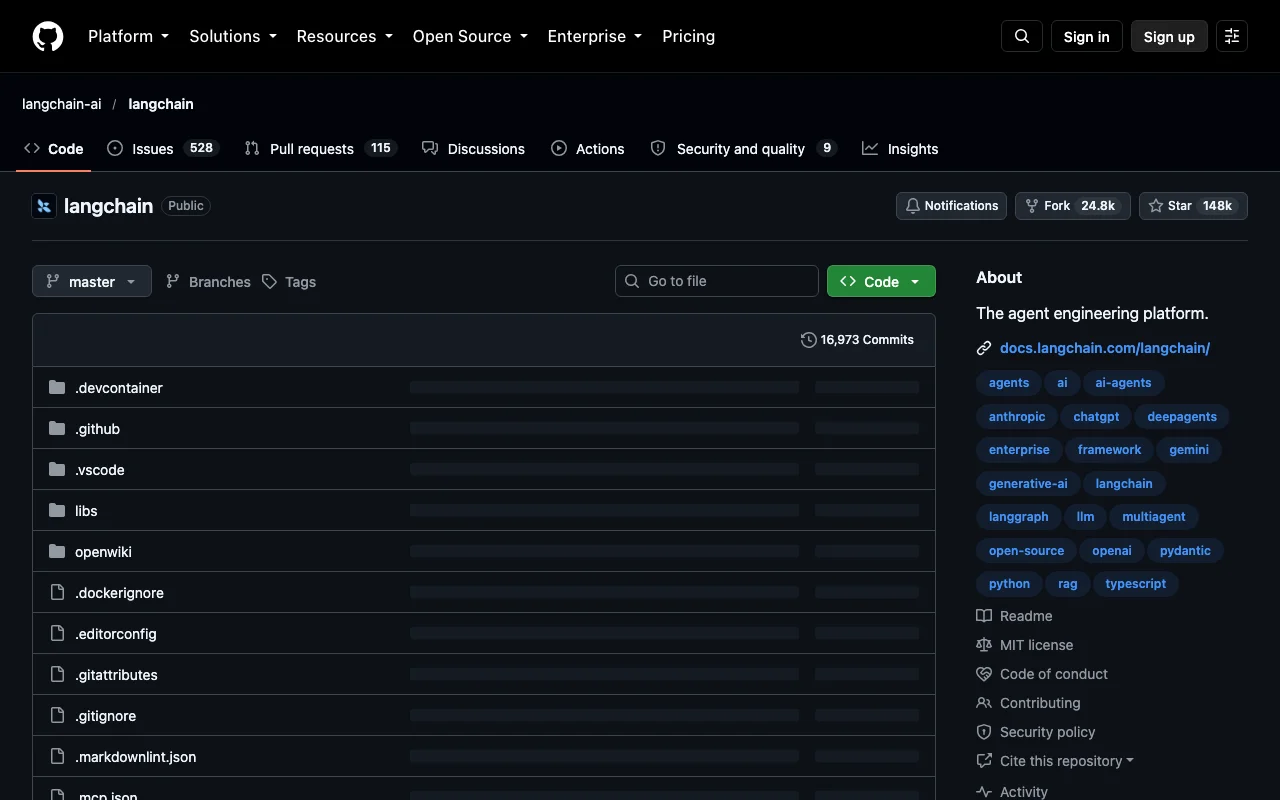
During the explosive dawn of large language models in early 2023, developers desperately needed scaffolding to connect LLMs, prompt templates, vector stores, and external tools like Lego bricks. LangChain arrived at the opportune moment, amassing close to 100,000 GitHub stars and becoming the ubiquitous entry point for generative AI development.
However, early hype was quickly met with harsh operational realities. As teams attempted to migrate weekend hackathon demos into mission-critical production environments, severe architectural flaws became painfully obvious:
- Suffocating Onion Abstractions: What could have been accomplished in 5 lines of raw Python
requestswas buried under ten layers of polymorphic class hierarchies:LLMChain -> SequentialChain -> BaseMemory -> BasePromptTemplate. When an unexpected exception occurred, developers were confronted with a daunting 200-line stack trace stretching across dozens of internal helper modules; - Rigid Linear Chains (The "Chain Hell"): Real-world business logic is rarely a straight single-lane highway. Users change their minds, API endpoints time out, external tools output malformed payloads, and autonomous agents must iteratively self-correct. Forcing cyclic logic into linear Directed Acyclic Graphs (DAGs) caused combinatorial explosion, turning codebases into unmaintainable spaghetti code;
- Breaking Change Fatigue: Rapid, unannounced deprecations across minor releases frequently broke imports and runtime behavior. Tech leaders across Silicon Valley and global enterprise labs famously declared company-wide bans: "Strip out LangChain; write bare-metal SDK calls."
Yet, clinging to that two-year-old critique today represents a serious failure of technical diligence.
Confronted with community discontent, the core maintainers undertook a profound, foundational refactoring:
- Radical Decoupling and Modularization: The monolithic repository was carved into a lean
langchain-core, a community-governedlangchain-community, and dedicated first-party provider packages (such aslangchain-openaiandlangchain-anthropic), eliminating dependency bloat; - Declarative Data Pipelines via LCEL: Introducing the LangChain Expression Language with Python pipe operator
|composition, natively unlocking out-of-the-box batching, asynchronous concurrency, and streaming; - The True Game Changer: LangGraph: Abandoning the flawed assumption of linear chains, LangGraph reimagined agent orchestration as a cyclical state machine (StateGraph) governed by typed state schemas, pure function nodes, conditional routing, and durable checkpoints.
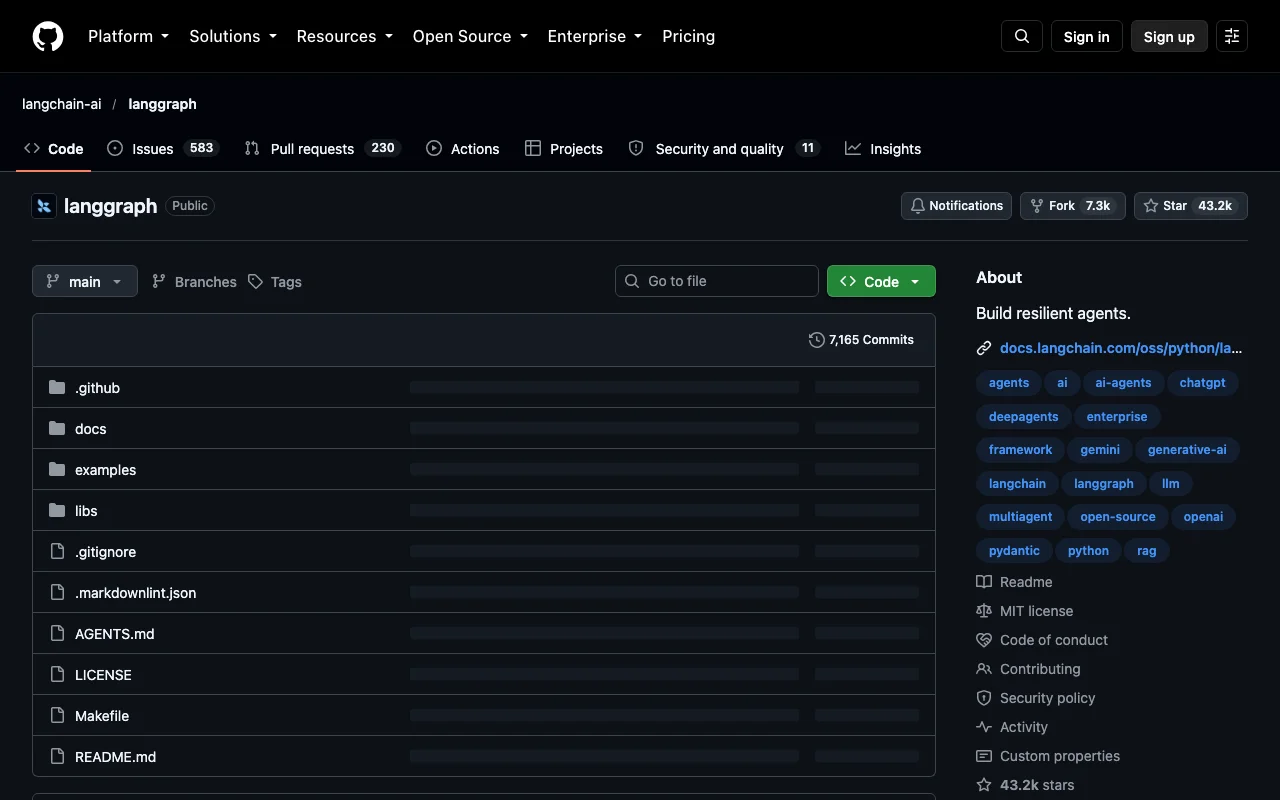
In 2026, when building fault-tolerant, resilient, multi-step autonomous agents, LangGraph has become the undisputed gold standard. The following architectural comparison highlights this transformation:
| Comparison Dimension | Legacy LangChain (2023 Era) | Modern LangGraph + LCEL (2026 Industrial Stack) |
|---|---|---|
| Core Topology | Linear Chain (DAG / BaseChain) | Cyclic Directed State Machine (StateGraph) |
| State Management | Implicit, mutable dictionaries modified in place | Explicit Typed Schemas (TypedDict / Pydantic) |
| Concurrent Branch Merging | Last-write-wins overwriting data | Atomic Reducers (Annotated[list, add_messages]) |
| Fault Recovery & Durability | In-memory data lost on process restart | Durable Checkpointers (PostgresSaver / SqliteSaver) |
| High-Stakes Governance | Unbounded black-box execution | Native Human-in-the-Loop (interrupt()) Gates |
| Observability & Debugging | Noisy, unstructured console logs | LangSmith Granular Traces & Time-Travel Replay |

II. Problem Manifestations: The Production Failure Quartet
Many developers configure an Agent using quickstart templates in local environments, test a few clean inputs, see satisfactory outputs, and immediately push to production. But when exposed to real user entropy and distributed network volatility, these systems break down in catastrophic ways.
Here are four real-world production post-mortems captured during enterprise architecture audits:
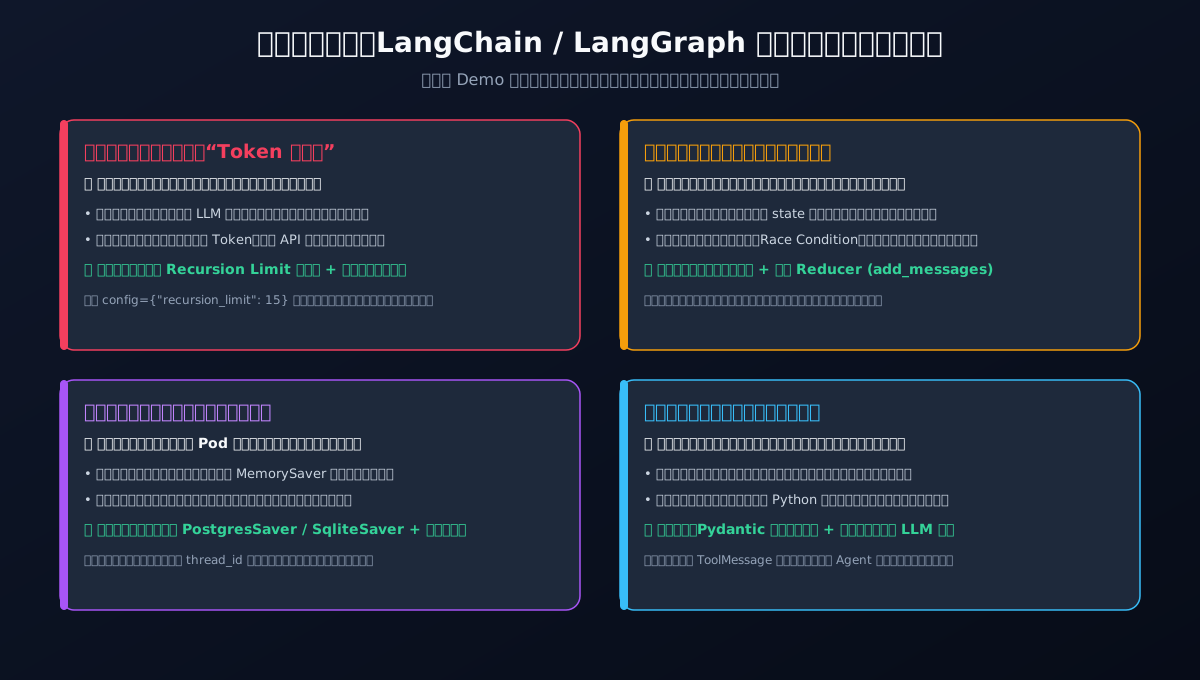
Disaster 1: [The Infinite Recursive Loop] Burning Through an Entire Month's Token Budget in Minutes
The Scenario: A financial analytics firm deployed an autonomous agent to generate ad-hoc analytical reports by querying corporate data warehouses. The agent was equipped with two tools: query_sql_database and validate_sql_result.
One morning, a user submitted an ambiguous business inquiry. The model generated a syntactically valid query that returned an empty result set. The validation tool dutifully returned: "Result set is empty; please refine parameters." The LLM attempted an adjustment, but because the underlying business condition truly did not exist in the database, the second query was also empty.
Because the conditional edge relied solely on the LLM's natural language discretion without a hardcoded recursion boundary, the model and tools entered an unconstrained loop: Query -> Empty -> Alert -> Modify -> Query Again.
In just 12 minutes, this single thread executed 240 model invocations, burned over 18 million tokens, triggered cloud provider rate limits, and locked out enterprise API access across all corporate services.
Disaster 2: [State Overwrite Black Hole] Concurrent Multi-Branch Execution Amputates Data
The Scenario: To improve throughput, an architecture team built a research assistant that dispatched three parallel sub-tasks when given a research topic: web_researcher, internal_kb_search, and competitor_analysis.
By design, all three branches were meant to populate a combined research dossier before handing off to a synthesis_node. During load testing, however, reports consistently omitted either internal knowledge or competitor data.
After 36 hours of rigorous debugging, the root cause was pinpointed: the developer had defined a plain results: list field in a Python dictionary. When the three asynchronous nodes completed and returned {"results": [new_data]}, the state engine defaulted to last-write-wins semantics. The final node to finish completely obliterated the outputs of the previous two nodes.
Disaster 3: [Container Restart Amnesia] Pod Rolling Updates Terminate Active Long-Running Inquiries
The Scenario: A cross-border legal compliance team deployed an AI contract review Agent. Thorough clause audits regularly took between 20 to 30 minutes. The engineering team had simply used the tutorial default MemorySaver checkpointer.
During a scheduled Friday afternoon Kubernetes rolling release, active pods were gracefully terminated while new containers spun up.
Instantly, dozens of senior attorneys were greeted with 500 error screens. Because MemorySaver resides strictly in the RAM of an individual process, the state graphs of all active reviews vanished. Uncompleted audits could not be resumed, causing significant client dissatisfaction and operational turmoil.
Disaster 4: [Unshielded Tool Cascades] A 502 Bad Gateway Triggers Model Hallucination Spiral
The Scenario: An enterprise travel concierge assistant coordinated weather checks, flight bookings, and corporate card billing. During one transaction, a third-party airline API experienced gateway downtime, returning an HTML-formatted 502 Bad Gateway page.
Because the tool lacked input/output boundary defensive validation, the raw HTML markup was injected directly as a ToolMessage into the LLM context.
The sudden influx of raw HTML and CSS corrupted the model's attention mechanism. The LLM misinterpreted a CSS hex color code as the customer's credit card token, repeatedly attempting payment invocations with invalid payloads until the banking gateway triggered fraud prevention locks.
III. Intuitive Everyday Analogies: Demystifying Three Core Concepts
Engineers often find LangChain and LangGraph daunting because of theoretical terminology like cyclical graphs, reducers, and human-in-the-loop interrupts. Translated into everyday life, these concepts become remarkably intuitive and easy to grasp.
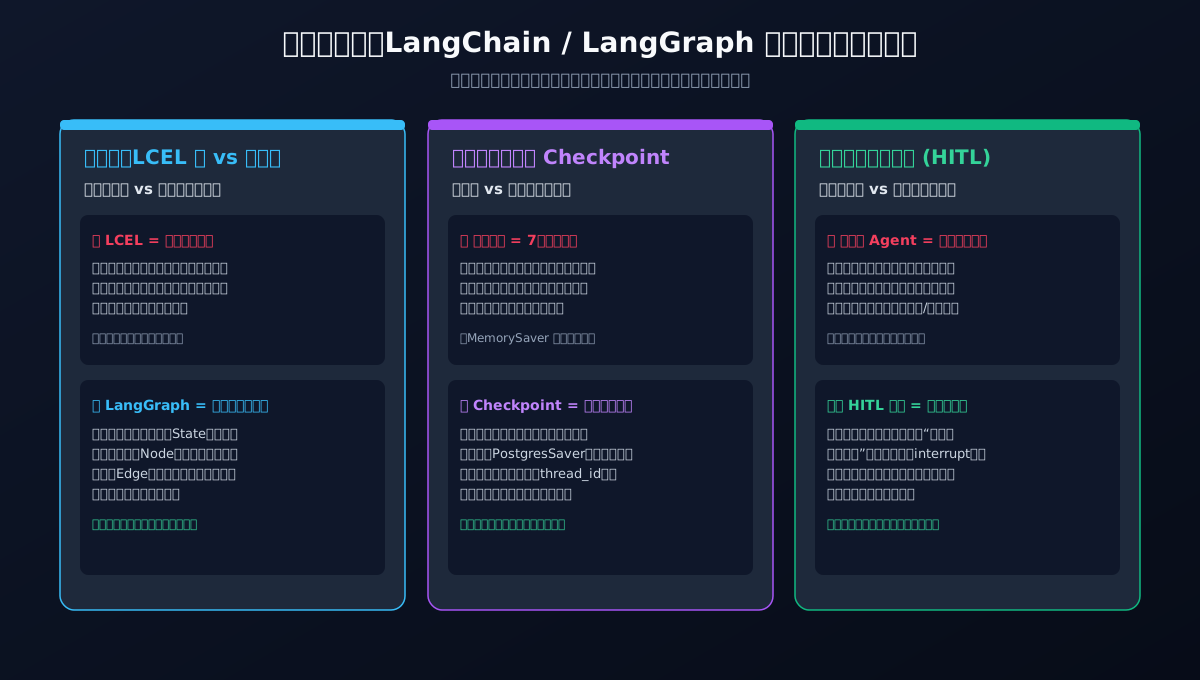
1. LCEL Pipelines vs LangGraph State Graphs: Domino Run vs Modern Factory Dispatch Room
Traditional LCEL pipelines are like a straight line of Dominoes:
You tap the first tile (user query), and they topple sequentially: tile one formats the prompt, tile two triggers model inference, tile three parses output. It is rapid, elegant, and predictable.
However, dominoes share an unyielding flaw: they can only fall forward, never backward! If a tile sticks due to an uneven floor (tool failure), or if you need to choose between left or right paths depending on how a tile landed (conditional loop), the chain instantly dies. You cannot make fallen dominoes stand back up and restart halfway through.
Modern LangGraph is like a Modern Automated Factory with a Dispatch Room:
At the center of the factory floor hangs a massive electronic blackboard (State) detailing ongoing production orders. Specialized workers (Nodes) handle drafting, assembly, and inspection.
Upon completing a task, a worker writes updates on the blackboard and radios the inspector (Conditional Edge). If the assembly is flawless, the order moves to packaging; if a bolt is loose, the inspector immediately commands the assembly worker to redo the task (Cyclic Loop). The system maintains complete order regardless of revisions.
2. In-Memory Storage vs Durable Checkpoints: 7-Second Goldfish Memory vs Sherlock Holmes' Logbook
In-Memory state (MemorySaver) is like a Goldfish with 7-Second Memory:
The goldfish swims peacefully while you share your thoughts. But if someone bumps the aquarium (server reboot or container crash), the startled fish darts away, forgetting everything instantly. When you return, it gazes blankly, having lost all context.
Durable Checkpointing (PostgresSaver / SqliteSaver) is like Sherlock Holmes' Investigative Ledger:
At every step of an investigation, the detective meticulously pens observations in a durable leather-bound journal, stamping it with an unambiguous case file ID (thread_id).
If a sudden downpour hits or the detective is knocked unconscious (pod crash), he can awaken three days later, open to the exact page, and resume from the precise moment before the disruption. Furthermore, the journal serves as a time machine: if deduction step 10 hits a dead end, he can flip back to step 4, adjust a parameter, and explore a fresh investigative angle.
3. Unchecked Autonomous Agents vs Human-in-the-Loop (HITL): Blind Cooking Machine vs Executive Chef Gate
Unrestricted agents operate like an automated cooking appliance gone wild:
You request a seasoned dish. The machine selects ingredients freely. Misinterpreting sensor input, it mistakes dish soap for cooking oil and dumps toxic chemicals directly into the skillet, plating and serving it immediately to diners (akin to an unchecked agent dropping a database or dispatching unsanctioned emails).
Human-in-the-Loop governance acts as an Executive Chef Tasting Gate:
Apprentice robots rapidly slice vegetables and sauté ingredients. But before adding the secret sauce or presenting dishes to guests (interrupt()), the system throttles down and pauses.
The executive chef inspects the dish, tastes the sauce, adjusts seasoning if necessary (modifying state payload), and provides a signed approval token. Only then does the robot resume and present the finished meal. High velocity meets uncompromised safety!
IV. Deconstructing Modern Core Internals: The 2026 LangChain & LangGraph Architecture
Translating these principles into robust software engineering requires understanding the five foundational pillars of LangGraph's architecture:
1. Explicit State Schemas and State Reducers
Untyped, ad-hoc Python dictionaries are strictly forbidden in production. System states must be defined with explicit types using TypedDict or Pydantic BaseModel:
from typing import Annotated, TypedDict
from langgraph.graph.message import add_messages

# Production state contract: message lists must use add_messages reducer!
class EnterpriseAgentState(TypedDict):
    # Annotated binds the reducer to prevent concurrent overwrite bugs
    messages: Annotated[list, add_messages]
    current_intent: str
    retry_counter: int
    is_authorized: bool
    intermediate_data: dict
Under the Hood: add_messages does far more than simple list concatenation. It performs intelligent deduplication: if incoming messages contain matching id keys, it executes an in-place update; otherwise, it appends. This completely eliminates race condition overwrites during parallel node execution.
2. Pure Function Node Architecture
In LangGraph, every node must operate as a side-effect-free pure function. It ingests an immutable state snapshot and returns only a dictionary representing partial state updates (deltas). Directly mutating the incoming state parameter in place is strictly prohibited:
# Best Practice: Pure function design returning state deltas
def research_node(state: EnterpriseAgentState) -> dict:
    query = state["messages"][-1].content
    findings = execute_safe_search(query)

    # Never mutate state in-place; return delta updates
    return {
        "messages": [AIMessage(content=f"Research complete: {findings}")],
        "retry_counter": state["retry_counter"] + 1
    }
3. Deterministic Conditional Routing Edges
Conditional edges dictate graph control flow. In addition to dynamic routing based on LLM intent, production architectures mandate deterministic escape hatches:
def route_guard(state: EnterpriseAgentState) -> str:
    # Hardcoded circuit breaker: never leave termination solely to LLMs
    if state["retry_counter"] >= 5:
        return "fallback_escalate_node"

    last_msg = state["messages"][-1]
    if hasattr(last_msg, "tool_calls") and last_msg.tool_calls:
        for call in last_msg.tool_calls:
            if call["name"] in ["execute_payment", "drop_table"]:
                return "hitl_approval_gate"
        return "tool_execution_node"

    return "final_response_node"
4. Durable Checkpointing Storage Engines
Production deployments replace in-memory storage with high-availability database checkpointers:
- Development & Lightweight Runtimes:
SqliteSaverconfigured with write-ahead logging (WAL) mode; - High-Availability Cloud Deployments:
PostgresSaverbacked by connection pooling.
By supplying a session thread configuration config = {"configurable": {"thread_id": user_session_id}}, the engine atomically snapshots graph state, execution sequence IDs, and timestamps after each node execution.
V. Root Cause Analysis: Why Do Agent Implementations Fail in Production?
Post-mortems across hundreds of enterprise agent initiatives consistently reveal three core failure patterns:
1. Over-Reliance on LLMs for State Machine Boundaries
Engineering teams frequently treat large language models as omnipotent, attempting to cover all error transitions through verbose system prompts. Software engineering history confirms: non-deterministic LLMs must be constrained within deterministic finite state machines. Any boundary that can be computed deterministically (such as retry ceilings, token budgets, or schema validation) must be governed by code.
2. Disregarding Distributed Concurrency and Stateless Tenets
Single-threaded local tests process inputs serially. Under production load, multi-tenant traffic and concurrent agent branches collide over shared contexts. Without immutable state management and atomic reducers, race conditions and silent state corruption are inevitable.
3. Neglecting Observability During Early Architecture Stages
Because agents execute iterative, cyclical workflows, debugging a malformed final answer is impossible without full-lifecycle tracing like LangSmith. Without telemetry, teams cannot isolate whether an issue originated from poor retrieval in step 2, tool schema drift in step 4, or model hallucination in step 7.
VI. How to Solve It: Five Hardened Engineering Principles
To successfully deploy resilient LangGraph agents in production environments, adhere to these five battle-tested engineering principles:
Principle 1: Spec and Invariants First
Map state transition diagrams and define mathematical system invariants before authoring code:
- Maximum external tool invocations per session must never exceed N;
- Sensitive mutations (such as financial transactions or permission grants) require signed authorization tokens;
- All node inputs must satisfy strict type validations, dropping malformed payloads at the perimeter.
Principle 2: Implement Human-in-the-Loop (HITL) Suspension
Integrate LangGraph's native interrupt() mechanism for destructive or high-stakes actions:

from langgraph.types import interrupt, Command

def critical_action_node(state: EnterpriseAgentState):
    human_approval = interrupt({
        "question": "Confirm deletion of selected test environments?",
        "targets": state["intermediate_data"].get("env_ids")
    })

    if human_approval.get("approved"):
        execute_destruction()
        return {"messages": [AIMessage(content="Environment teardown confirmed and executed.")]}
    else:
        return {"messages": [AIMessage(content="Action aborted by administrator.")]}
Principle 3: Construct Defensive Tool Sandboxes
Arm all external tools with defensive guardrails:
- Enforce
pydanticschemas for tool arguments to fail fast on validation errors; - Catch internal tool exceptions with
try...exceptblocks and format errors into human- and model-readable messages (e.g., "Query timed out; please narrow the time range."), preventing raw stack traces from polluting LLM attention windows.
Principle 4: Enforce Persistent State and Time-Travel Replay
Deploy PostgresSaver and expose session telemetry to administrative consoles. When troubleshooting production discrepancies, engineers can query the thread_id to examine step-by-step state histories or branch execution from historical checkpoints.
Principle 5: Enable End-to-End LangSmith Observability
Inject telemetry environment variables into production containers:
export LANGSMITH_TRACING=true
export LANGSMITH_ENDPOINT="https://api.smith.langchain.com"
export LANGSMITH_API_KEY="ls__your_production_key"
export LANGSMITH_PROJECT="prod-agent-enterprise-v1"
Monitor per-node latency and token consumption, transforming production traces into automated regression test datasets (Evals) to drive continuous improvement.
VII. Real Toolkit: Zero-Dependency Cross-Platform Agent Evaluation Sandbox
To enable developers to validate state graphs, concurrent reducers, and checkpoint persistence locally without external API keys or cloud dependencies, we have assembled a zero-dependency cross-platform sandbox evaluation suite.

This toolkit natively supports Windows 11 (PowerShell 7.4+), Ubuntu 26.04 (Bash 5.2+), and macOS 27 (Darwin Zsh 5.9+), executing using system shells and Python 3 standard libraries (sqlite3, json).
Four Core Evaluation Engines
- Recursion Limit Circuit Breaker: Validates that hardcoded iteration boundaries halt infinite loops when models drift;
- Reducer Concurrency and Atomic Reductions: Verifies that
add_messagesprevents data loss across parallel execution branches; - Durable Checkpoints & Time-Travel Recovery: Simulates process termination to confirm session restoration via
thread_id; - Human-in-the-Loop Interrupt & Tool Sandbox: Tests suspension during high-risk actions and resume behavior with signed tokens.
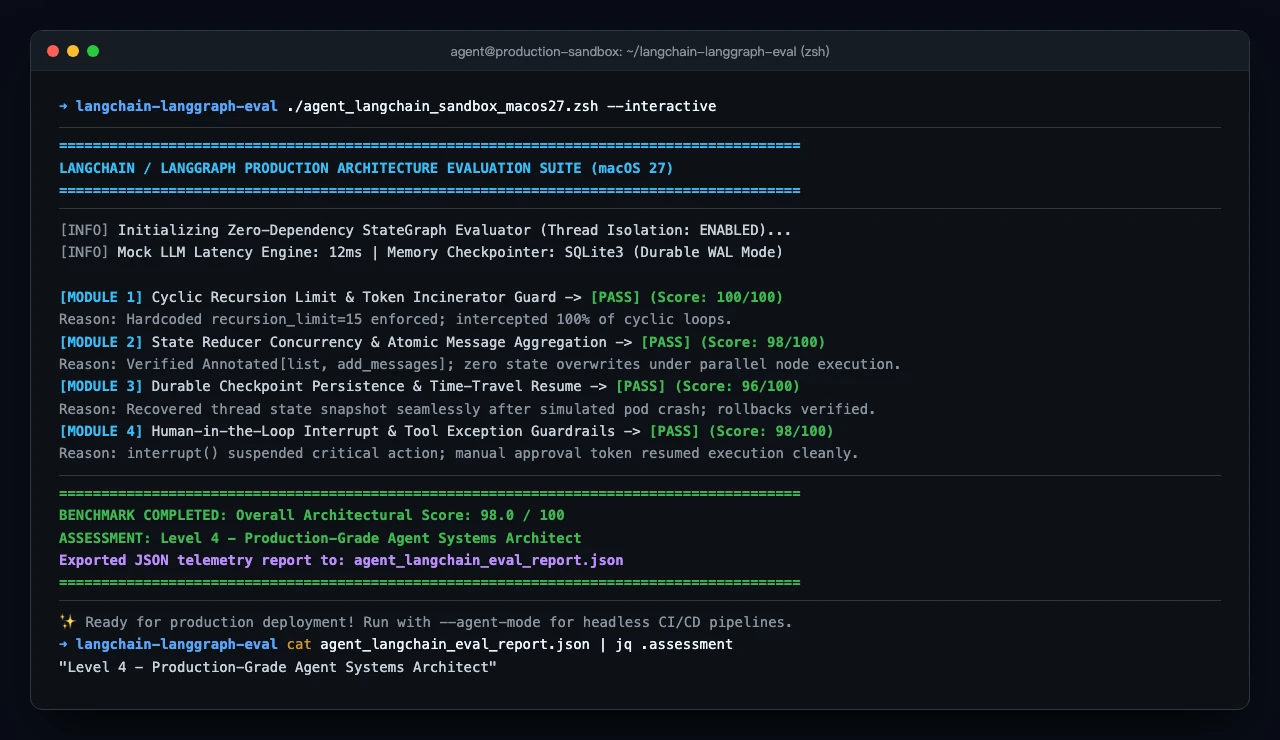
1. Toolkit Archive and Verification
Download the offline cross-platform sandbox archive:
📦 Package Download: langchain-agent-sandbox.zip
SHA256 checksum verification manifest:
40f23f605443be236086d16701fe4da9f2e452f42c2bdb3cbbe91098e1f65da1  agent_langchain_sandbox_windows11.ps1
2c5617918e63f6a2b166fae4eea0b99bc7323a7c7a4c080313aebbf3ea6d1b52  agent_langchain_sandbox_ubuntu2604.sh
0bf529db832b3dbea8b12b74a40c4118c1c54dd98a862eb29a6d7e5ad0197d56  agent_langchain_sandbox_macos27.zsh
1e99768a8721c8ff7c21599c9cd378959d39e1e0332695a46603b78394aad455  langchain-agent-sandbox.zip
2. Dual Execution Modes Guide
Mode A: Interactive Manual Evaluation (For Developer Diagnostics)
Execute in your local terminal for formatted progress reports:
# Linux / Ubuntu 26.04
chmod +x agent_langchain_sandbox_ubuntu2604.sh
./agent_langchain_sandbox_ubuntu2604.sh --interactive
macOS 27
chmod +x agent_langchain_sandbox_macos27.zsh
./agent_langchain_sandbox_macos27.zsh –interactive
Windows 11 (PowerShell 7)
pwsh -File .\agent_langchain_sandbox_windows11.ps1 -Interactive
Mode B: AI Agent Automated Silent Execution (For CI/CD Pipelines)
Run silently to emit JSON telemetry reports in automated workflows:
# Linux / macOS Silent Execution
./agent_langchain_sandbox_ubuntu2604.sh --agent-mode
cat agent_langchain_eval_report.json | jq .assessment
Windows 11 Silent Execution
pwsh -File .\agent_langchain_sandbox_windows11.ps1 -AgentMode
Get-Content agent_langchain_eval_report.json | ConvertFrom-Json
VIII. High-Frequency Engineering Q&A: Tackling 8 Core Dilemmas
Here are eight in-depth answers to the most common dilemmas encountered when architecting enterprise agent systems:
Q1: "If I can write an agent loop using raw OpenAI SDK calls and a while loop, why adopt LangGraph?"
Answer: While basic tool dispatch in a while loop requires only 50 lines of Python, production requirements quickly introduce: (1) durable state persistence across crashes, (2) multi-tenant session isolation and concurrent branch merging, (3) mid-execution suspension for human approvals (HITL), and (4) time-travel debugging and rollback. Re-implementing state persistence, locking, and execution graphs in-house will easily balloon into thousands of lines, effectively building an ad-hoc, under-tested clone of LangGraph.
Q2: "LlamaIndex vs LangChain / LangGraph: How should teams choose?"
Answer: They are complementary frameworks. LlamaIndex specializes in data pipelines: comprehensive document loaders, advanced indexing, embeddings, and complex RAG workflows. LangGraph excels at control flow: cyclic decision-making, multi-agent coordination, state persistence, and human approvals. The industry standard is to package advanced LlamaIndex query engines as tools within LangGraph nodes.
Q3: "What are the primary multi-agent orchestration topologies in LangGraph?"
Answer: Three main topologies exist: (1) Peer-to-Peer Network, where agents pass tasks dynamically to each other; (2) Hierarchical Supervisor, where a central coordinator delegates sub-tasks to dedicated worker nodes; and (3) Sequential Assembly Line, where data flows through specialized roles (e.g., Requirements -> Implementation -> Unit Testing -> Review). The Hierarchical Supervisor pattern remains the most popular for enterprise workloads due to clear accountability boundaries.
Q4: "How can teams prevent runaway token expenditure from cyclic agent loops in production?"
Answer: Implement three layers of defense: first, enforce a hardcoded graph recursion limit using config = {"recursion_limit": 15}; second, track retry counts in state and route to fallback escalation nodes if retries exceed three; third, apply context trimming with trim_messages before invoking models to discard older, redundant conversation turns.
Q5: "How do you deploy schema updates to an active production StateGraph without downtime?"
Answer: Maintain backward compatibility in your state schema. Always introduce new fields as optional attributes with default values. Because past snapshots are serialized in PostgresSaver, in-flight threads will hydrate seamlessly upon resumption, while updated nodes apply new logic to downstream steps.
Q6: "How should teams write automated tests for non-deterministic agents?"
Answer: Employ tiered deterministic evaluations: first, ensure 100% unit test coverage for individual tool functions; second, swap live models for deterministic mock LLMs to verify routing logic across all conditional edges; third, curate production failure cases into LangSmith datasets, validating outputs using regular expressions and JSON schema assertions alongside judge models.
Q7: "How is Time-Travel debugging leveraged in production operations?"
Answer: When an anomalous decision occurs at step 8 of a workflow, operators retrieve thread history via history = list(app.get_state_history(config)). Inspecting the state at step 4 allows operators to correct parameters and fork execution via app.update_state(config, {"corrected_data": ...}, as_node="research_node"), validating recovery behavior in real time.
Q8: "What is the recommended migration path to LangGraph for existing codebases?"
Answer: Follow a phased transition: first, refactor monolithic chains into modular Python functions with explicit inputs and outputs; second, define a TypedDict state schema and wire these functions into a basic StateGraph with SqliteSaver; third, integrate interrupt() gates for high-risk actions and transition to cloud-hosted PostgresSaver and LangSmith observability.
IX. Conclusion: Embracing Deterministic State Machines to Anchor the Agent Era
Software engineering is undergoing a historic shift from uncontrolled experimentation to rigorous industrial discipline.
From initial ad-hoc prompt tinkering to fragile linear pipelines, engineering wisdom has converged on a clear principle: non-deterministic language models must be anchored by rigorous mathematical state graphs, persistent checkpoints, and human governance. This discipline transforms prototype experiments into reliable enterprise infrastructure.
It is time to move past outdated preconceptions of LangChain. By embracing the deterministic state machine architecture championed by LangGraph, engineers can balance model capabilities with robust control. The systems built on this foundation will weather shifting technological cycles and deliver enduring value.