41 Free Online Logic Puzzles: A Quick Guide to the puzzle-*.com Series
A quick question: the last time you played Sudoku, was it in a newspaper, or in an app with more pop-up ads than puzzles?
If you enjoy games that rely on reasoning rather than luck, and you don’t want to install a pile of apps, this series may earn its own folder in your bookmarks. It is called puzzle-*.com: a family of sites with one domain per puzzle, from Sudoku, Nonograms and Minesweeper to Slitherlink, Nurikabe and Star Battle—41 in total, all free, all running in the browser.
I found it by accident while looking for a Pipes game, then clicked through the banners at the bottom of the page one by one and realized it is a remarkably complete universe of logic puzzles. This post sorts all 41 by mechanic, shows each one’s official thumbnail with a one-line rule, and suggests a path for beginners.
1. What it is: one puzzle, one domain
The naming is as literal as it gets: puzzle- plus the puzzle’s English name. puzzle-sudoku.com is Sudoku, puzzle-nonograms.com is Nonograms, puzzle-loop.com is Slitherlink, puzzle-star-battle.com is Star Battle. A few puzzles share a domain—Minesweeper and Mosaic both live on puzzle-minesweeper.com, and Binairo and Binairo+ on puzzle-binairo.com.
The sites are translated into many languages; swap the leading www for a language code (for example cn for Chinese) to switch.
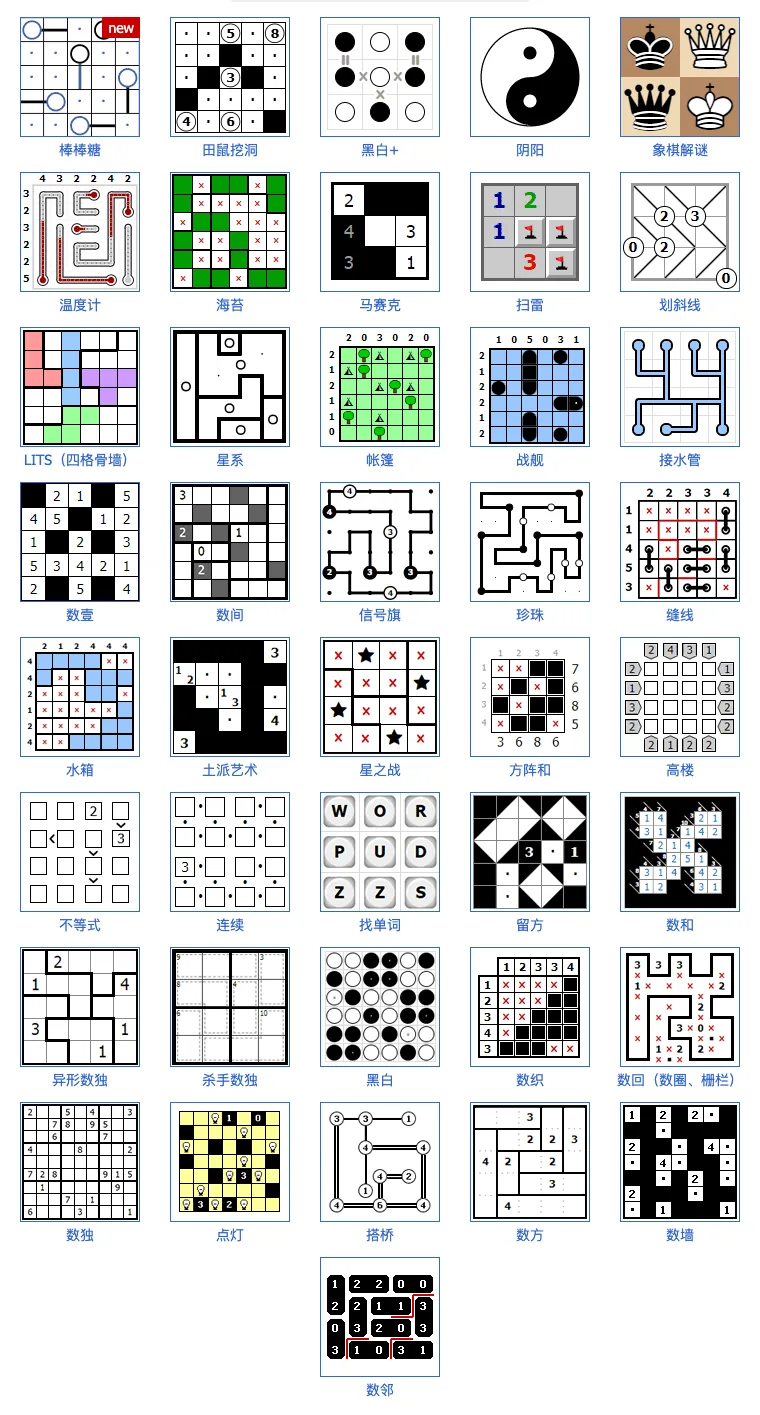
At the bottom of every puzzle page there is a “more puzzles” wall listing all 41 games, each with a thumbnail. Here is a real screenshot of that wall, taken from the Chinese Sudoku page. The thumbnails in the tables below come from it too:
2. A look inside: layout and shared controls
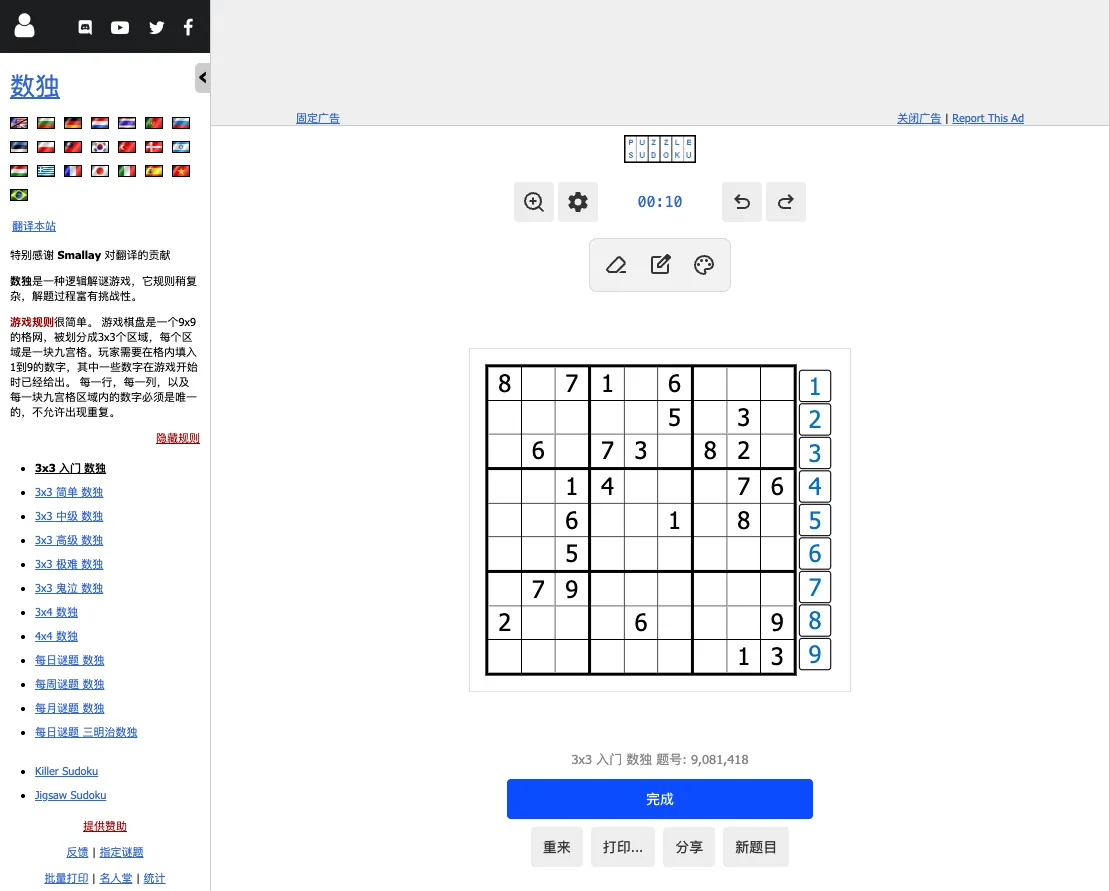
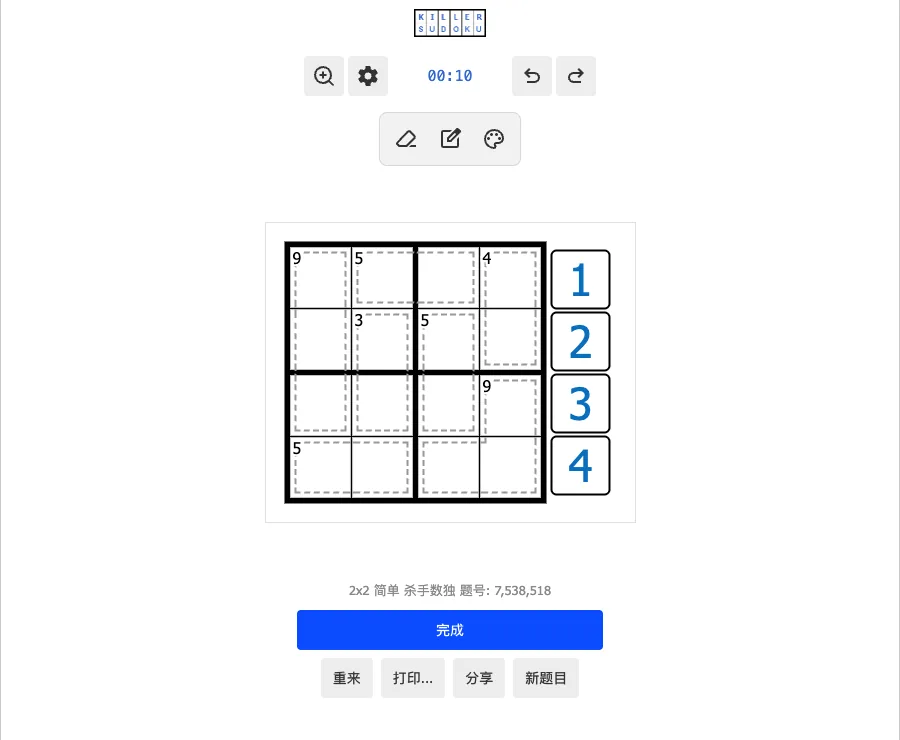
Take Sudoku as an example. The left column has the puzzle name, translator credits, the rules, and links to every size and difficulty. The board and toolbar sit in the middle, with Done, Restart, Print, Share and New Puzzle buttons below.
Things I like about it:
- Free, nothing to install: it runs in the browser and works with touch. There are official iOS and Android apps too, but the web version is good enough. There are some ads on the page.
- Progress is saved: close the tab halfway through and the same puzzle picks up where you left off.
- Rules on the page: every puzzle explains its rules, and most link to a video tutorial.
- A full difficulty ladder: sizes from 5×5 to 20×20 or larger, and easy, normal and hard levels.
- Daily, weekly and monthly specials: besides random boards there are fixed special puzzles, with a Hall of Fame ranking solve times.
Controls are consistent across the series: left-click fills or shades, right-click marks an × or a dot meaning “definitely not here”. Most shading puzzles let you click and drag across a row of cells. The toolbar has zoom, undo and redo.
3. All 41 puzzles at a glance, in six groups
41 sounds like a lot, but grouped by what you actually do on the grid there are only six kinds: fill in numbers, shade cells, draw lines, place objects, divide the grid, and two that fit nowhere else. The rules are condensed from each site’s official description; the site is authoritative on details.
3.1 🔢 Fill in numbers: the Sudoku family (7)
The easiest group to start with, since most people have played Sudoku. Fill each cell with 1 to N with no repeats per row or column, plus each puzzle’s extra constraint—sums, comparisons, or how many towers you can see.
| Thumbnail | Puzzle and rules |
|---|---|
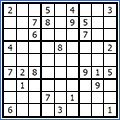 |
Sudoku Fill a 9×9 grid with 1–9 so no digit repeats in any row, column or 3×3 box |
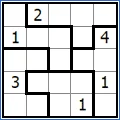 |
Jigsaw Sudoku Sudoku rules, but the boxes have irregular shapes |
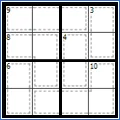 |
Killer Sudoku Sudoku plus cages: digits in each dotted cage add up to its corner clue and do not repeat |
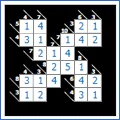 |
Kakuro Fill white cells with 1–9; a clue in a black cell is the sum of the run to its right or below, with no repeats in a run |
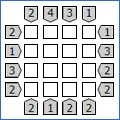 |
Skyscrapers Place towers of height 1–N with no repeats per row or column; edge clues say how many towers are visible from that side |
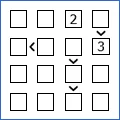 |
Futoshiki Fill 1–N with no repeats per row or column, satisfying the greater-than and less-than signs |
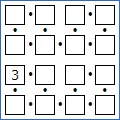 |
Renzoku Fill 1–N with no repeats; a dot between two cells means their numbers are consecutive, no dot means they are not |
Killer Sudoku is my top pick for a next step: cage sums make you reason about combinations (“three different digits adding to 7 can only be 1, 2 and 4”), which is far more interesting than elimination alone.
3.2 🔲 Shade cells (13)
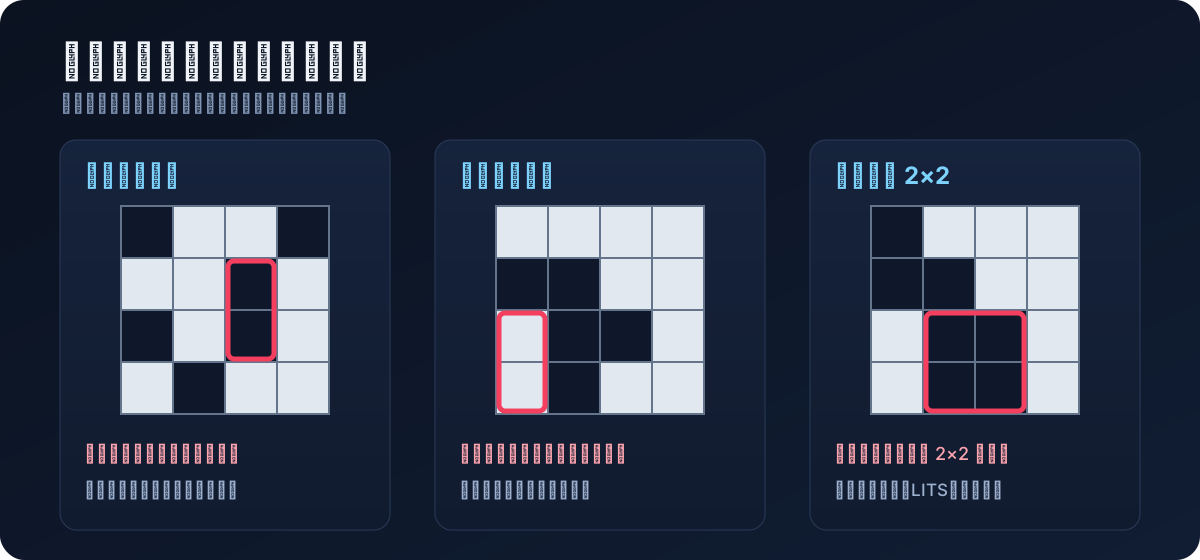
The biggest group. Every cell is either black or white, and number clues tell you which. The rules look different, but three constraints keep coming back: black cells don’t touch, white cells stay connected, and no 2×2 block of one color. Learn these three and the rest of the group gets much easier.
| Thumbnail | Puzzle and rules |
|---|---|
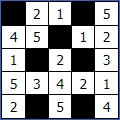 |
Hitori Shade cells so no unshaded number repeats in a row or column; shaded cells never touch orthogonally and unshaded cells stay connected |
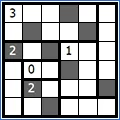 |
Heyawake Numbered regions hold that many black cells; black cells never touch orthogonally, white cells stay connected, and a straight run of white cells crosses at most two regions |
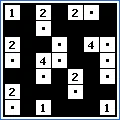 |
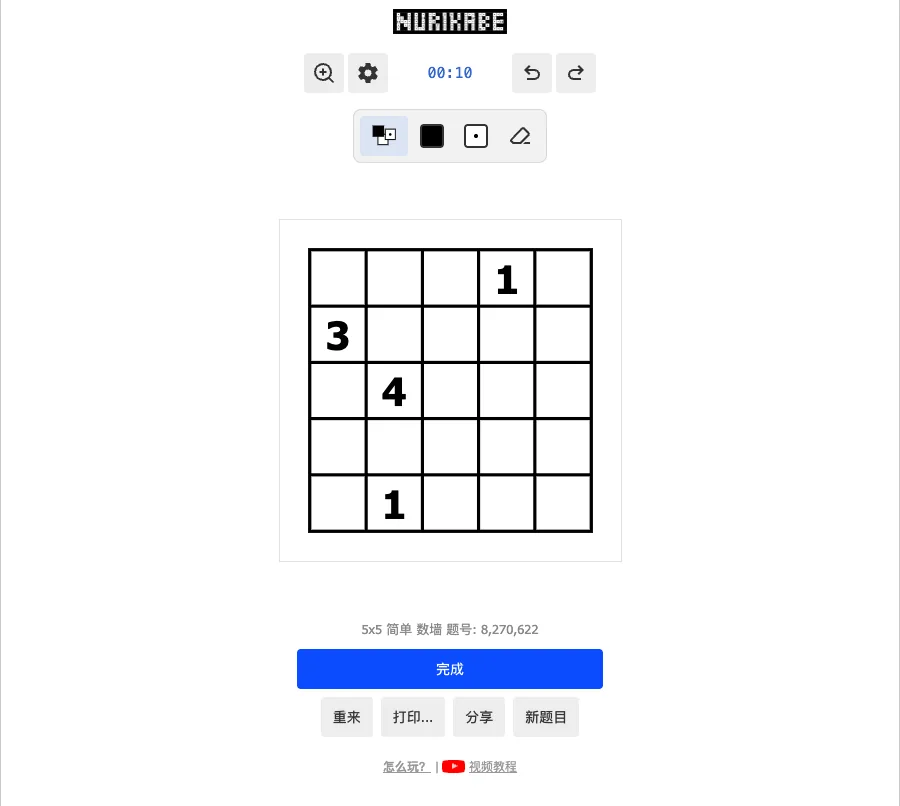
Nurikabe Each number is an island of that many white cells, one number per island; the black “stream” is connected and has no 2×2 blocks |
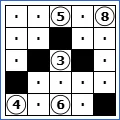 |
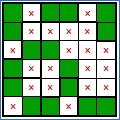
Kurodoko Each number counts the white cells visible from it in four directions, itself included; black cells never touch orthogonally and white cells stay connected |
 |
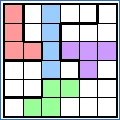
Norinori Shade exactly 2 cells per region; every shaded cell is part of a 1×2 domino, and dominoes touch only diagonally |
 |
LITS Place one L, I, T or S tetromino per region; identical shapes never share an edge, all shaded cells connect, and no 2×2 blocks |
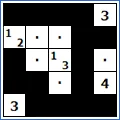 |
Tapa Clues list the lengths of black runs among the 8 surrounding cells; all black cells connect, with no 2×2 blocks |
 |
Yin-Yang Color every cell black or white so each color forms one connected group, with no 2×2 of the same color |
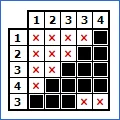 |
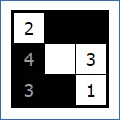
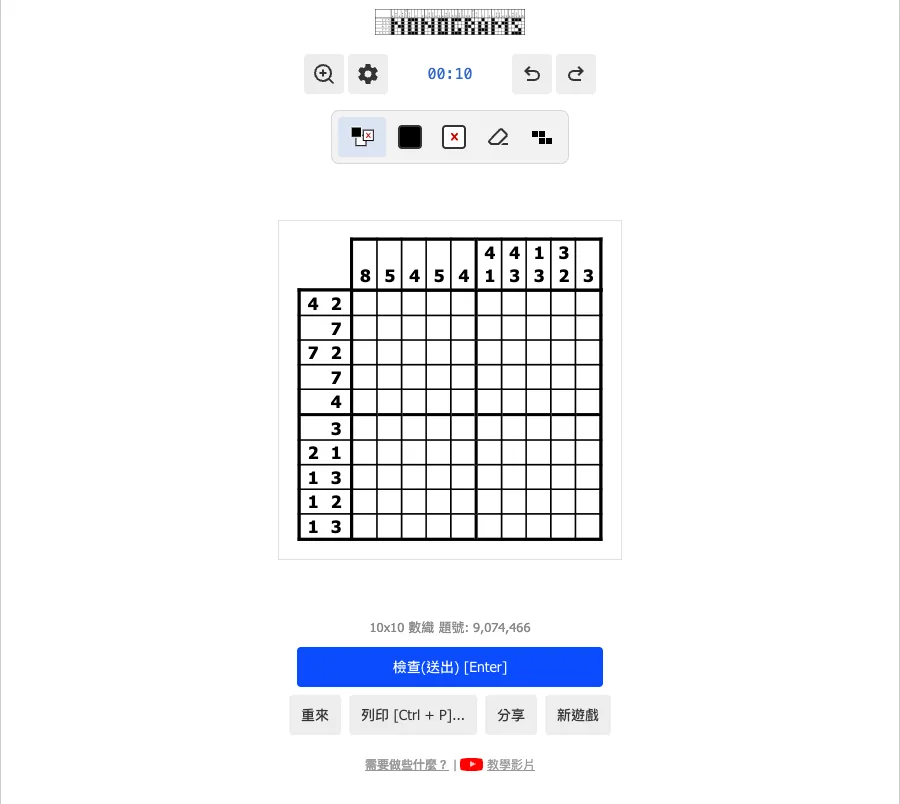
Nonograms Clues beside each row and column give the lengths of its black runs; shade them to reveal a picture |
 |
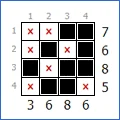
Mosaic A Minesweeper variant: each number counts the black cells in the 3×3 area around it, itself included |
 |
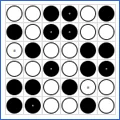
Kakurasu The 1st cell in a row is worth 1, the 2nd worth 2, and so on; shaded cells must sum to the clue at the end of each row and column |
 |
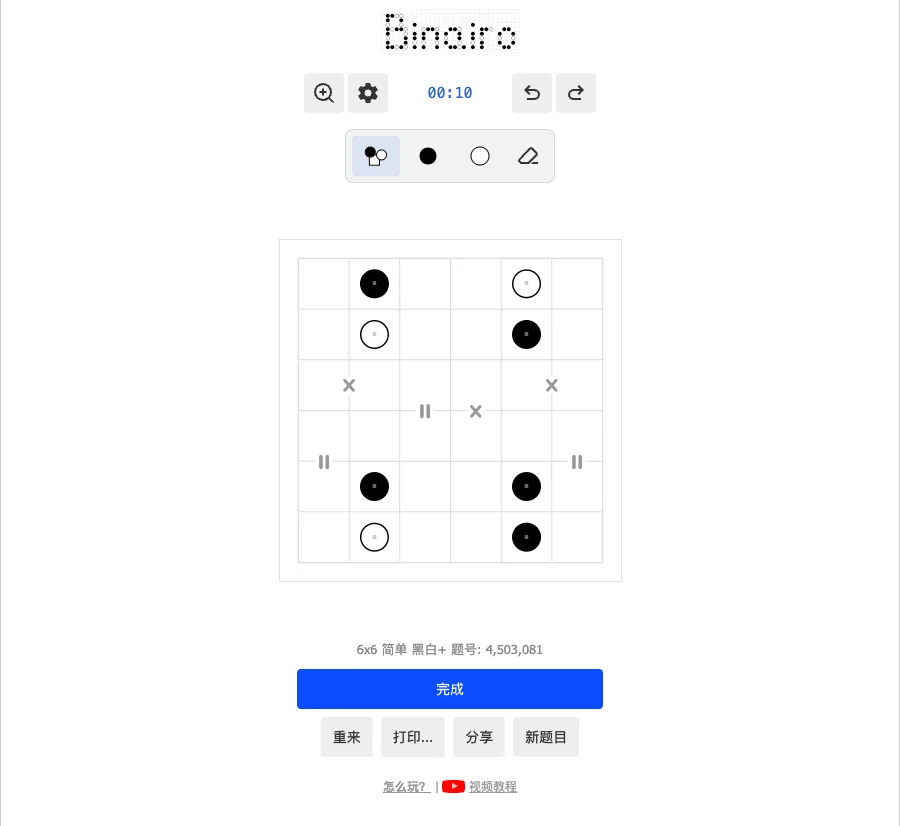
Binairo Place black and white circles: equal counts per row and column, no three of a color in a line, and no two identical rows or columns |
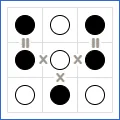 |
Binairo+ Binairo with signs (LinkedIn’s Tango): “=” means same color, “×” means opposite colors |
Nonograms (also called Picross) are the most rewarding: the clues beside each row and column give the lengths of its black runs, and when you finish you get a pixel picture.
Nurikabe combines all three constraints: the black wall must connect with no 2×2, and each white island’s size must match its number. It looks impenetrable at first, but start from the 1s (always surrounded by wall) and it opens up quickly.
If you play LinkedIn’s daily Tango, you will recognize Binairo+: equal black and white per row and column, no three in a row, plus “=” and “×” signs.
3.3 ➰ Draw lines (7)
These puzzles have you draw between dots or cells, usually forming one loop with no crossings or branches. They share a key deduction: every point on a loop has either 0 or 2 lines, never 1 or 3.
| Thumbnail | Puzzle and rules |
|---|---|
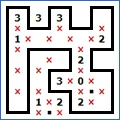 |
Slitherlink Connect dots into a single loop with no crossings or branches; each number says how many of its four sides are used |
 |
Masyu Draw a loop through every circle: go straight through white ones and turn next to them; turn on black ones and go straight on both sides |
 |
Shingoki Like Masyu—straight through white, turn on black—and the number in a circle is the total length of its two straight arms |
 |
Pipes Rotate the tiles so all pipes join into one network with no closed loops |
 |
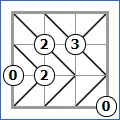
Hashi Build straight bridges between numbered islands, at most two per pair, never crossing; each island’s bridges match its number and all islands connect |
 |
Slant Draw a diagonal in every cell; numbers at corners say how many diagonals meet there, and the lines may not form a loop |
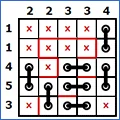 |
Stitches Join every block to each neighboring block with one stitch across their border, never sharing a hole; edge clues count the holes per row and column |
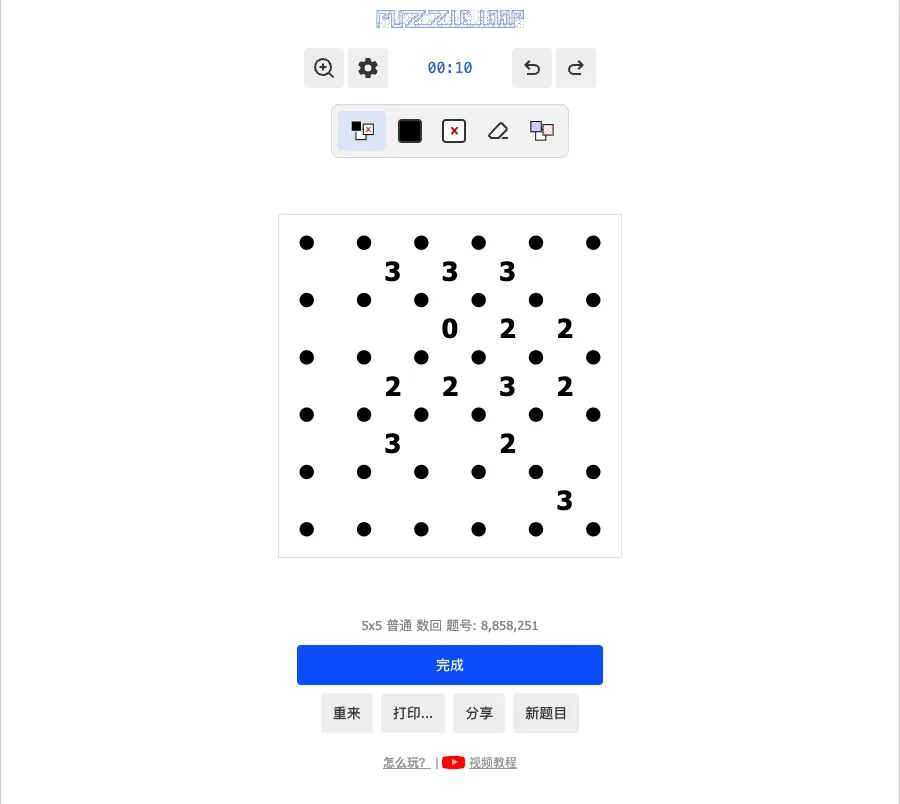
Slitherlink is the best entry point: each number says how many of its four sides are drawn. Cross out everything around a 0, start from a 3 in a corner, and the board starts to unfold.
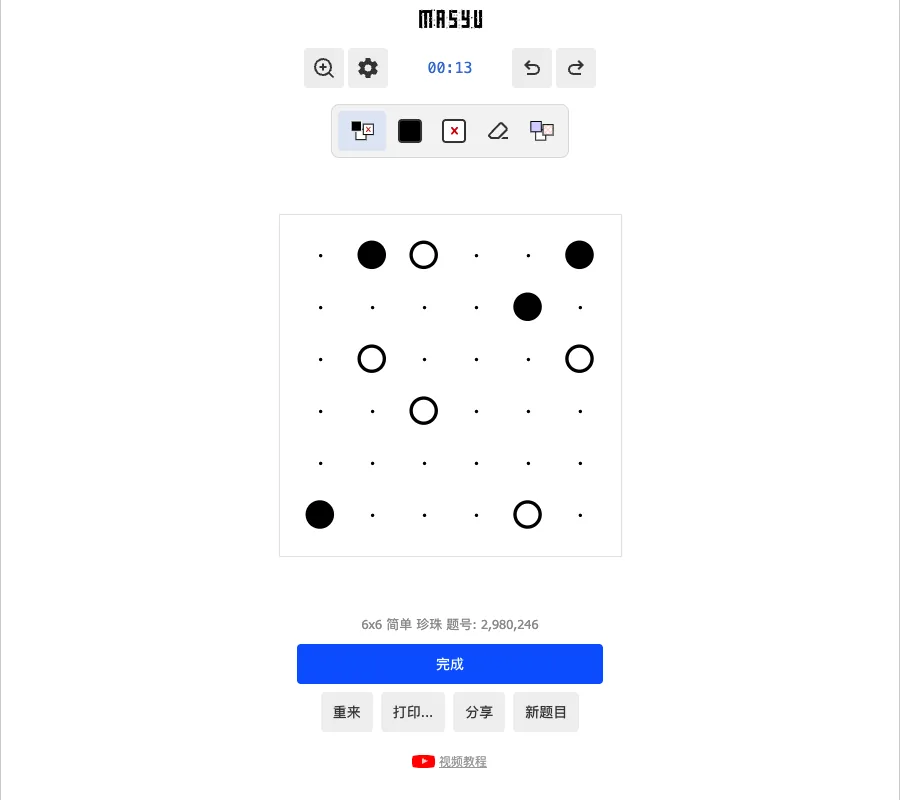
Masyu has only black and white circles, but the rules are clever: go straight through white circles and turn next to them; turn on black circles and go straight on both sides.
3.4 📍 Place objects (9)
Here you place things on the board—mines, bulbs, tents, ships, stars, lollipops—or fill aquariums and thermometers. Clues are usually counts: how many around here, how many in this row.
| Thumbnail | Puzzle and rules |
|---|---|
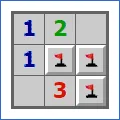 |
Minesweeper Classic Minesweeper: numbers count the mines in the 8 surrounding cells; find them all |
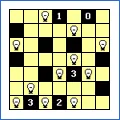 |
Light Up Place bulbs that light every white cell along rows and columns up to a black cell; bulbs may not light each other, and numbered black cells count adjacent bulbs |
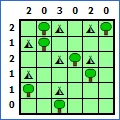 |
Tents Pair each tree with one tent next to it orthogonally; tents never touch, even diagonally, and edge clues count the tents per row and column |
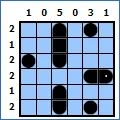 |
Battleships Find the fleet shown in the legend; ships never touch, even diagonally, and edge clues count occupied cells per row and column |
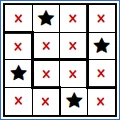 |
Star Battle Place 1 (or N) stars in every row, column and region, with no two stars touching even diagonally (LinkedIn’s Queens) |
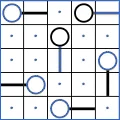 |
Lollipops Complete lollipops—a circle plus a one-cell stick—so different lollipops never share an edge and same-type parts in a row or column are separated by another part |
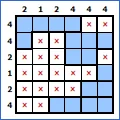 |
Aquarium Fill aquariums with water at one level across each tank’s full width; edge clues count the filled cells per row and column |
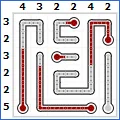 |
Thermometers Fill thermometers with mercury from the bulb with no gaps; edge clues count the filled cells per row and column |
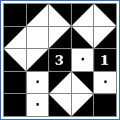 |
Shakashaka Place black right triangles in white cells so the remaining white areas are all rectangles (upright or at 45°); numbered black cells count adjacent triangles |
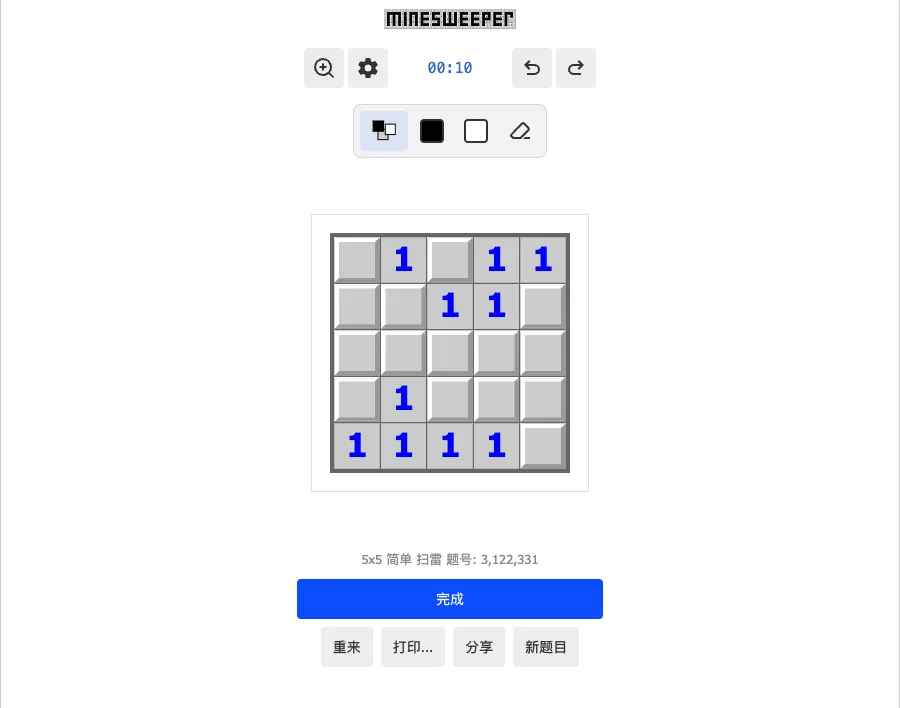
Everyone knows Minesweeper, but this one differs from the Windows classic: all the numbers are given up front, so there is no guessing—pure deduction finds every mine.
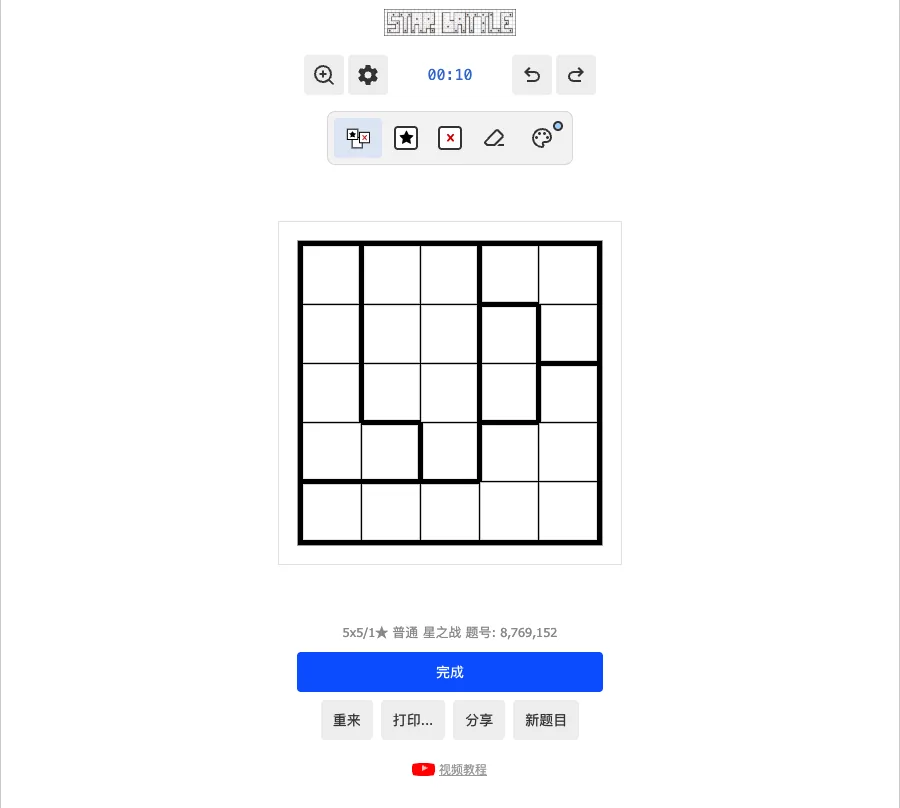
Star Battle is LinkedIn’s Queens: one star per row, column and region, with no two stars touching even diagonally. Small boards make a good warm-up; the 10×10 two-star version is a real workout.
3.5 ✂️ Divide the grid (3)
Cut the whole board into pieces that each meet a condition. Simple rules, good for short breaks.
| Thumbnail | Puzzle and rules |
|---|---|
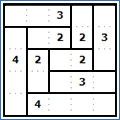 |
Shikaku Cut the grid into rectangles, each holding exactly one number equal to its area |
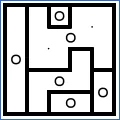 |
Galaxies Split the grid into galaxies, each with exactly one dot and unchanged when rotated 180° around it |
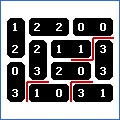 |
Dominosa Pair the numbers into dominoes so every number pair appears exactly once |
3.6 ♟️ Others (2)
Two that fit nowhere else: a chess endgame where every move must capture, and an English word search.
| Thumbnail | Puzzle and rules |
|---|---|
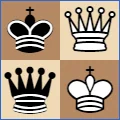 |
Chess Puzzles Chess pieces move normally, but every move must capture (kings included) until one piece is left |
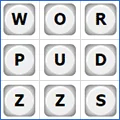 |
Word search games Boggle: chain adjacent letters into as many words as you can; longer words score more |
4. A beginner path in five stops
Puzzles with related rules are easiest to learn together. Go through these five stops, starting each at 5×5 or easy, and move on once you can solve two or three on your own:
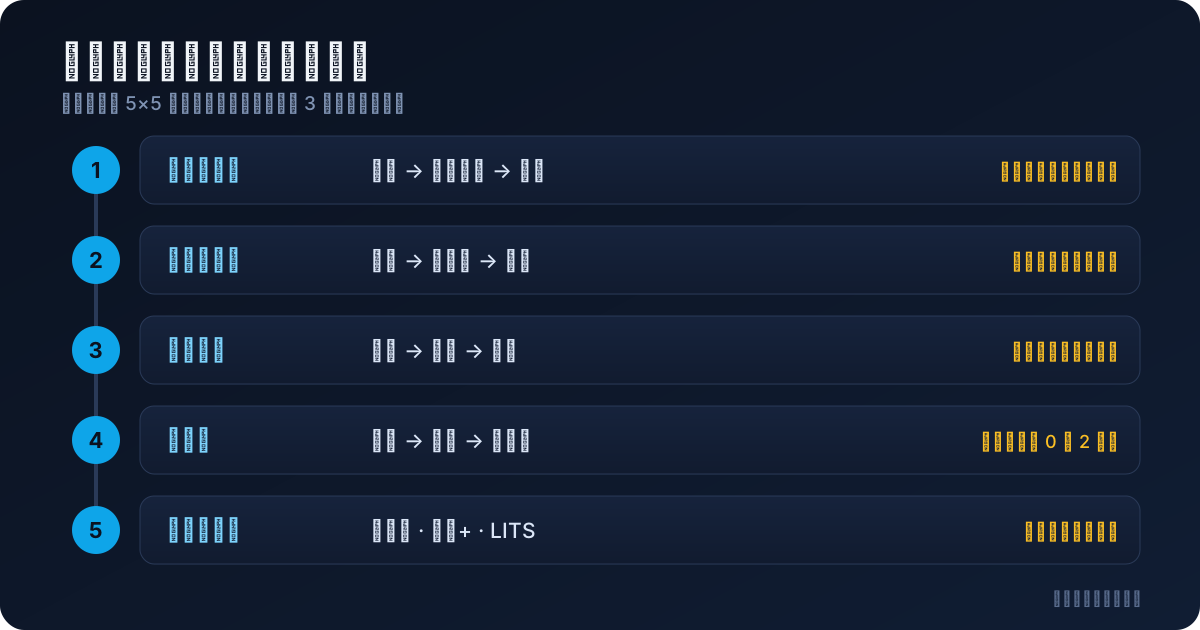
- Sudoku → Killer Sudoku → Kakuro: start with familiar number placement, then add sums and digit combinations.
- Minesweeper → Mosaic → Nonograms: deduce black cells from numbers—and Nonograms reward you with a pixel picture.
- Hitori → Nurikabe → Heyawake: practice “black cells don’t touch” and “white cells stay connected”.
- Slitherlink → Masyu → Shingoki: loop puzzles, built on “every point has 0 or 2 lines”.
- Star Battle, Binairo+, LITS: puzzles that combine several constraints. If you play LinkedIn’s Queens and Tango, jump straight to bigger boards.
5. General solving tips
- Certain moves first: every step should have a clear reason. If you catch yourself “just trying”, there is a clue you haven’t used.
- Use right-click marks: put an × on cells you’ve ruled out. Breakthroughs often come from what you eliminate, not what you fill.
- Start from extreme clues: a 1 in Nurikabe, a 0 or 3 in Slitherlink, a 1 or N in Skyscrapers all give away a lot at once.
- Stuck? Watch the tutorial: Yin-Yang and LITS rely on a few lemmas covered in the official videos; without them even easy boards feel hard.
- Don’t chase the clock: the Hall of Fame is fierce; the fun is solving it yourself.
6. Q&A
Q: Do I need an account?
No. Just open a puzzle and play; progress is stored in your browser. There is an account entry in the top-left corner if you want to sync progress across devices.
Q: Does it work on phones?
Yes, touch is supported. Large boards get cramped on a phone, though—use a tablet or computer for 15×15 and up.
Q: Is it good for kids?
Very. No math knowledge is needed, just patience and logic. Start with 5×5 Minesweeper, Nonograms or Tents.
7. Final thoughts
The charm of logic puzzles is that every board has exactly one solution, and you can reach it without guessing. Starting from an empty grid and ruling things out one step at a time until the Done button lights up gives a feeling of everything clicking into place that few games match.
Pick one or two of the 41 you like and solve one a day—it’s great exercise for the brain. The series is also in my favorites for quick access.