The Internet Is Not Free: Who Really Pays for Every “Free” Click?
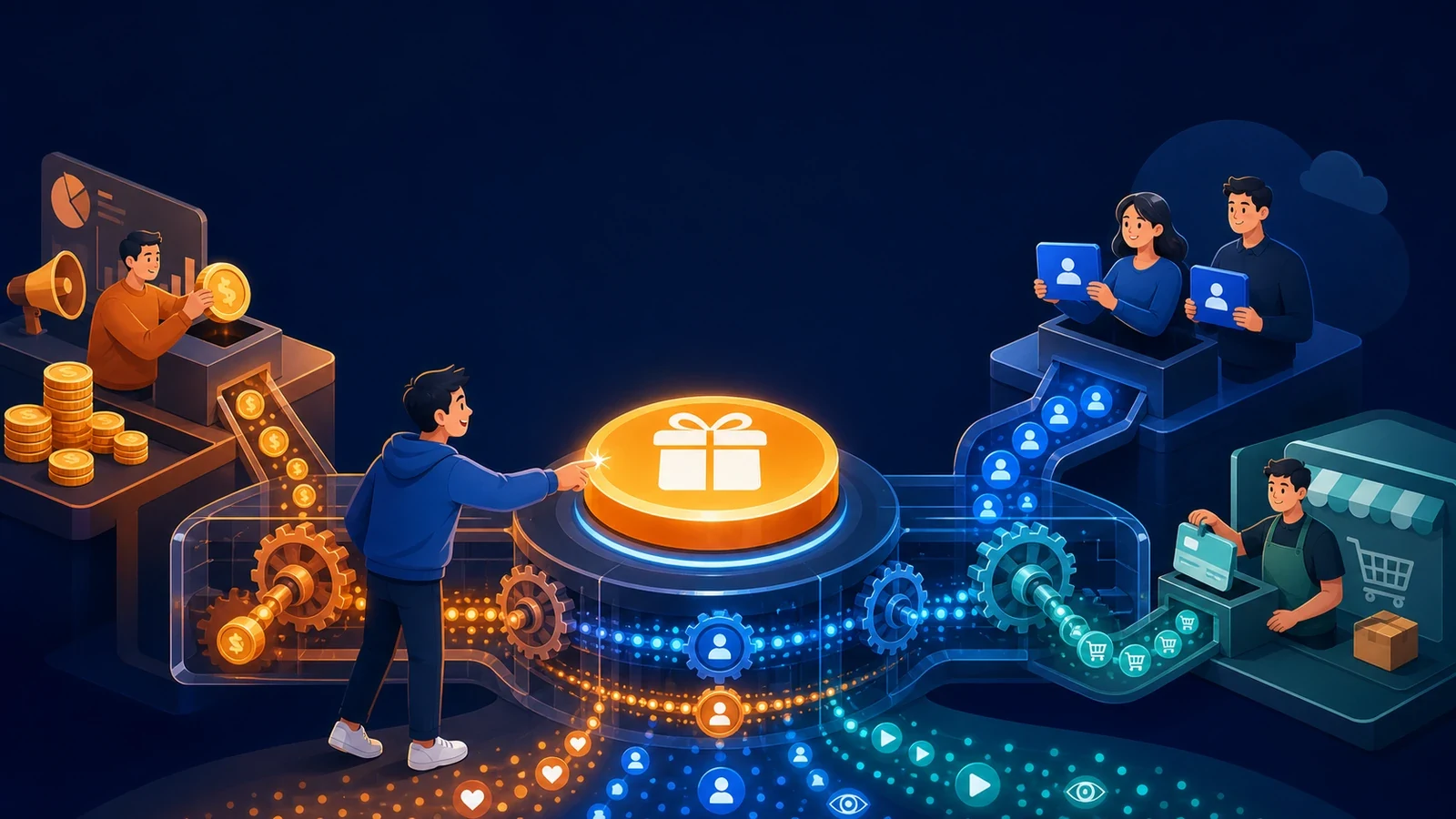
The short answer: a free website is not cost-free, and it is rarely a charity. You may not pay at checkout, but advertisers, subscribers, merchants, enterprise customers, donors, and investors may be paying at different points in the system. Users also contribute value, just not always in dollars: attention, time, behavioral signals, content, and part of their control over what they see next.
Every day we open search engines, short-video feeds, email, maps, forums, and news sites. The strange part is not that these services exist; it is that we can often use them without a credit card. Servers must be purchased, data centers rented, engineers paid, content moderated, customers supported, and attacks defended against. Yet one tap is enough to get in.
It is similar to a free sample outside a supermarket. You do not pay for the small cookie in your hand, but the store still paid for flour, rent, and staff. The merchant hopes you will buy a box, return to the store, or attract a brand that wants to rent the best position. The internet has simply made that stall larger, faster, and much better at measuring what happens next.
Background: why free services became the default
Internet products have a powerful property: the marginal cost of serving one additional user can be small, while the cost of building a reliable product is enormous.
Saving the text of one email may take only a few kilobytes. Letting hundreds of millions of people sign in at any time requires storage, bandwidth, backups, spam filters, account security, moderation, and continuous software upgrades. One extra article view may be cheap; making sure that article still loads during a traffic peak requires capacity prepared in advance.
Think of a city water system. One extra hand-wash does not immediately require a new water plant, but the plant must be ready when an entire neighborhood turns on its taps. Internet companies face the same problem: infrastructure looks cheap per request, but it must be oversized enough for the busiest hour.
So “free” is usually a customer-acquisition strategy, not a magic trick that makes costs disappear. Bring people in first, then collect revenue from other participants in the system.
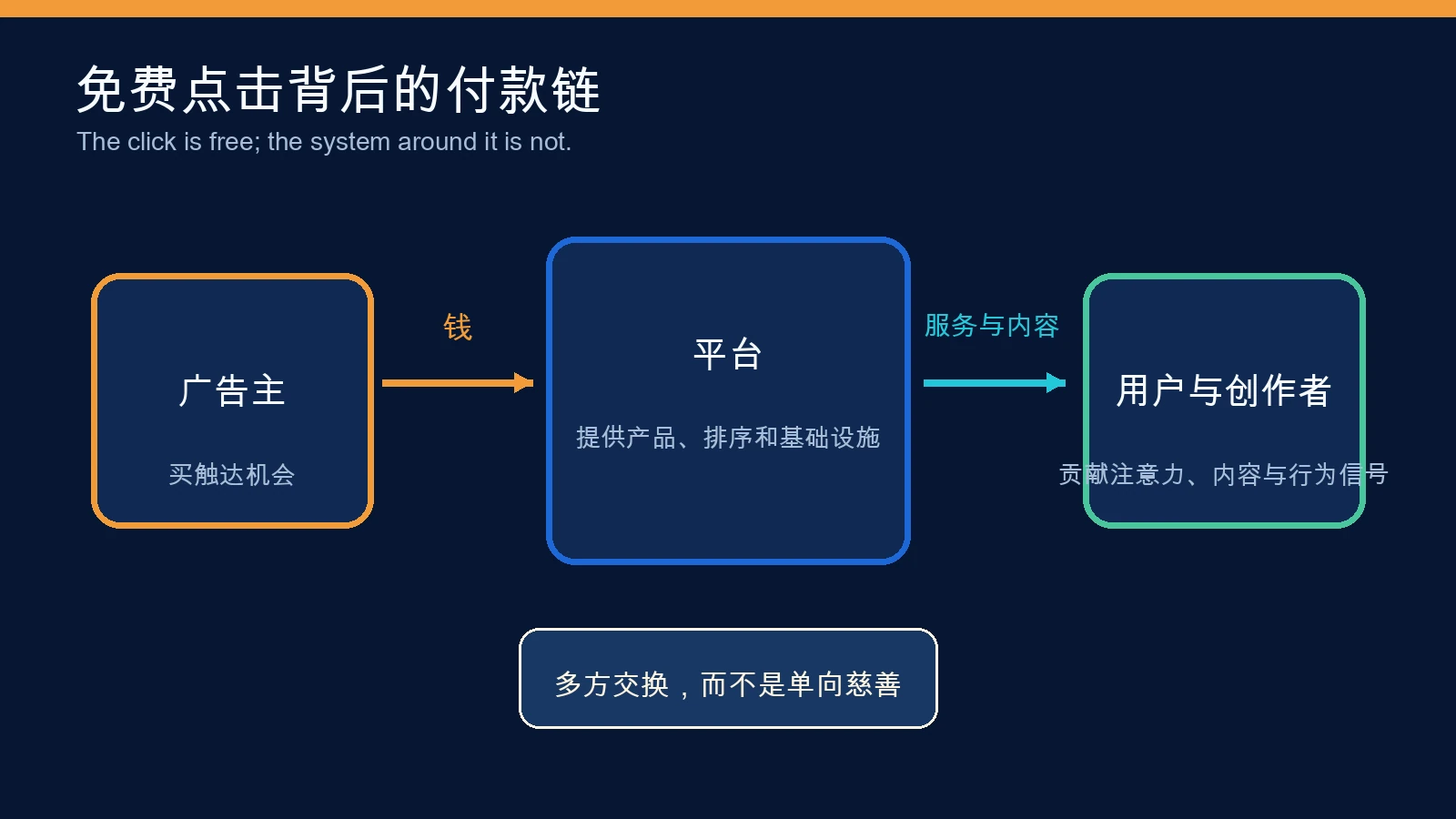
The first major payer: advertisers
The most familiar answer is advertising. Search, social networks, video, recommendations, and many utility websites sell part of their page space and user attention to advertisers.
Advertisers are not simply buying a static poster. They are buying a chance to be seen, clicked, or converted. If you search for “children’s bicycle,” an advertiser may bid for that click. After you watch a travel video, a hotel ad may appear next. Add a product to a shopping cart, and similar products may follow you to other pages.
This resembles a market-stall auction. The most expensive stall is not necessarily awarded to the highest bidder forever. The market operator also cares about location, relevance, and whether the stall is useful to visitors. Google’s official explanation calls one part of this process Ad Rank: whether an ad appears, and where it appears, depends not only on the bid but also on competition, search context, and ad quality.
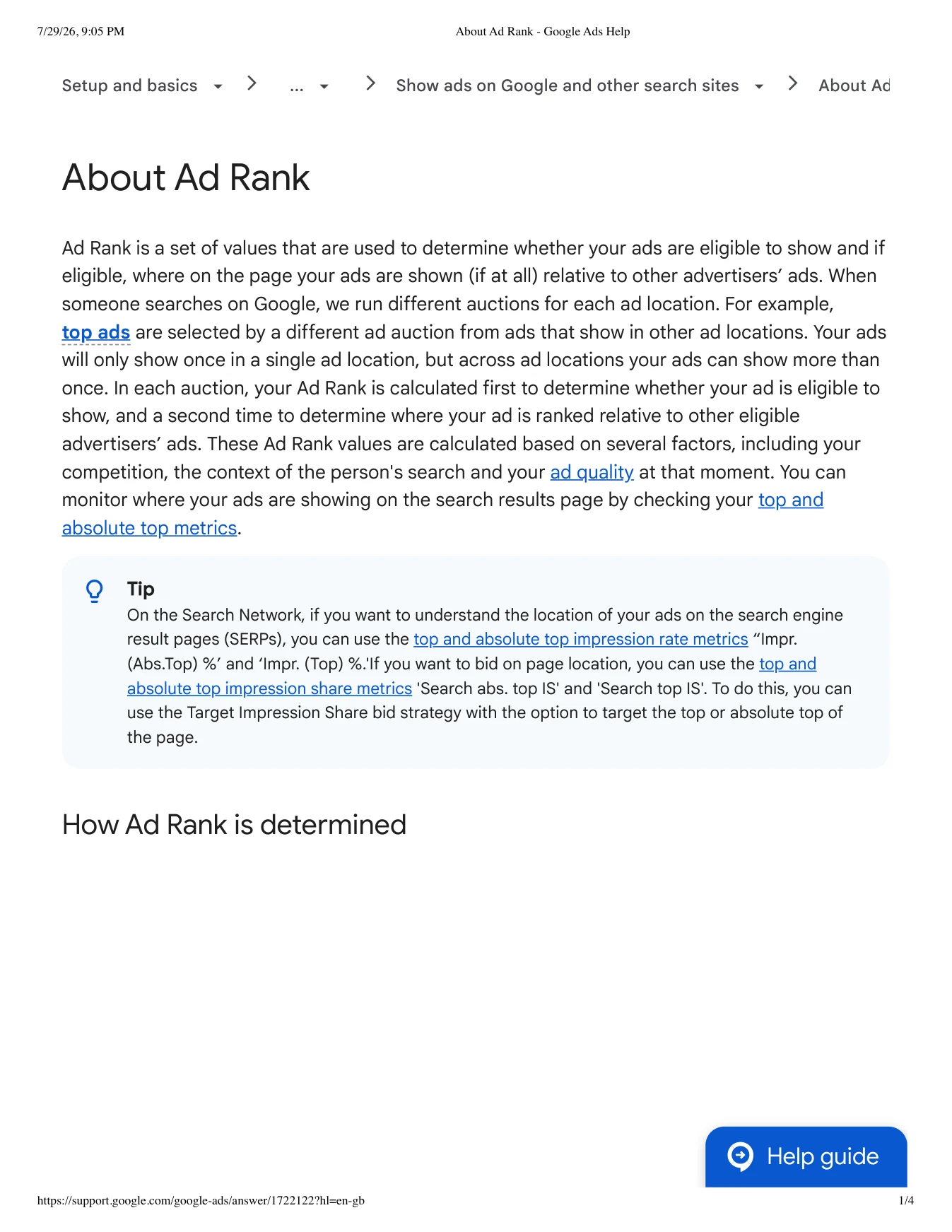
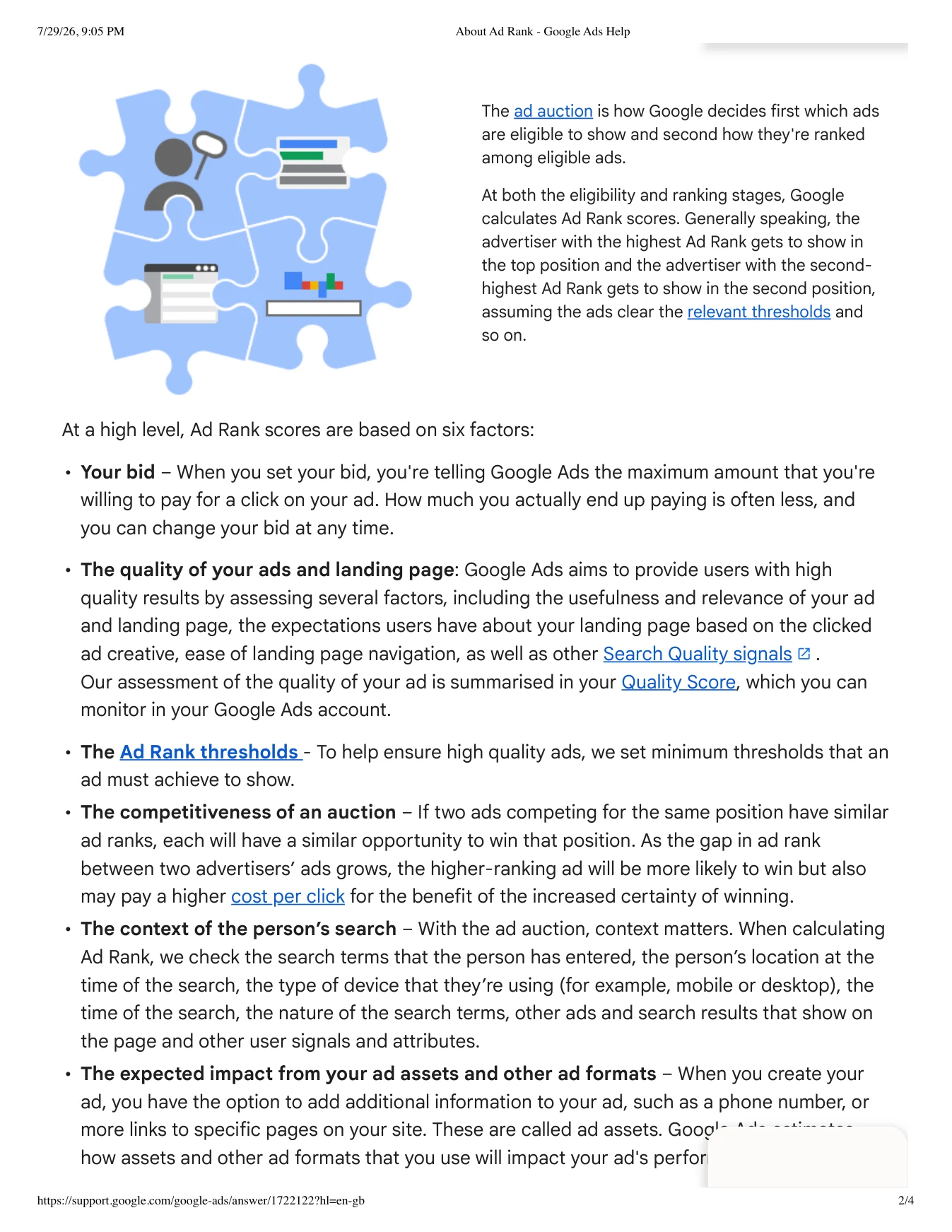
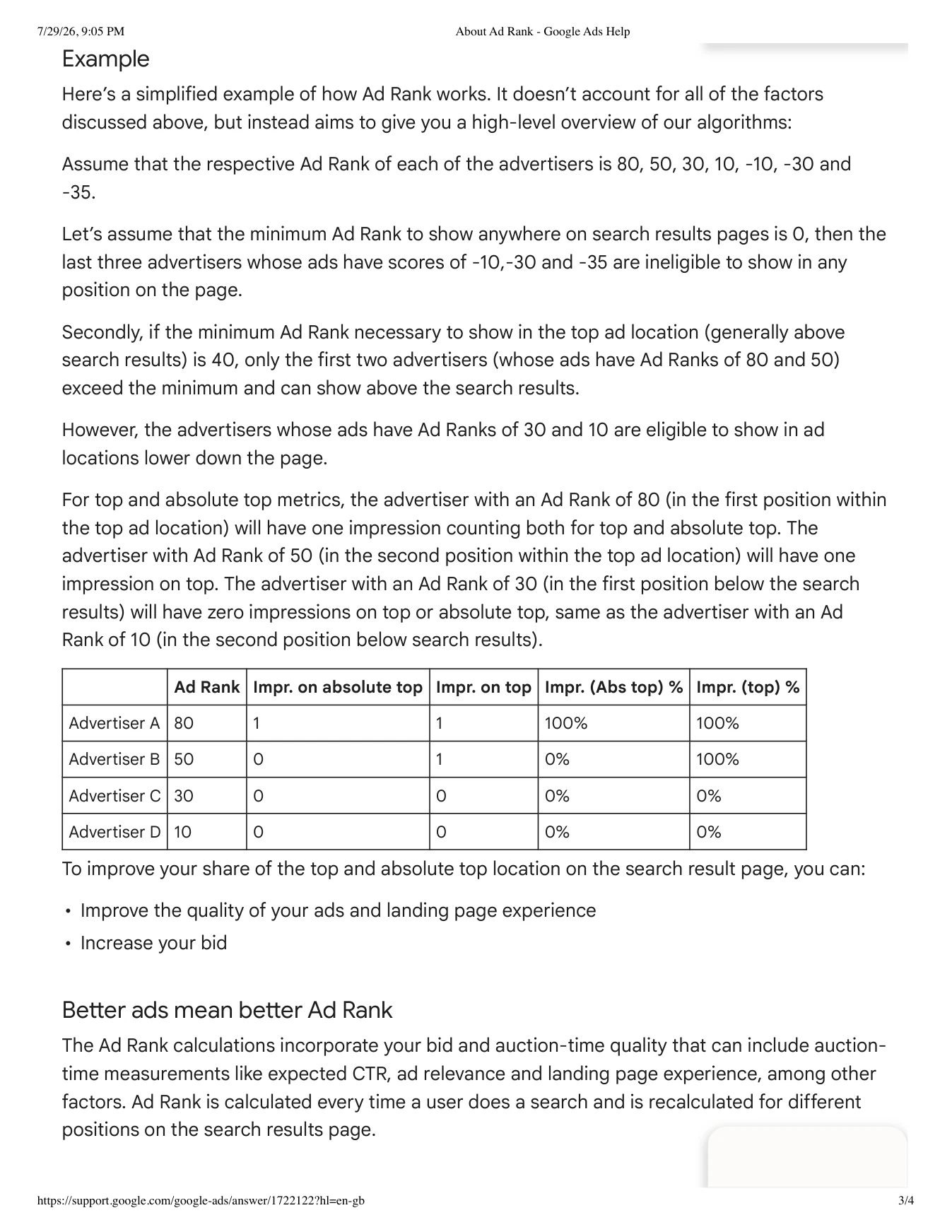
The important point is not that everyone must click an ad. It is that many low-probability actions can become predictable revenue when multiplied across a very large audience. A million impressions may produce only a small number of clicks, but if the audience is large, the targeting is useful, and the purchase path is short, advertisers will keep paying.
Why data matters: not simply selling “you” as a file
“The platform makes money by selling data” is directionally understandable but incomplete. Large platforms more often use signals in four connected stages:
- Segmentation: grouping people by interests, location, device, content preference, or purchase stage.
- Prediction: estimating who is likely to click, buy, renew, or leave.
- Bidding: allowing advertisers to offer different prices for different opportunities.
- Attribution: estimating whether an impression or click led to a signup, purchase, or visit.
Imagine a market manager who does not hand a shopper’s diary to every merchant. It may be enough to know that people carrying sports shoes, shopping with children, and spending time near the family-food aisle are more likely to want a particular bundle. Internet platforms do this with far more data and far more sophisticated models, but the basic idea is similar: turn scattered signals into probability estimates.
That is also where the risks begin. Predictions can be wrong. Users may not know which signals were used. Advertisers may treat “more effective” as “more manipulative.” Platforms may keep increasing tracking and personalization because those techniques can improve revenue.
The evidence: why advertising can support free products
Meta’s 2025 Form 10-K reports approximately $196.175 billion in advertising revenue, out of roughly $200.966 billion in total revenue. The filing also explains that advertising revenue changes with ad impressions delivered and the average price per ad. The table is a direct reminder that, for a large social platform, free users are not economically irrelevant. Audience scale and engagement are part of the advertising infrastructure.
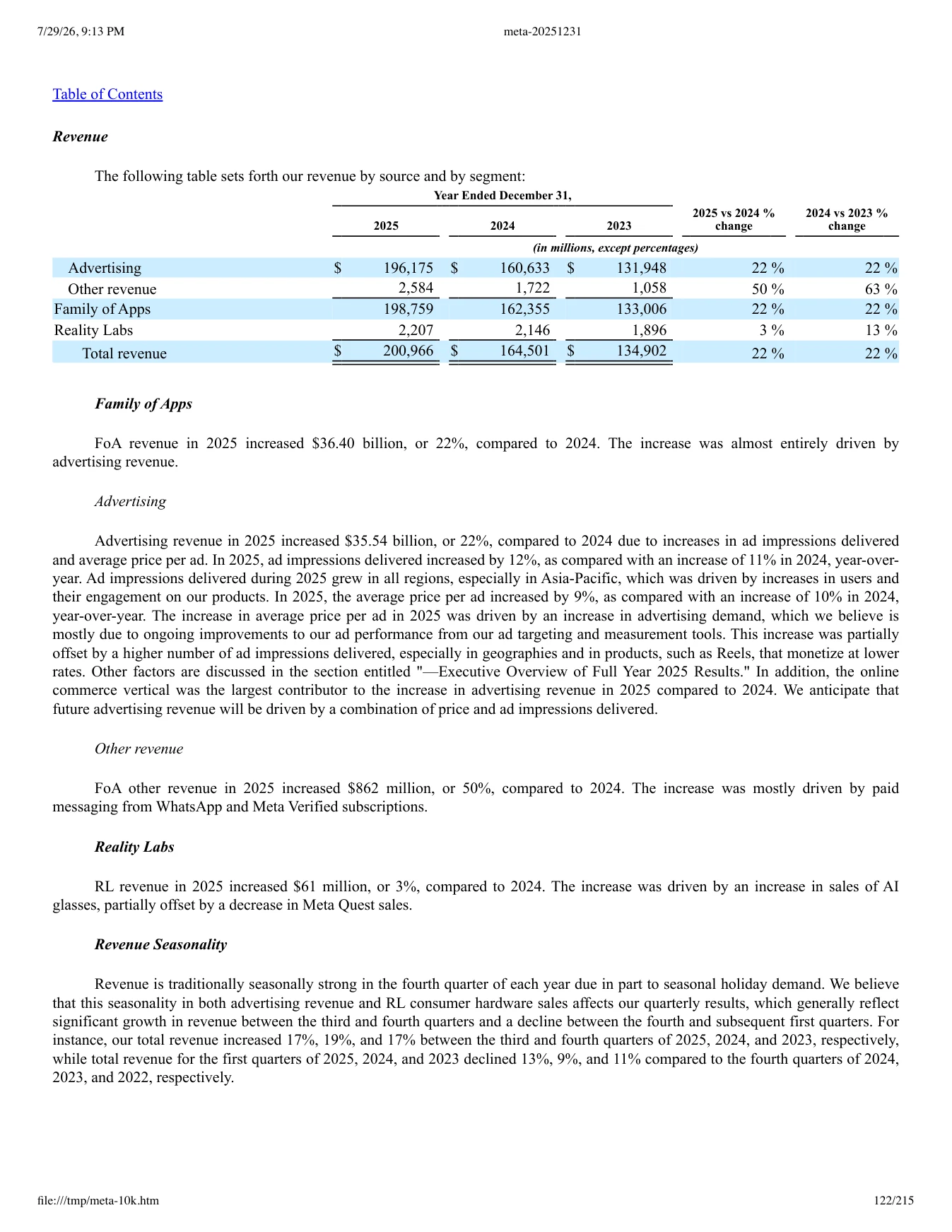
The same filing breaks growth into two levers: how many impressions were delivered and how much each impression was worth. Think of a shopping mall with two knobs: how many people enter and pass each advertising position, and how much rent each position can command.

This also explains the popularity of “next,” autoplay, continuous recommendations, and infinite scroll. These features are not automatically bad; they can help people discover content. But from a business perspective, they also create more opportunities for impressions and measurable behavioral feedback.
The four currencies users contribute
Many people say, “I did not buy anything, so I did not pay.” That is only half true. A free service may collect four other kinds of value:
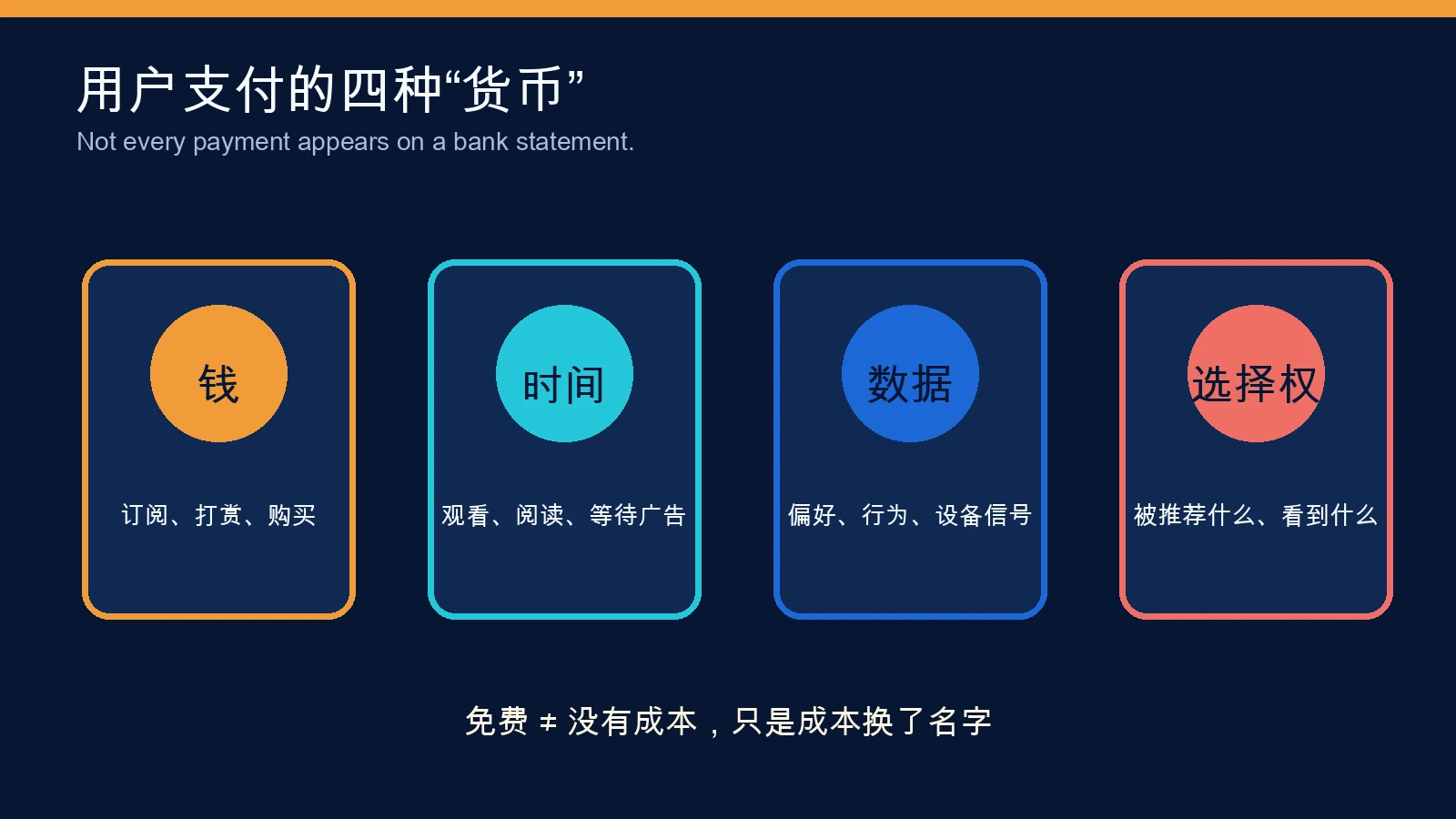
Attention
You give the page your eyes and your brain. Platforms compete not merely for your presence, but for how long you stay and whether you return.
Time
Watching ads, completing preference forms, browsing recommendations, and joining discussions all take time. More time often creates more impressions and feedback.
Behavioral signals
What you click, skip, save, or pause on helps a system estimate what you may do next. These signals are not always identical to personally identifying information, but they can reveal patterns of behavior.
Choice
Recommendation systems do not only tell you what exists; they influence what you see first. When a platform controls ranking, some choice moves from the user to the sorting system.
The question “Are users the product?” is therefore too binary. A more accurate description is: users are service recipients and also contributors of attention, content, network effects, and behavioral signals.
Why free models gain scale
Free lowers the psychological cost of trying something. You do not need to compare prices or fear wasting money. That lets a platform accumulate users quickly. More users can make the service more useful: social networks make it easier to find people, question-and-answer sites make it easier to find answers, maps receive more road information, and content platforms attract more creators.
This is the network effect. A playground with two children may be boring; with twenty children it becomes active; if everyone in the school goes there, leaving becomes difficult. Once a platform reaches scale, advertisers are more willing to buy placements, creators are more willing to publish, and the platform can keep subsidizing free access.
Scale also creates concentration risk. If one platform controls a major entry point, users may not have a realistic substitute. Creators may depend on one distribution channel. Advertisers may have little choice but to accept platform rules. The stronger the free entrance, the stronger the platform’s bargaining power can become.
Beyond advertising: who else pays
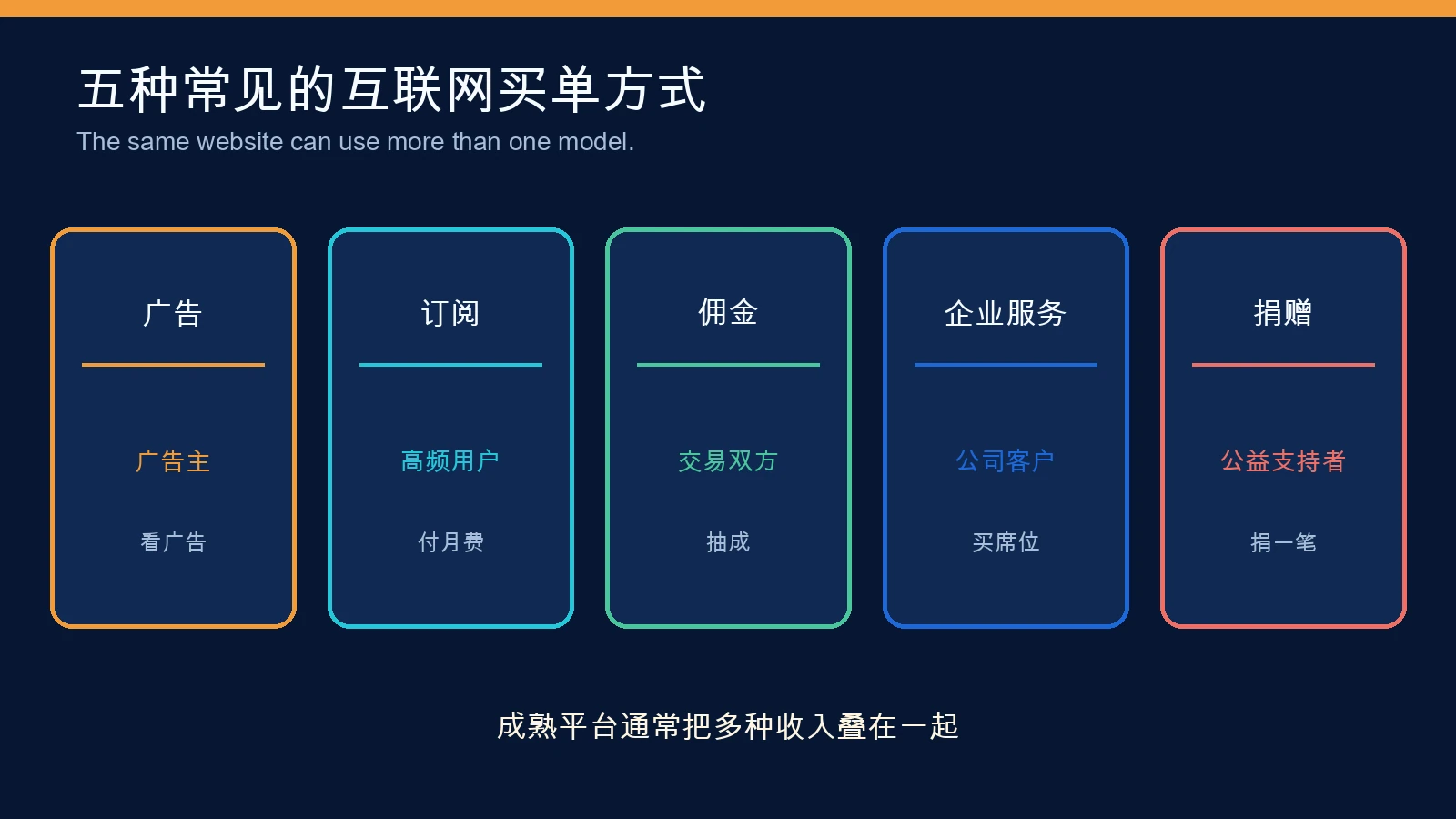
Advertising is only the most visible model. Mature products often combine several revenue streams.
Subscribers
The free tier lets people try the product; the paid tier provides more quota, no ads, more storage, faster service, or professional features. Free users may reduce marketing costs, while a smaller group of heavy users pays most of the bill.
Merchants and transaction participants
E-commerce, food delivery, resale, ticketing, and tipping platforms may take a commission from each transaction. What looks like “free registration” may be funded by the seller, the merchant, or a transaction fee.
Enterprise customers
A tool used by individuals may also sell team plans, enterprise plans, APIs, or analytics. The free version can become a product demonstration for business sales.
Donors and public-interest organizations
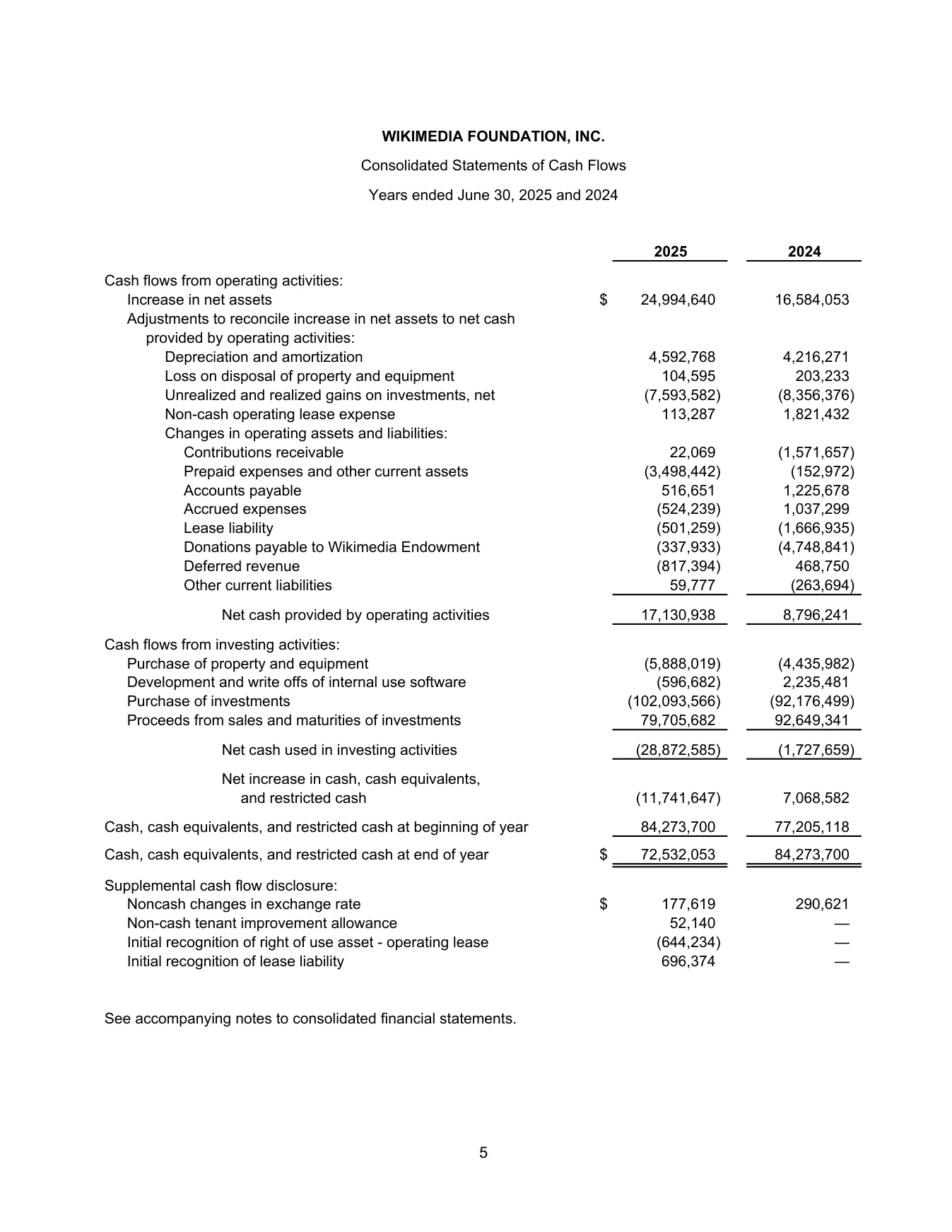
Wikimedia provides a useful counterexample. It is not a typical advertising platform. The Wikimedia Foundation’s FY 2025 audited statements list about $184 million in contributions of cash and other financial assets, along with roughly $3.47 million in internet hosting costs. The website still has a bill; the payer is simply a donor rather than an advertiser, and the organization is structured around a public mission.
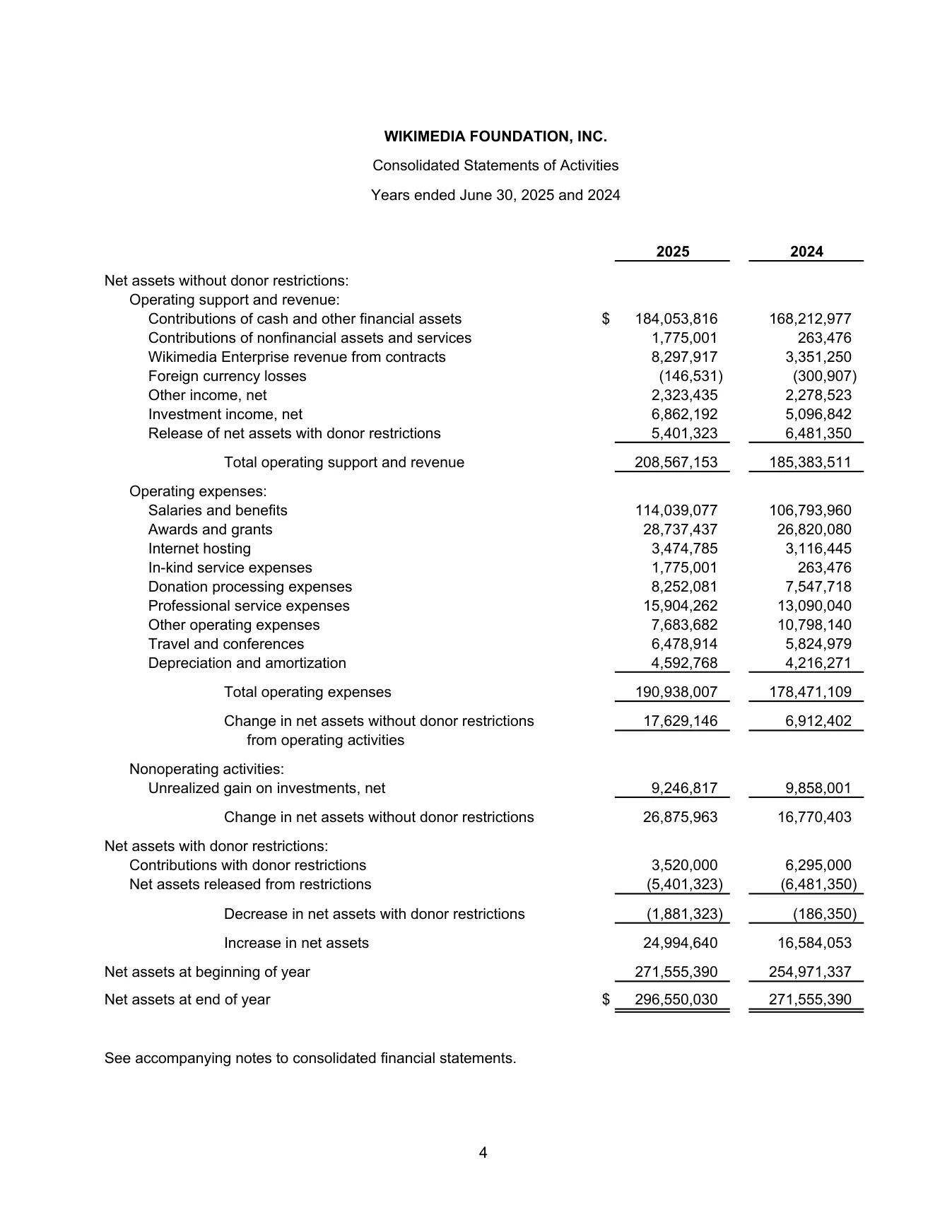
The same statement separates salaries, grants, hosting, donation processing, and other operating expenses. Visitors see an encyclopedia page; behind it is a public infrastructure that requires continuing fundraising and operations.
Investors and future revenue
Some products lose money for years while investors fund servers and growth. They are buying future scale, expecting later revenue from subscriptions, advertising, transactions, or enterprise services. To a user, the period looks like “free forever.” To an investor, it is today’s money purchasing tomorrow’s market position.
When the free model starts to feel uncomfortable
Free is not automatically guilty, and paid is not automatically ethical. The real questions are whether the exchange is clear, voluntary, and fair.
Common warning signs include:
- The opt-out control is hidden while the accept button is prominent.
- Recommendations increasingly resemble ads, and ads increasingly resemble ordinary content.
- The service optimizes for longer sessions by pushing more extreme material.
- A user believes content was deleted while parts of the history remain in logs or backups.
- Different users see different prices without a clear explanation.
- Creators depend on distribution but cannot see how revenue, ranking, or penalties are determined.
These outcomes are not inevitable, but they reveal a structural issue: when the payer is not the user, the platform may prioritize the payer’s objectives.
Root cause: the four parties do not want exactly the same thing
Think of the internet business model as a table with four diners:
- Users want useful, quiet, affordable services and privacy.
- Advertisers want relevant customers and measurable results.
- Platforms want recurring revenue, controlled costs, and returning users.
- Creators want reach, income, and room to express themselves.
These interests overlap, but they cannot be perfectly aligned. Users want fewer ads; advertisers want more exposure. Users want less tracking; platforms want more signals. Creators want distribution; platforms want content that supports the commercial system.
The root cause is therefore not a single button or a single cookie. It is that commercial incentives and user interests do not fully coincide. If a platform earns more from clicks, conversions, retention, and repeat visits, it will naturally optimize those metrics. Technology simply makes the incentive faster and more precise.
What users can do
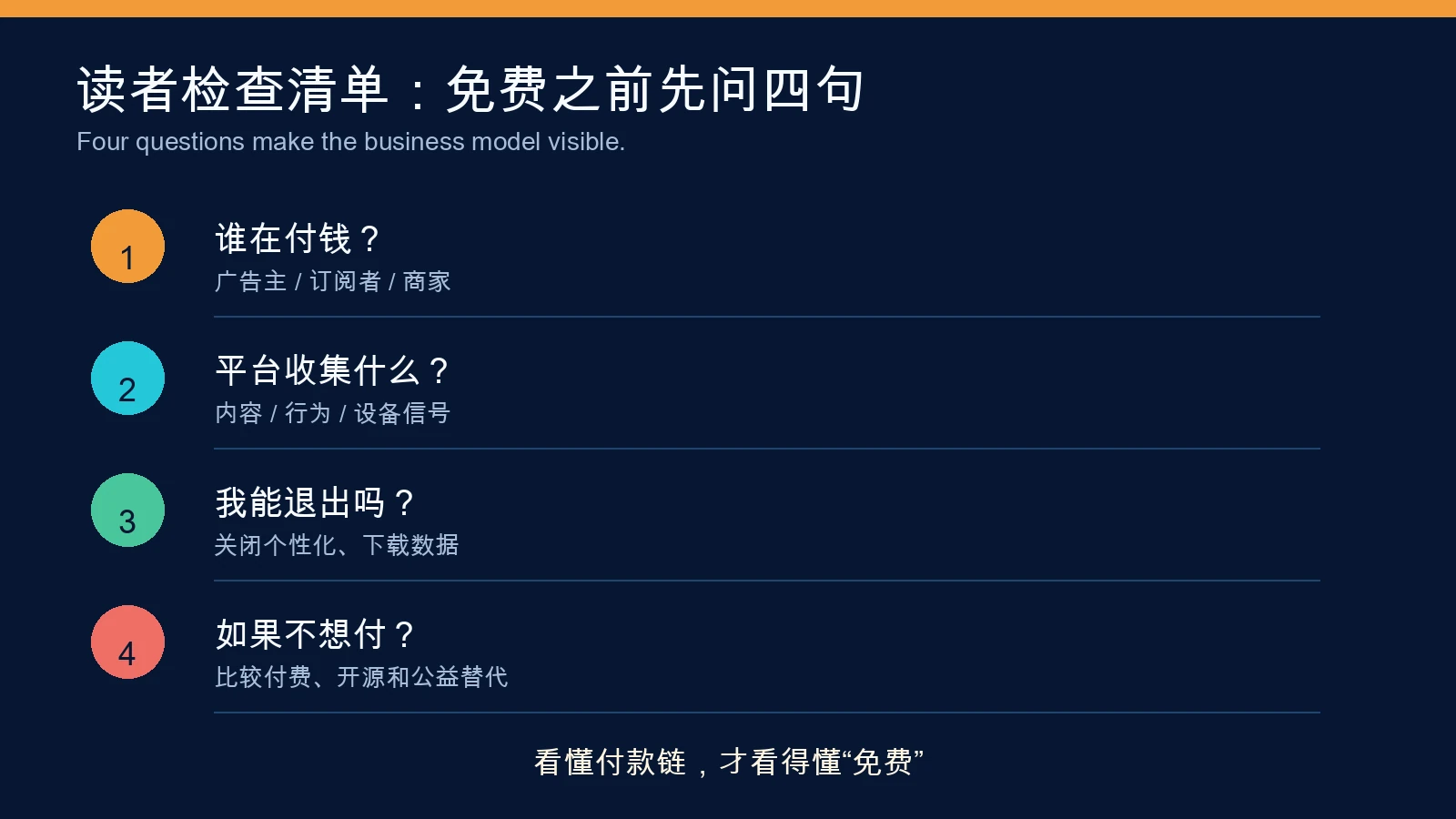
No individual can redesign the entire internet, but users can treat a free service as an exchange worth understanding.
Ask who pays
If a page is free, revenue may come from advertisers, transaction fees, subscribers, enterprise customers, donors, or investor subsidies. Find the payer first; then the product’s design makes more sense.
Treat privacy settings like a budget
You do not need to disable everything, and you do not have to accept everything. Close unnecessary personalization, disable unused location access, enable multi-factor authentication, review third-party permissions, and periodically delete history.
Support valuable work
If you rely on a small publication, open-source project, or independent creator, consider subscribing, donating, or buying a legitimate product. This is not a moral performance; it is a way to turn “I want this to continue” into sustainable revenue.
Compare total cost, not just price
A free tool may save money but consume hours. A paid tool may remove ads, allow data export, and reduce migration costs. The right comparison is total cost, not the number printed on the price tag.
The AI era: a free quota may be a sample, not a permanent meal
Generative AI pushes the free-service question into a new phase. Showing one more web ad may add little incremental cost; answering a question can consume GPUs, energy, inference time, and model maintenance. Long contexts, image generation, video generation, and agent tasks can have very different costs.
An AI free tier is therefore closer to a coffee sample. The provider hopes you will try it, then buy a subscription, API usage, team seats, or enterprise service. Free users still matter because they bring feedback, word of mouth, error examples, and future conversions. But as inference costs rise, “free” may become a queue, a rate limit, or a reduced feature set.
That is not necessarily wrong. The problem is when a provider hides the limits or lets people assume that free means permanent, unlimited, and free of exchange.
Q&A
Are users really the product?
It is a memorable metaphor but not a precise one. Platforms often sell ad reach, prediction, ranking, and transaction opportunities. Users are not neatly boxed products, but they are central participants in the system.
Does advertising always violate privacy?
No. Contextual advertising can be based on the topic of a page without identifying the reader. Personalized advertising uses more signals. The important questions are what is collected, how it is explained, how long it is stored, whether it is shared, and whether users can leave.
If I block cookies, does the website know nothing about me?
No. Cookies are only one technique. Accounts, device information, server logs, browser storage, and partner signals may also be used. Blocking one tracker does not erase every system record.
Why not charge every user directly?
Direct payment creates friction and blocks many potential users. Advertising or enterprise funding lets a platform grow first and charge the participants who receive the most commercial value.
Should everything be paid?
No. Free services remain extremely valuable, especially public-interest projects, open-source software, and public knowledge. The better approach is to understand the exchange, keep reliable backups for important work, reduce unnecessary permissions, and prefer services with export and migration options.
The final answer: the internet is not free; the checkout counter is hidden
Imagine that the next “free” website is a shopping mall with no visible checkout. An advertiser rented a stall. A subscriber bought a premium pass. A merchant paid a transaction fee. A donor kept the public-interest corner open. The platform used attention and behavioral signals to tune the market.
You do not have to reject the mall, and you do not need to treat every recommendation as a conspiracy. What matters is knowing who pays, what the platform collects, what you receive, and whether you can leave when the exchange no longer feels fair.
The healthiest free service is not one where users never pay a cent. It is one where the exchange is transparent, users retain meaningful choices, and platforms and creators can earn sustainable revenue. Once we understand the payment chain, we understand the internet more honestly.
Sources
- Meta Platforms, Inc., 2025 Form 10-K: https://www.sec.gov/Archives/edgar/data/1326801/000162828026003942/meta-20251231.htm
- Google Ads Help, About Ad Rank: https://support.google.com/google-ads/answer/1722122?hl=en-gb
- Wikimedia Foundation FY 2024–25 Audit Report: https://foundation.wikimedia.org/wiki/File:Wikimedia_Foundation_FY_24-25_Audit_Report.pdf
- Federal Trade Commission, Surveillance Pricing Study: https://www.ftc.gov/news-events/news/press-releases/2025/01/ftc-surveillance-pricing-study-indicates-wide-range-personal-data-used-set-individualized-consumer
- Interactive Advertising Bureau, Internet Advertising Revenue Report: https://www.iab.com/insights/internet-advertising-revenue-report/
Financial figures are shown in the original currencies used by each organization. Sources were accessed on July 29, 2026. Screenshots help readers locate the source material and do not represent the complete reports.