Helium Is Escaping Earth: Why We Must Conserve the Universe’s Second-Most Abundant Element
The conclusion first
“Helium is the only element on Earth that only decreases and never increases” makes a memorable headline. It is also inaccurate. Radioactive decay inside Earth continues to produce helium. What we cannot readily replace is the accessible helium accumulated over geological time and released over much shorter human timescales.
Helium brings together three unusual properties: it is light, so released helium disperses and some eventually escapes into space; it is chemically reluctant to bond; and it performs exceptionally useful jobs at extremely low temperatures.
It is not an element scheduled to disappear tomorrow. It is a form of geological savings that deserves careful management.
1. A balloon has something in common with a medical scanner
For most children, helium means a balloon that needs a string. Let go, and a colorful dot rises into the sky. Few people watching it think about MRI scanners, semiconductor manufacturing or laboratories investigating matter at temperatures close to absolute zero.
An important qualification belongs here: saving one party balloon does not translate directly into one additional MRI examination. Balloon gas and helium supplied to medical equipment can differ in purity, physical form, distribution and contractual arrangements. Blaming birthday parties for every shortage is neither fair nor a useful explanation of the industry.
The interesting question is why a gas cheap enough to put inside a toy can also become important enough for engineers and hospital managers to worry about.
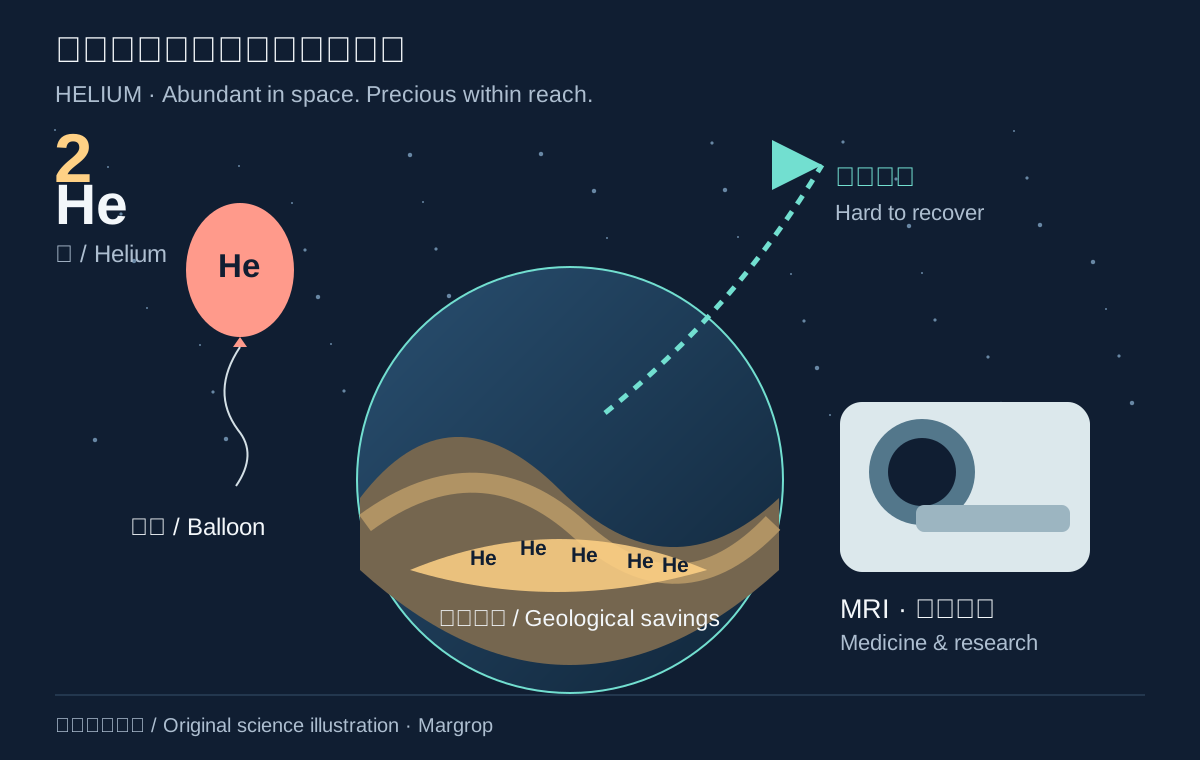
Figure 1. An original SVG illustration for this article. Geological accumulation, everyday uses and medical research share the same element. This is a conceptual illustration, not a scale drawing.
Think of helium as a special spare part. A shopping mall uses it for decoration; a laboratory needs properties that another material may struggle to provide. Its value depends on whether another part can do a particular job, rather than on whether its most familiar use looks sophisticated.
2. First, correct the claim that helium never replenishes
The Royal Society of Chemistry explicitly states that helium was, and is still being, formed through alpha-particle decay of radioactive elements inside Earth. Some reaches the atmosphere, while helium also escapes into outer space.[1]
Therefore, “Earth produces no new helium” is false. “Helium is the only element that Earth can lose” is also false: hydrogen can escape from the atmosphere as well.
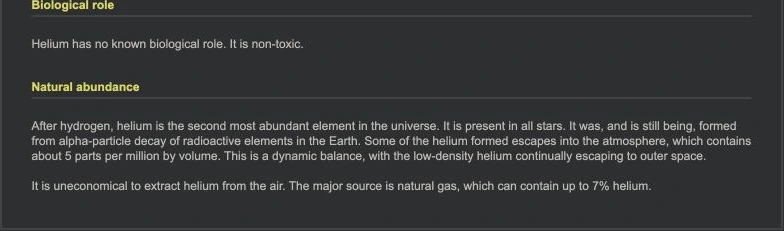
Figure 2. Genuine webpage screenshot: Royal Society of Chemistry — Helium, Uses and properties / Natural abundance. The important phrase is that helium is still being formed.
A better statement is:
Earth continues to make helium, but commercially useful deposits accumulate slowly. Once helium disperses into the open environment, recovering it is generally uneconomic. Natural helium is therefore normally treated as nonrenewable on human timescales.
Imagine a grandparent’s jar of coins, filled a little at a time over a lifetime. A few coins still go into the jar each day. That does not make the savings inexhaustible if someone removes handfuls every afternoon.
There are also two very different meanings of “more helium.” Producing new atoms inside Earth is one process. Discovering a deposit that people previously did not know about is another. A discovery increases our inventory of known resources; it does not mean those atoms appeared on the day of the announcement.
This article does not attempt a present-day net helium budget for the entire planet. It focuses on something more useful for society: helium that can be recovered, purified, transported and delivered when people need it. Mixing those boundaries together is how an interesting resource story becomes a misleading slogan.
3. How rocks slowly make the helium in a cylinder
Uranium, thorium and other radioactive elements undergo decay. Some steps in their decay chains emit an alpha particle: a cluster of two protons and two neutrons. That is the nucleus of helium-4. After slowing down and acquiring electrons from its surroundings, it can become a neutral helium atom.[1]
For a child, the helpful picture is “first the atom’s center, then its electron clothing.” More precisely, acquiring electrons here means neutralizing the particle’s charge; it should not be confused with the distinct nuclear-decay process called electron capture.
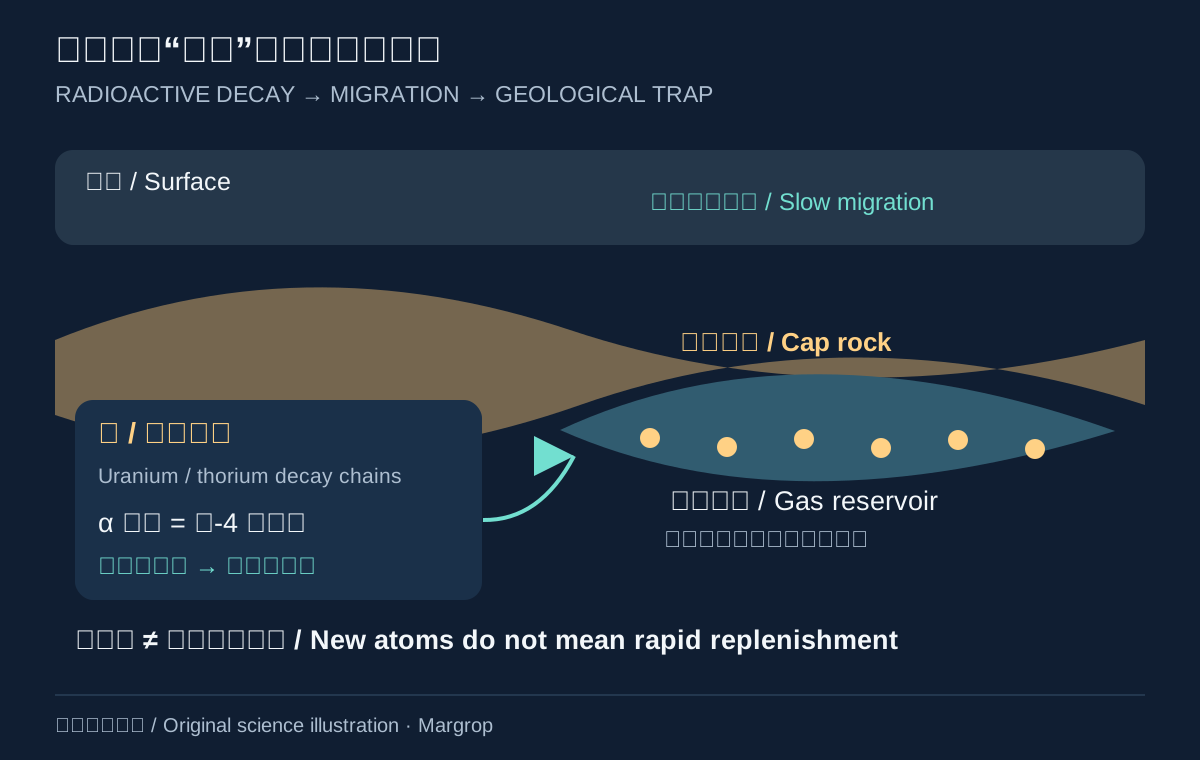
Figure 3. An original geological schematic. Generation, migration and retention are separate steps. Rocks that produce helium do not automatically create a commercially useful deposit.
New helium atoms do not organize themselves into a queue outside a factory. Some remain trapped in minerals. Others migrate through pores and fractures. A useful accumulation requires suitable source conditions, storage space, retention and a great deal of time.
The analogy is rain and a reservoir. Rain falling on a hillside does not mean that hillside contains a reservoir. A reservoir existing in the mountains does not mean its water has reached your kitchen tap.
Commercial helium has historically been recovered mainly from helium-bearing natural gas. However, it would be too strong to say it can only come from combustible natural gas. The USGS 2026 report notes that some deposits under exploration and development are nonhydrocarbon sourced.[2] Concentration, impurities, scale, processing costs and infrastructure determine whether a resource can become useful supply.
One reassuring distinction matters here: being produced by radioactive decay does not make the resulting helium radioactive. Ordinary industrial helium is predominantly stable helium-4. Origins and finished properties must be assessed separately, much as a chair made from a thorny tree does not necessarily have thorns.
4. Why released helium is difficult to get back
The atmosphere is not a chest of drawers with every gas neatly sorted by weight. Wind, convection and turbulence mix gases. A helium balloon rises because the buoyancy from displaced air can exceed the weight of the balloon and its contents, not because helium is exempt from gravity.
A released balloon eventually leaks or bursts. Its helium mixes into the air. Over longer periods, atmospheric transport carries helium upward, and some can escape through processes in the upper atmosphere. The details are more complicated than “light things keep floating upward forever.”
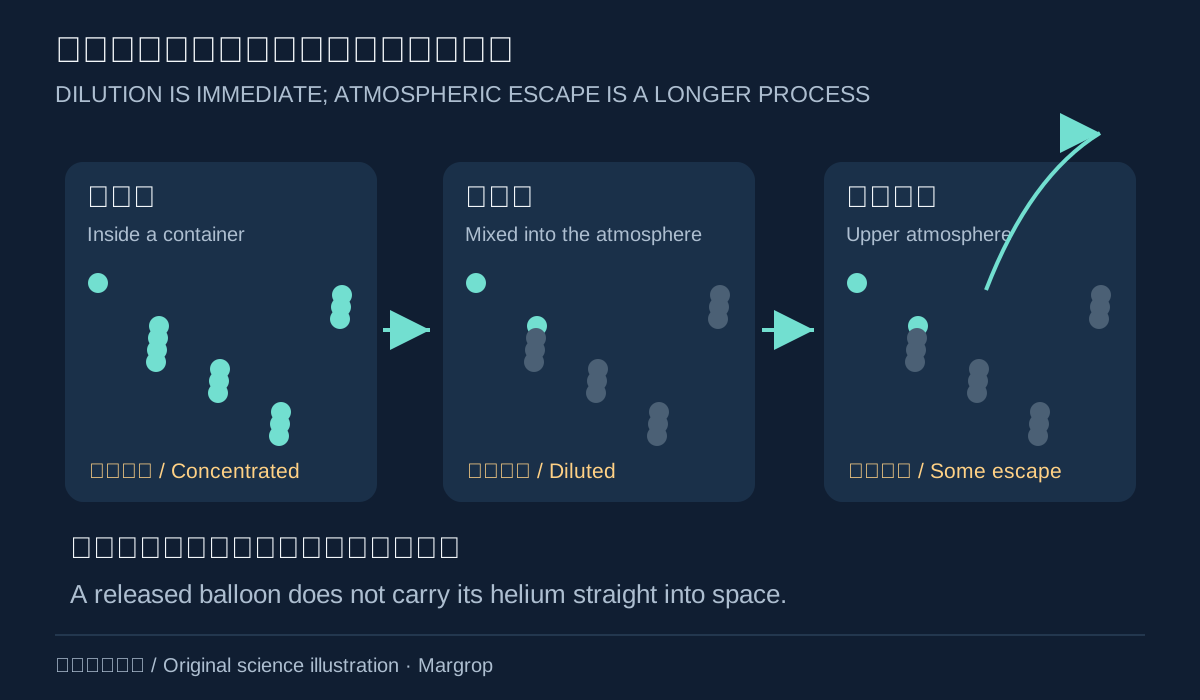
Figure 4. Original schematic. Dispersion and dilution follow release; leaving the planet is not an immediate, synchronized next step for every helium atom.
Imagine pouring a spoonful of sugar into a cup of tea. Now imagine pouring it into a swimming pool and trying to recover that particular spoonful. The sugar still exists, but gathering it becomes a very different problem.
Helium can become economically impractical to recover long before it actually leaves Earth. Dilution already removes it from the convenient, concentrated inventory available to users.
Helium is also very unreactive under ordinary conditions and normally exists as individual atoms. Unlike elements that readily enter common compounds, it does not easily find a chemical partner that keeps it locked into everyday solids or liquids.
This does not mean helium cannot be stored. Cylinders, cryogenic vessels and appropriate geological structures can retain it. The distinction is between keeping a concentrated supply under control and recovering the same supply after dispersal through a vast atmosphere.
5. If the universe has so much, why not extract it from air?
Helium is the universe’s second-most abundant element after hydrogen. Much cosmic helium originated in early-universe nucleosynthesis, and stars also produce helium. But cosmic abundance does not describe the composition of the air beside your desk.[1]
The Royal Society of Chemistry gives an atmospheric concentration of approximately five parts per million by volume. Picture a box holding one million equally sized balls: only about five represent helium.
At the same temperature and pressure, that approximate concentration means that obtaining one cubic meter of helium gas would require processing roughly 200,000 cubic meters of air, even in an ideal calculation with perfect recovery and no losses.
That is a concentration calculation, not a factory specification. It also refers to gas, not a cubic meter of liquid helium. Actual separation requires energy, machinery, purification and acceptance of imperfect recovery.
“Air contains helium” and “air is an economical helium feedstock” are separated by an entire industrial process. Whether a resource exists is a physical question. Whether we can conveniently use it also depends on concentration, energy and cost.
6. Helium’s valuable talent: working where it is extraordinarily cold
Its ability to lift balloons is familiar. Its low-temperature properties are a major reason hospitals and laboratories care about it.
Near standard atmospheric pressure, helium-4 boils at approximately 4.2 K, or −269°C. K means kelvin: absolute zero is 0 K, equivalent to −273.15°C. Liquid nitrogen, already spectacularly cold by everyday standards, boils at about 77 K, or −196°C, at atmospheric pressure.[1][3]
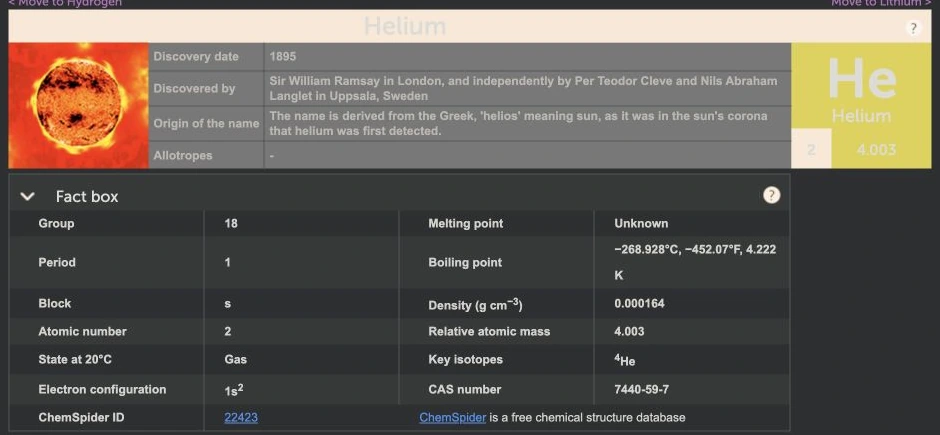
Figure 5. Genuine screenshot of the RSC helium fact box. Checking the original also prevents accidental confusion between Fahrenheit and Celsius.
“Both are incredibly cold, so surely either will work?” Not necessarily.
Two keys can look similar and still fit different locks. For a superconducting material, temperature, magnetic field and electrical current help determine whether it can remain superconducting. The difference between 77 K and approximately 4 K can be the difference between reaching the required operating state and failing to reach it at all.
Superconductivity can be introduced as electricity flowing through certain materials without the ordinary resistive heating of a wire. But a material must meet its operating conditions. It is not a trick that works on every metal placed in a refrigerator.
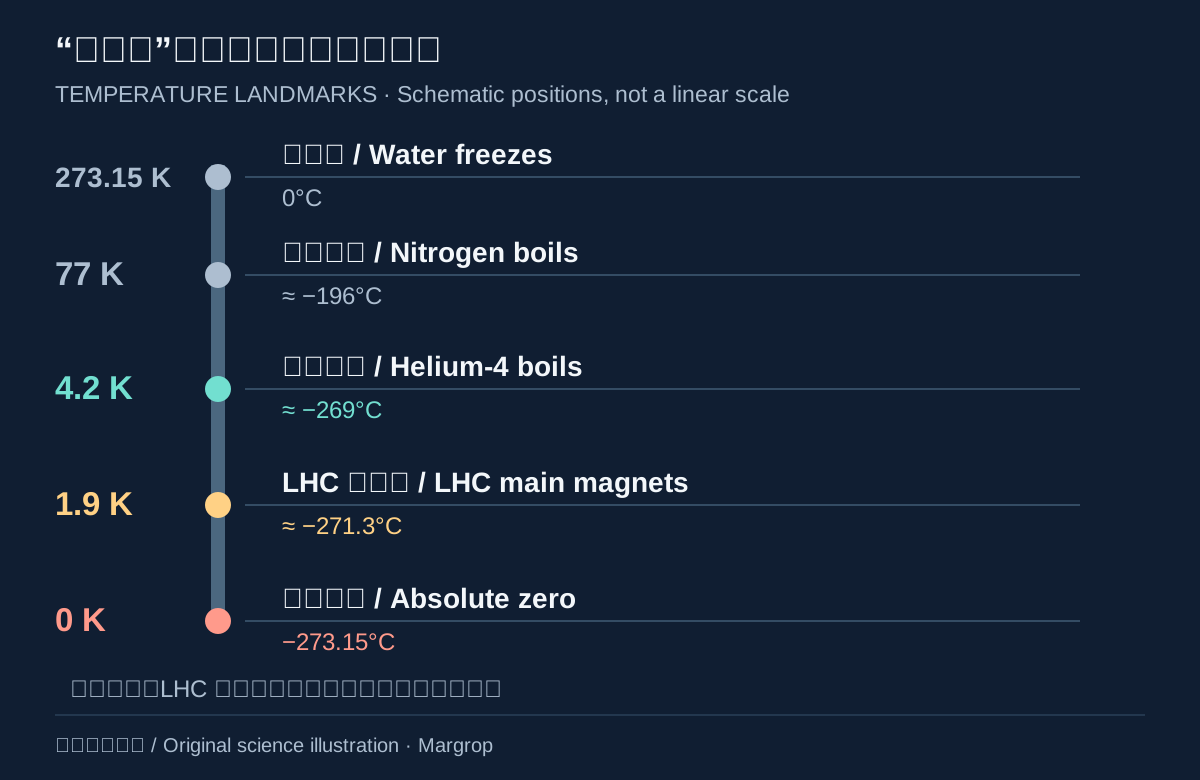
Figure 6. Original educational diagram. Positions are schematic, not a linear temperature scale. Nitrogen and helium values are atmospheric-pressure boiling points; 1.9 K is an LHC operating temperature.
Many high-field MRI systems use superconducting magnets, supported by helium-based cooling arrangements. An MRI examination does not automatically burn a fixed dose of helium like a car burning fuel over a fixed distance. Well-designed systems try to retain or recover their helium. Replenishment needs depend on the design, maintenance and abnormal events.
Nor do all MRI machines depend on liquid helium in the same way. Field strengths, magnet types and cooling approaches vary. That variation creates opportunities for better engineering.
CERN offers a striking example of helium at work: the Large Hadron Collider’s main magnets operate at approximately 1.9 K, maintained through a closed liquid-helium circuit. Helium circulates during operation.[3] A normal boiling point near 4.2 K does not prevent specialized refrigeration and reduced-pressure arrangements from reaching lower temperatures.
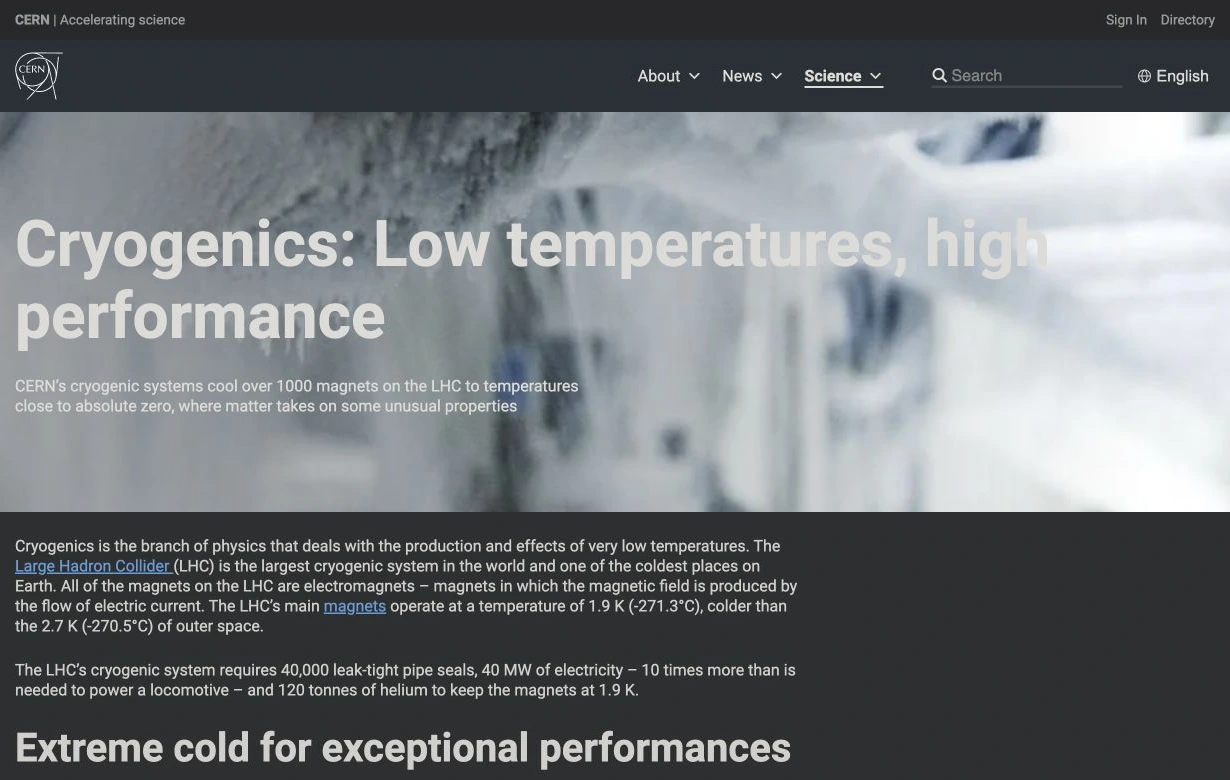
Figure 7. Genuine screenshot: CERN — Cryogenics: Low temperatures, high performance. These temperatures require an engineered refrigeration system.
Helium also serves semiconductor and optical-fiber manufacturing, leak detection, welding, and aerospace purging and pressurization. Those applications do not all need it for the same reason. Some require an inert atmosphere; others exploit its ability to pass through tiny leaks. “It is all for cooling” is another tempting oversimplification.
7. A helium crisis is not a countdown to the last atom
When people hear “nonrenewable,” they understandably ask how many years are left.
Dividing known reserves by annual consumption produces a number that sounds scientific. However, reserves change with exploration, prices, technology and reporting definitions. Production and demand change too. At most, that division produces a static ratio under stated assumptions. It is not the planet’s shutdown date.
The structure of supply is often more useful. The USGS Mineral Commodity Summaries 2026, published in February 2026, gives these estimates for 2025 helium production:[2]
| Location | Estimated 2025 production, million cubic meters of helium gas |
|---|---|
| United States | 81 |
| Qatar | 63 |
| Russia | 18 |
| Algeria | 11 |
| Canada | 6 |
| China | 3 |
| Poland | 3 |
| World total, rounded in the report | 190 |
Three qualifications matter. These are 2025 estimates, not a live view of 2026 deliveries. The U.S. figure includes some helium extracted in Canada and purified in the United States. Finally, the published world total is rounded: country values need not add up exactly to 190, and the arithmetic difference should not be presented as the production of an unlisted country.
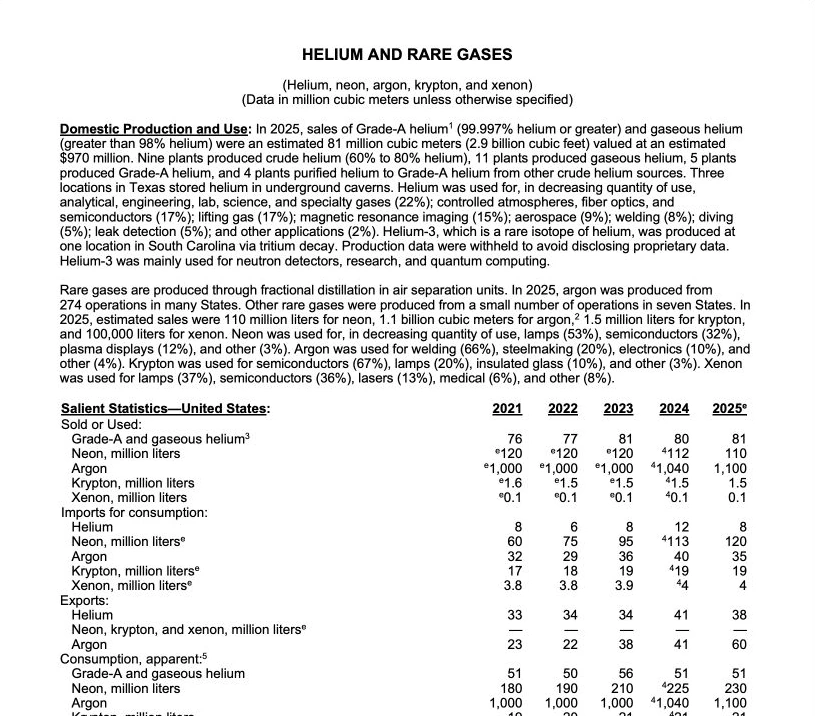
Figure 8. Genuine browser screenshot of the original USGS PDF, page 1. Its end-use percentages describe the United States, not the entire world. Original report
The report lists U.S. helium use as including analytical, engineering, laboratory, science and specialty gases at 22%; controlled atmospheres, fiber optics and semiconductors at 17%; lifting gas at 17%; and MRI at 15%. Lifting gas is not synonymous with birthday balloons. Assigning the entire category to children’s parties would misrepresent the data.

Figure 9. Genuine screenshot of page 2 of the USGS report. Production, reserves and resources are different quantities.
Using the published rounded figures, the United States and Qatar account for approximately 76% of world production. That concentration helps explain why a problem at a major source, processing plant or transportation route can affect customers even while plenty of helium remains underground.
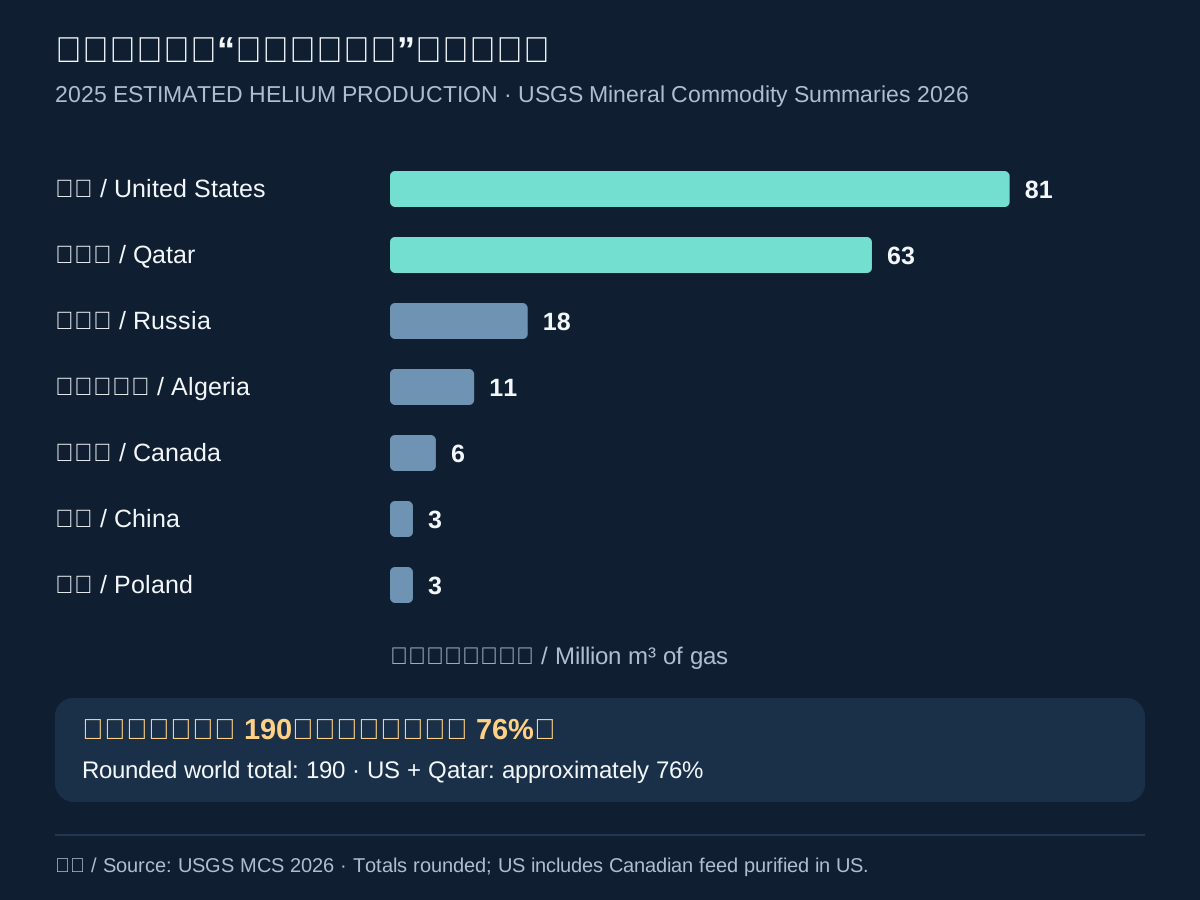
Figure 10. Original chart based on USGS data, in million cubic meters of helium gas. Bars use a common linear scale; the 76% figure is approximate and uses the published rounded world total.
Think of a city supplied through a few large water mains. The reservoir may still be full when your neighborhood loses water. The deposit is the reservoir, purification is the treatment plant, liquefaction and transport are the distribution network, and the hospital is the tap.
This resembles a point from my article on the value of domain names: scarcity is not always about something being absent from the universe. It can mean the right thing is difficult to obtain at the time, place and conditions you require.
8. What helps: lose less, circulate more, and develop reliable supply
If the problem is more complex than “atoms are nearly gone,” its solution needs to be more useful than “ban balloons.”
Catch helium before it disperses
The best recovery opportunity is while helium remains in equipment, pipework or a collectable exhaust stream. Boil-off gas can be captured, compressed, purified and re-liquefied so the same inventory performs its job repeatedly.
Think of a cafeteria’s reusable trays. Collecting them on a return conveyor is manageable. Smashing them and distributing the pieces among rubbish bins across the city first would make recovery far harder.
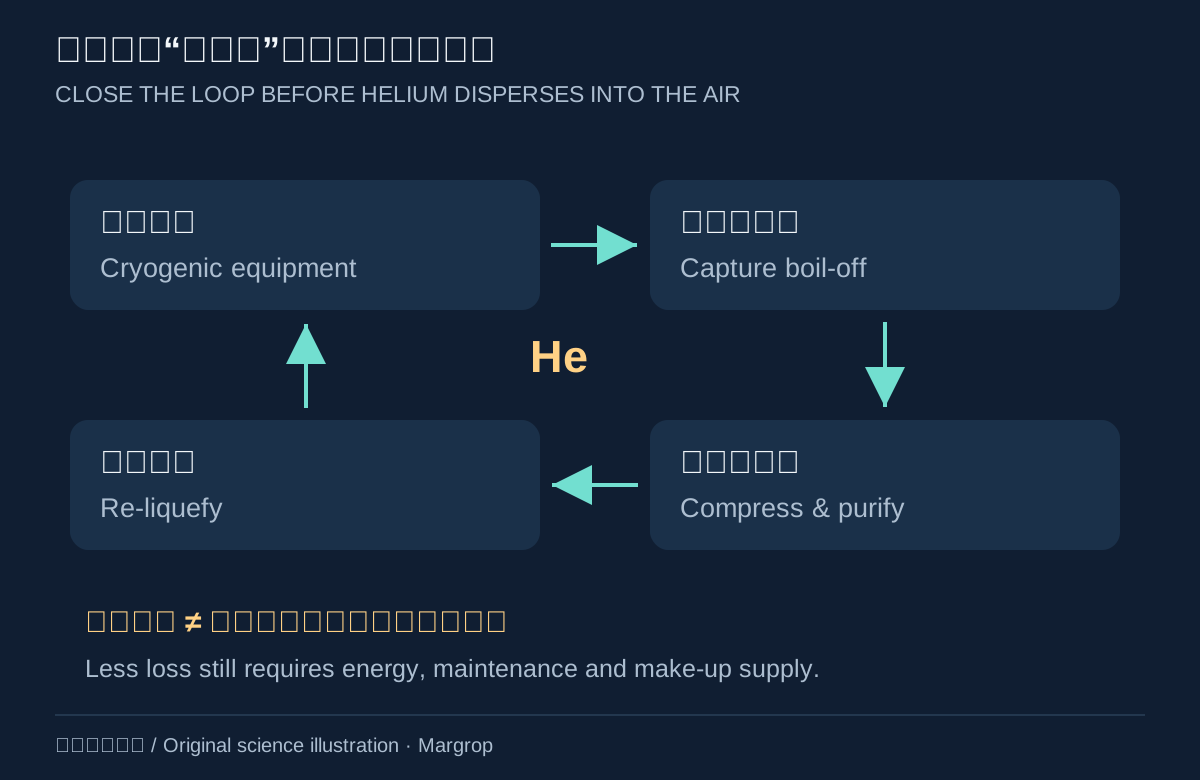
Figure 11. Original recovery-loop illustration. Recycling reduces purchases of fresh helium but still requires electricity, equipment, maintenance and some make-up supply.
USGS reports that closed-loop systems are becoming more common, while helium in large-volume U.S. applications is still seldom recycled.[2] Recovery is useful, but it is not already perfect or universal.
Design equipment to need less from the beginning
Low-helium designs, improved insulation, recondensation, leak reduction and better maintenance can reduce demand. Some applications can use different cooling systems, materials or gases.
Substitution must be evaluated for a particular task. Nitrogen or argon might suit one process; neither can simply be poured into an existing helium-cooled magnet as a universal replacement. Medical equipment should be assessed against manufacturer specifications, clinical requirements and qualified engineering advice.
A commercial example is Philips BlueSeal. Its website uses the phrase “helium-free operations” while also stating that approximately seven liters of helium are permanently enclosed in the cryogenic circuit.[4]

Figure 12. Genuine Philips product-page screenshot. This demonstrates a specific commercial approach, not the configuration of every MRI machine.
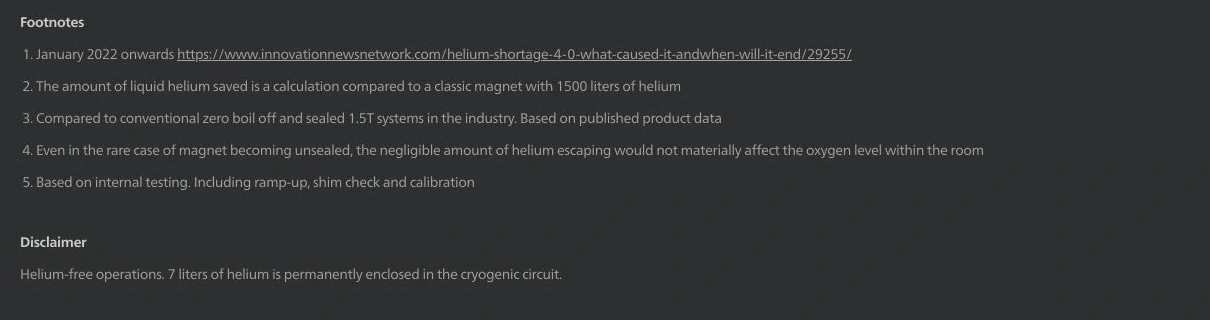
Figure 13. Genuine screenshot of the same page’s disclaimer. “No routine helium refilling” and “contains no helium” are different claims. This is manufacturer documentation, not an independent performance review.
The everyday analogy is a sealed refrigerator. You normally do not top up its refrigerant, but that does not mean there is none inside. Understanding that distinction makes “helium-free” much less mysterious.
Connect new resources to functioning infrastructure
New deposits, processing plants and storage can improve supply. USGS records new operations in the United States, Canada and South Africa during 2025, along with new storage infrastructure.[2] An account that says nothing can be done except watch helium run out would also be inaccurate.
Nevertheless, a discovery must pass through resource assessment, financing, construction, commissioning, purity qualification and logistics before dependable delivery. A large resource number in a headline is not a cylinder arriving at a laboratory next month.
Individuals can reduce unnecessary releases, choose air-filled decorations and reuse celebration materials. Institutions can focus on leaks, recovery rates, lifetime equipment costs and diversified supply. Personal conservation and industrial improvements complement each other.
9. Four different accounts behind “we are running out”
Perhaps the most useful lesson is a way of reading resource news, rather than a particular helium statistic.
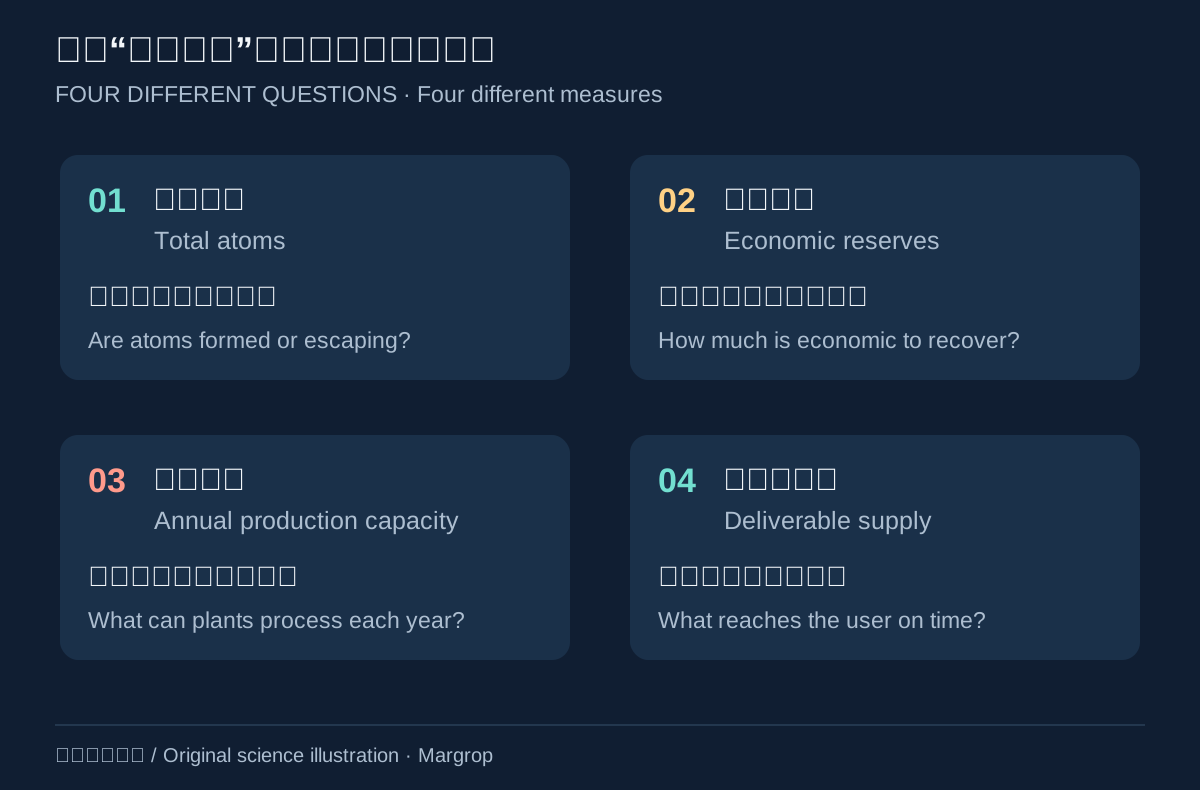
Figure 14. Four different accounting questions. Define the quantity, time period and geographical boundary before drawing a conclusion.
| A headline says… | The next question should be… |
|---|---|
| “Earth has plenty of helium” | All helium atoms, or identified resources that are economic to recover? |
| “A huge helium deposit was found” | What concentration? Resources or reserves? When can it supply customers? |
| “Helium supply is increasing” | Where, at what purity, in gas or liquid form, and with what delivery reliability? |
| “This device is helium-free” | Does it contain no helium, or avoid routine refilling under specified conditions? |
Good science writing should clarify these questions instead of squeezing them into the most frightening possible sentence.
Q&A: nine questions readers often ask
Is helium really nonrenewable?
On human and commercial timescales, that is generally a useful classification. Natural generation continues, but useful deposits do not replenish at the pace of purchasing and consumption. Nonrenewable does not mean that no new atom ever forms.
Why not manufacture helium through nuclear reactions?
Nuclear processes can produce helium. Doing so at suitable cost, energy use and scale is a different question. Treating a nuclear installation as an ordinary industrial helium generator is not a general replacement for geological feedstocks today. Producing smaller quantities of helium-3 addresses another market and set of applications.
What is the difference between helium-3 and helium-4? Can the Moon help?
Both nuclei have two protons. Helium-3 has one neutron; helium-4 has two. Ordinary industrial helium is predominantly helium-4. USGS also records helium-3 production through tritium decay.[2] Lunar helium-3 discussions often concern a potential fusion fuel. They should not be confused with a ready-to-use supply plan for terrestrial helium cooling systems.
Does helium burn?
Not under ordinary conditions. Its inertness differs markedly from hydrogen’s flammability. However, nonflammable does not mean safe to inhale.
Is inhaling helium for a funny voice harmless?
No. Helium displaces the oxygen needed for breathing, and inhalation directly from a pressurized cylinder adds injury risks. The voice effect mainly involves sound propagation and resonance in the vocal tract, not suddenly shrinking vocal cords. A nontoxic gas can still cause oxygen deprivation.
Will helium shortages shut down every MRI scanner?
That conclusion does not follow. Designs, helium requirements, recovery, inventories and supply arrangements differ. Supply deserves management, but a period of market tightness does not establish inevitable shutdowns across all hospitals.
Does recycling eliminate the need for extraction?
No. Real systems have losses, recovery needs energy, and economic limits vary. New equipment may also need an initial fill. Recycling makes the same inventory useful more often; it does not create a perfect system requiring no replenishment.
Should every helium balloon be banned?
Reducing unnecessary single-use consumption is sensible, but lifting applications also include purposes such as scientific observation. A blanket slogan will not fix processing, transport, recovery or equipment design. For ordinary decorations, using air is often a straightforward alternative.
What three sentences should a child remember?
Earth slowly makes helium. Released helium is difficult to collect again. Some important machines need it, so we should conserve it and use it repeatedly.
Those sentences are less dramatic than “the only element that never increases.” They are also far more useful.
The valuable part is what we can keep within reach
Helium offers a wonderful contrast: extraordinarily abundant across the universe, difficult to replace in some important jobs here on Earth.
A balloon can still bring joy. Understanding its resource story is not about turning every celebration into a moral burden. It is about recognizing that quiet, invisible materials can support a surprising amount of modern life.
The concern is not a day when every helium atom suddenly vanishes. It is that we might keep treating geological savings like ordinary air, even when better storage, equipment and recovery could preserve much more of their value.
References and image notes
This is a science explainer, not a computer setup or troubleshooting tutorial, so it does not include unrelated operating-system scripts. Sources checked on 8 September 2026. Annual supply figures are 2025 estimates published in February 2026, not live prices or delivery conditions on the writing date.
- Royal Society of Chemistry: Helium. Element properties, boiling point, abundance, radioactive-decay origins and uses.
- USGS: Mineral Commodity Summaries 2026 — Helium and Rare Gases. Estimated 2025 production, U.S. end uses, recovery and project developments. Rounding and footnotes matter.
- CERN: Cryogenics — Low temperatures, high performance. The LHC’s 1.9 K operating temperature and closed helium circuit.
- Philips: Helium-free MRI BlueSeal technology. A manufacturer’s low-helium design and the qualifications behind “helium-free operations”; not an endorsement or independent evaluation.
The article contains 14 figures: seven original SVG science illustrations and seven genuine webpage or original-PDF browser screenshots. Screenshots were cropped to relevant areas and converted to WebP, not reconstructed as imitation webpages. Sources appear in their captions; original webpage text, branding and interfaces remain the property of their respective rights holders. Diagrams are not presented as photographs, field measurements or experimental results. All images are hosted on this blog rather than hotlinked from external sites.