Stop Being a Syntax Typist! The Ultimate Guide to Mastering ByteDance Trae AI IDE: From Blind Generation to Chief Project Director, Four Production Pitfalls, MCP/Rules Tuning, and Zero-Dependency Cross-Platform Sandbox
Executive Summary: If you open Trae today and merely use it as a slightly faster, free VS Code fork to press Tab for code completion, you are treating an aerospace jet engine like a wooden pushcart!
- From Syntax Typist to Chief Site Inspector: Trae (The Real AI Engineer) is not a passive autocomplete box; it is an autonomous agent endowed with plan formulation, multi-file manipulation, terminal control, and external tool connectivity. Elite engineers no longer manually lay individual bricks; they orchestrate systems from the command deck through specification engineering and rigorous architectural verification;
- Post-Mortem of Four Devastating Production Pitfalls: We dissect the most insidious failure modes developers face—context poisoning and silent deletion of production logic from indiscriminate repository indexing, broken multi-file contracts caused by vague prompting, terminal execution death loops, and stdio communication channel collapse from unbuffered debug prints;
- Four Everyday Analogies That Anyone Can Grasp: Unpack Chat vs Builder modes using the interior decorator vs the general construction crew, understand token budget pollution through the cluttered 1-meter study desk, comprehend
.trae/rules/via Michelin kitchen food safety imperatives, and visualize MCP using prosthetic bionic arms and sensory sockets;- Five Battle-Tested Enterprise Hardening Laws: Dual-engine synergy, surgical context gatekeeping with
.traeignoreand#Doc/#Web, deterministic rule enforcement, pristine zero-noise MCP server integration, and multi-model dispatching;- Zero-Dependency Cross-Platform Diagnostic Sandbox: Production-grade native toolkits for Windows 11 (PowerShell 7), Ubuntu 26.04 (Bash), and macOS 27 (Zsh), supporting both interactive self-healing and headless automated agent configuration.
1. Background: The Productivity Illusion and Engineering Backlash in AI Coding
Across the global software landscape in 2026, AI-assisted development is undergoing a generational shift from reactive code completion (Copilot paradigms) to fully autonomous, proactive coding agents (Agentic IDEs).
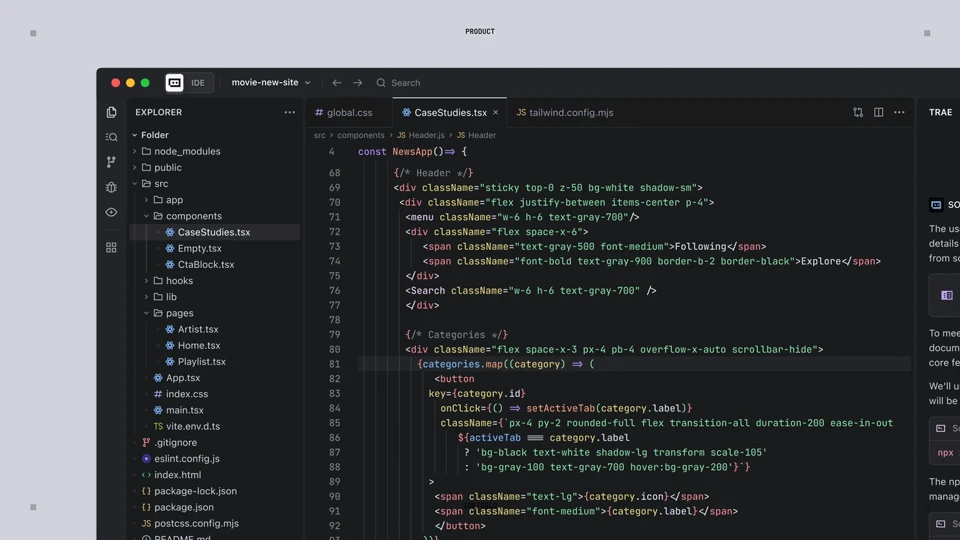
Among this new crop of development platforms, ByteDance's Trae has rapidly become a premier powerhouse. Deriving its name from "The Real AI Engineer", Trae was designed from the ground up not as a cosmetic chat sidebar, but as an integrated development environment where artificial intelligence natively orchestrates file trees, terminal processes, interactive debuggers, and browser previews.
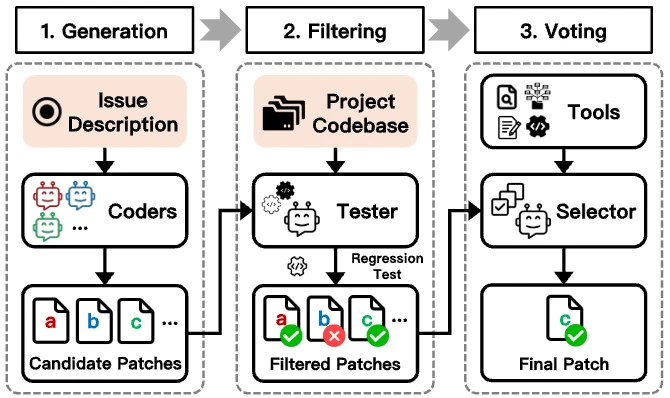
Trae possesses formidable technical credentials: built directly upon the battle-tested VS Code core, it preserves total compatibility with thousands of extensions, themes, and keybindings; its underlying model engine seamlessly bridges premier frontier models (Claude 3.5 / 3.7 Sonnet and GPT-4o) alongside ByteDance's proprietary Doubao models; on the SWE-bench Verified benchmark, Trae Agent clinched industry-leading accuracy through its innovative Selector Agent multi-agent architecture.
However, beneath the initial surge of adoption lies a sobering reality. Extensive surveys of development teams reveal a striking paradox:
More than 80% of engineers who install Trae still treat it like a traditional autocomplete plugin. Their workflow remains painfully primitive: when a bug surfaces, they paste a screenshot into the sidebar, ask "How do I fix this?", manually copy the code snippet back into their editor, switch to an external terminal, run the test, watch it fail, and repeat the cycle.
When tasks escalate in scope—such as refactoring dozens of interacting microservice modules—this superficial approach collapses:
- Regressions multiply as historical logic evaporates: The AI confidently generates a solution that inadvertently overwrites carefully hardened business invariants authored earlier;
- Context windows saturate into memory loss: After ten conversational turns, the agent forgets foundational architectural constraints and begins hallucinating phantom variables;
- Developers freeze in fear of autonomous Builder execution: Unsure how to constrain the agent's terminal powers, developers either withhold permissions or watch helplessly as the agent loops endlessly on recursive errors.
This brings us to the core thesis of this guide: How do we transcend superficial usage and truly master Trae's autonomous engineering capabilities? How do we transition from anxious code-typists to commanding Chief Project Directors?
2. Problem Manifestation: Four Real-World Production Collapse Post-Mortems
To illuminate the hazards of unconstrained agent development, we examine four catastrophic failure modes drawn directly from production post-mortems:
Failure Mode 1: [Context Poisoning via Blind Workspace Indexing] — The Phantom Evaporation of Production Logic
The Incident: A full-stack engineer was tasked with introducing a new digital payment channel into a legacy commerce engine containing a 500MB node_modules directory, compiled build outputs, and historical branches. The developer prompted Trae with a broad instruction: "Integrate WeChat Pay across our entire order settlement pipeline and update all affected frontend views."
The Collapse: Trae initiated an exhaustive workspace scan. Without a hardened .traeignore file, the agent's context window was instantly flooded with third-party type definitions, minified bundles, and build caches. Paralyzed by noise, the agent began applying multi-file edits. While the payment client was created, the agent mistakenly identified 2,000 lines of hardened concurrency locking and coupon deduction algorithms as "redundant boilerplate" and silently deleted them. The repository passed shallow syntax checks, but collapsed entirely during integration testing, demanding two full days of git surgery to recover.
Failure Mode 2: [Ghost Diffs from Vague Prompts] — Silent Interface Contract Fractures
The Incident: A frontend engineer wanted to modernize a shared component library, issuing an ambiguous command: "Make the card component look cleaner and migrate data fetching into custom hooks."
The Collapse: Trae's Builder generated edits across twelve files. Because the repository lacked clear .trae/rules/ constraints, the agent improvised an interface property named isHighlighted?: boolean in the child component, while leaving the parent container calling activeState. Worse, the agent loosened strict TypeScript union types into generic any definitions to bypass compiler checks. The build appeared to succeed, but the production page immediately threw fatal undefined is not an object runtime exceptions.
Failure Mode 3: [Terminal Execution Death Loop] — The Blind Puppy Chasing Its Tail in the Mud
The Incident: A backend developer authorized Trae's Builder mode to spin up a Python microservice repository, granting unattended terminal execution permissions.
The Collapse: Because the developer's local environment suffered from symlinked virtualenv conflicts, pytest exited with ModuleNotFoundError. Rather than diagnosing the root environment mismatch, the agent blindly inferred that packages were missing, executing recursive pip install commands. When permission errors followed, it attempted to write to system-level directories. Failing that, it introduced monkey-patched dynamic imports into application code. Fifteen iterations later, the terminal was buried in thousands of lines of errors, and the repository was utterly broken.
Failure Mode 4: [MCP Stdio Logging Contamination] — The Silent Fatal JSON-RPC Rupture
The Incident: A staff infrastructure engineer authored a custom local Python Model Context Protocol (MCP) server so Trae could inspect production database schemas directly over standard I/O (stdio).
The Collapse: While debugging the server, the engineer inserted a seemingly innocuous statement at the top of the script: print("Connecting to database..."). This plain text output directly polluted standard output (stdout). Trae's MCP client, expecting strictly formatted JSON-RPC 2.0 framed packets, encountered raw text and terminated with Invalid JSON-RPC protocol packet: Connection reset by peer. Assuming a complex model or protocol bug, the engineer spent hours debugging, unaware that a single unbuffered print statement had sabotaged the channel.
3. Intuitive Everyday Analogies: Four Core Mental Models Decoded
No matter how complex the engineering nomenclature, grasping the physical world analogy allows developers to master the underlying mechanics effortlessly. Here are four everyday analogies that anyone can understand:
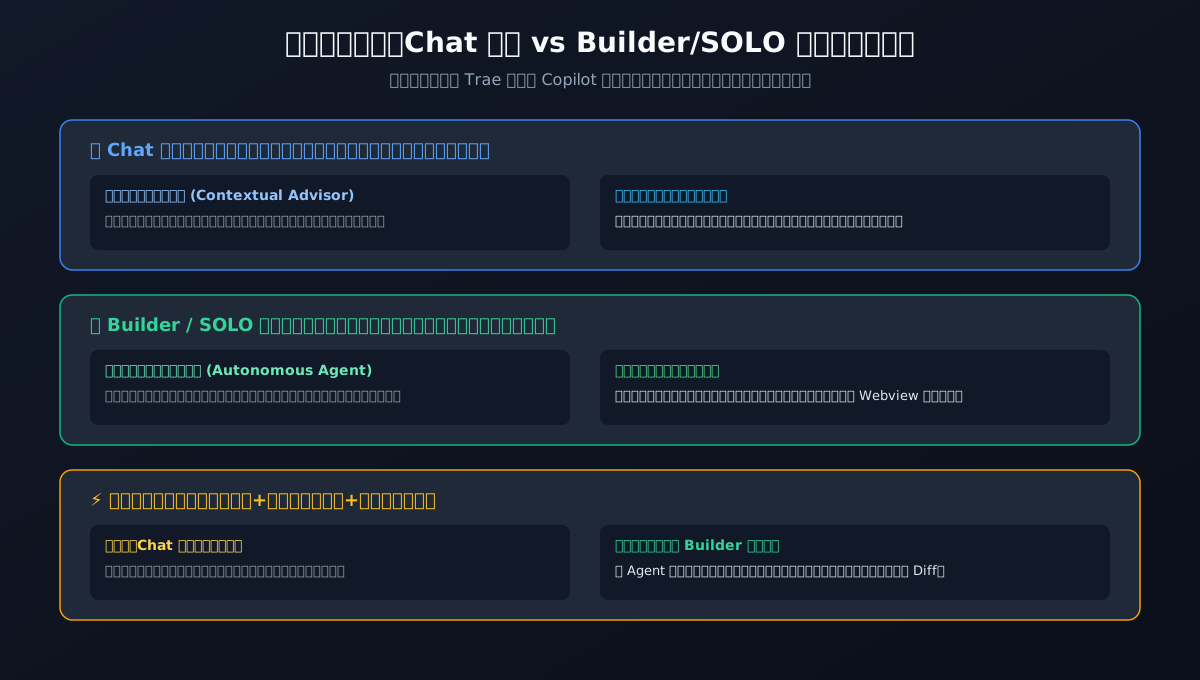
1. Chat Mode vs Builder/SOLO Mode: [The Interior Decorator] vs [The General Construction Crew]
When should you use Chat, and when should you invoke Builder? Think of remodeling a house:
- Chat Mode is your [Interior Decorator Consultant]: You sit on the living room sofa drinking tea together, asking: "Would a leather Scandinavian couch match our bay window lighting?" The decorator opens a sketchbook, draws floor plans, and evaluates color palettes. Crucially: the decorator carries no sledgehammers, drills, or wet cement. They will never demolish a load-bearing wall or alter your plumbing without asking. When you need architectural trade-off evaluations, mathematical derivations, or localized snippet explanations, Chat mode is your safest harbor because it never touches your file system.
- Builder / SOLO Mode is your [General Construction Crew]: The crew chief arrives in a truck loaded with jackhammers, laser levels, electrical conduit, and cement bags! You point to the blueprints: "Tear down the partition wall, convert the kitchen to an open layout, and plumb the master bathroom by Friday." The crew chief immediately assigns tasks: workers knock down masonry, pull wiring, discover pipe mismatches, measure them with calipers, weld new fittings, and conduct pressure tests before calling you for inspection. That is Builder mode: it autonomously decomposes multi-file requirements, writes code across directories, installs dependencies via the terminal, and renders the result in an embedded preview window.
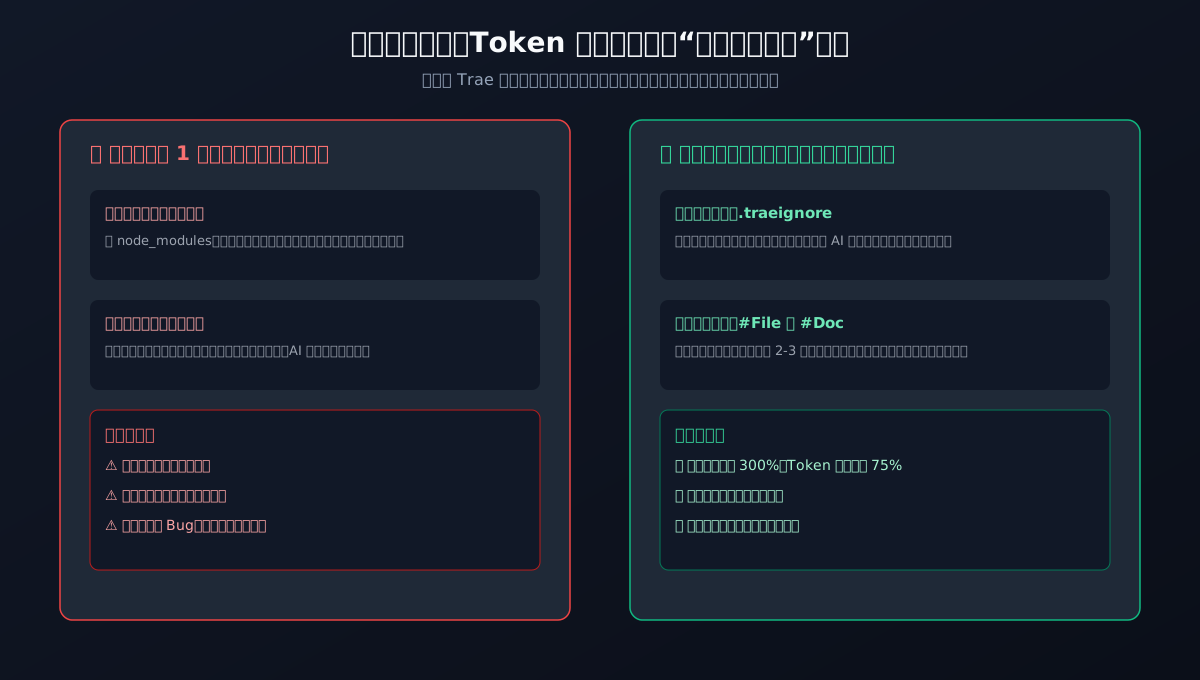
2. Token Context Window and Pollution: [The 1-Meter Study Desk Cluttered with Scrap Paper]
Why does an AI begin hallucinating, misinterpreting instructions, or deleting functions during long sessions?
Visualize the large language model as a studious kitten sitting at a compact desk measuring exactly one meter wide:
- The Horror of Context Poisoning: If you dump yesterday's soggy newspapers, takeout containers, and thousands of scrap calculation sheets onto the desk (analogous to unindexed
node_modules, build caches, and endless terminal logs), there is no room left for a pencil. Crucially, your final exam blueprint (core architecture rules and API schemas) is buried at the bottom of the trash pile. The kitten cannot locate the true requirements and frantically copies whatever scrap paper it happens to touch, producing bizarre hallucinations and destroying valid code. - The Master Desk Routine: Professional engineers deploy an industrial vacuum cleaner (a strict
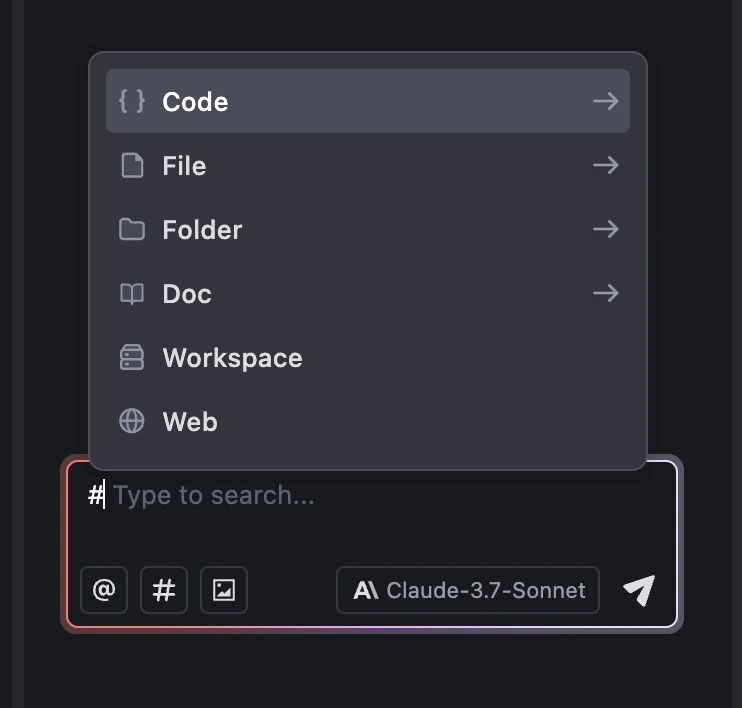
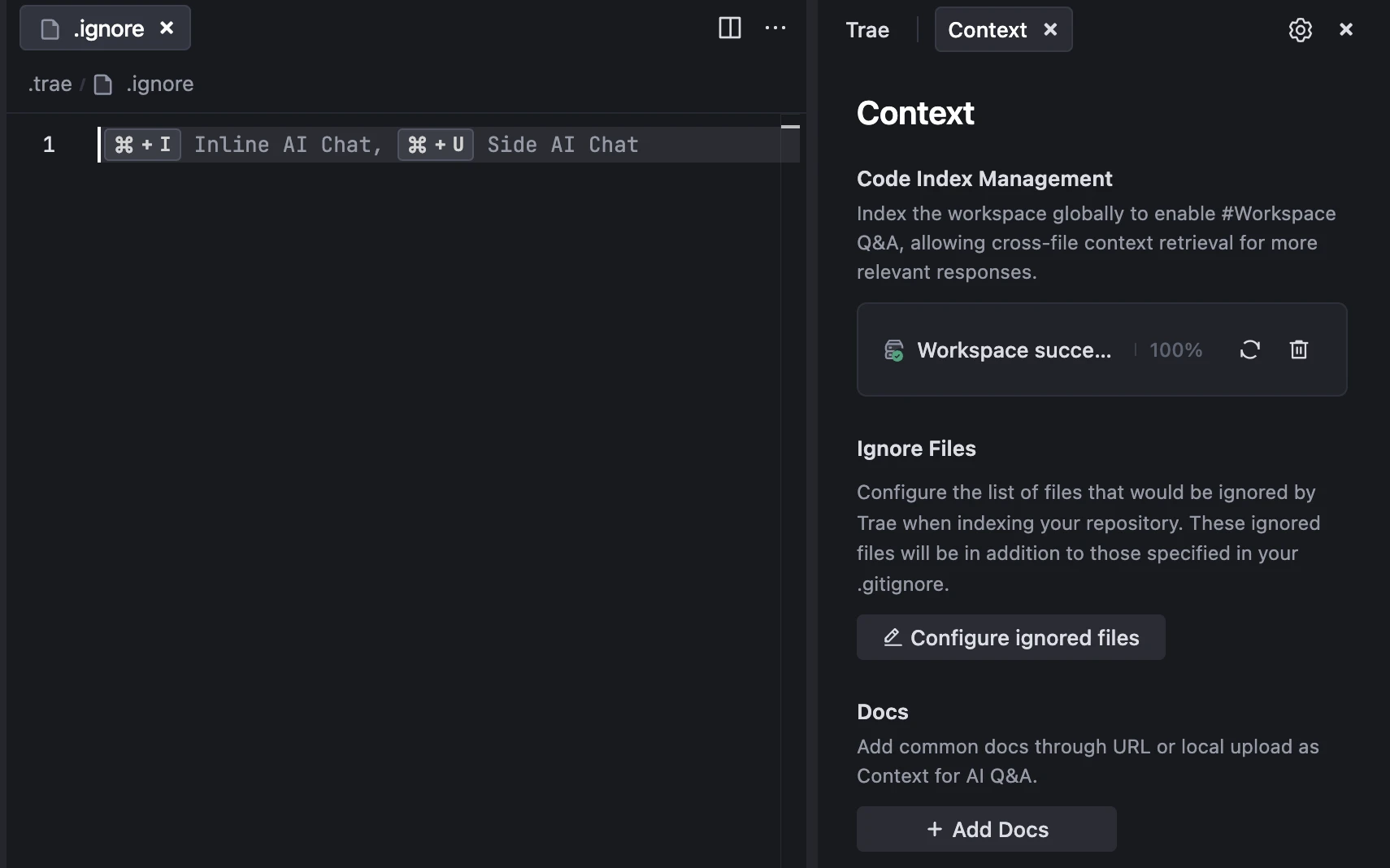
.traeignorefile) that prevents junk from entering the study in the first place. When modifying a feature, they pull only the two or three relevant blueprints from the shelf (using#Filereferences). The desk stays pristine, and the kitten's attention remains laser-focused on the exam paper.
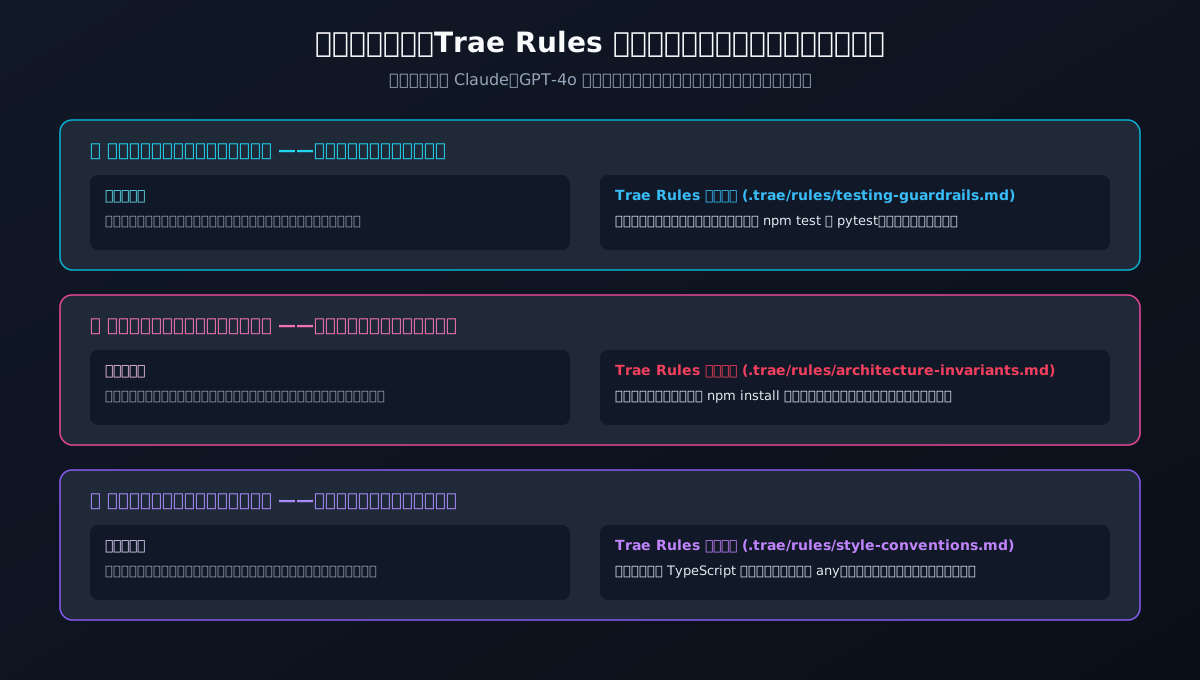
3. Trae Rules: [Michelin Kitchen Food Safety Non-Negotiables]
Large language models possess immense raw intellect, but because they absorbed hundreds of billions of lines of random Internet code, their natural work habits can be sloppy—mixing paradigms, taking shortcuts, and introducing security vulnerabilities if left unguided.
The .trae/rules/ directory represents the golden safety commandments framed above the prep station in a three-star Michelin restaurant:
- No matter which chef is on duty (Claude 3.7, GPT-4o, or Doubao), the moment they step into the kitchen, they are legally bound by these rules;
- Rule 1 (Wash dishes with purified water before serving): This is [Test-Driven Verification]. Every dish must pass inspection. When code is altered, automated test suites must be executed in the terminal; red tests mean the kitchen cannot declare completion;
- Rule 2 (No unauthorized street market ingredients): This is [Dependency Invariant Control]. Agents are strictly forbidden from randomly executing
npm installorpip installon untrusted packages without explicit authorization; - Rule 3 (Every serving dish must carry an allergen and date label): This is [Strict Type Contracting]. No
anyshortcuts; every parameter and interface must have full typing and clear documentation.
4. Model Context Protocol (MCP): [Giving Bionic Arms to the Genius Locked in a Chamber]
A pure text large language model, regardless of reasoning capability, fundamentally resembles a brilliant polymath locked in a soundproof, windowless room:
The scholar understands all mathematical theories and can recite Shakespeare from memory. But inside that room, they cannot see your room's temperature, lack hands to turn a doorknob, and cannot check live traffic. You interact solely by slipping paper notes under the door.
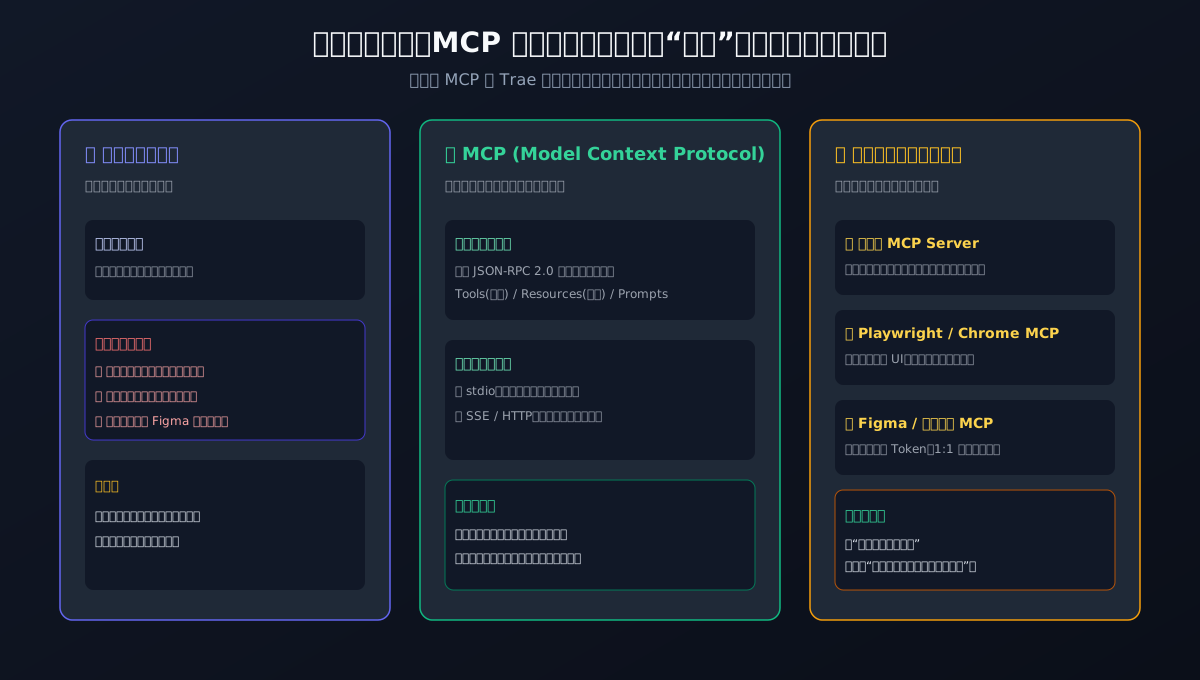
The Model Context Protocol (MCP) functions as a standardized cybernetic docking port embedded into the chamber wall:
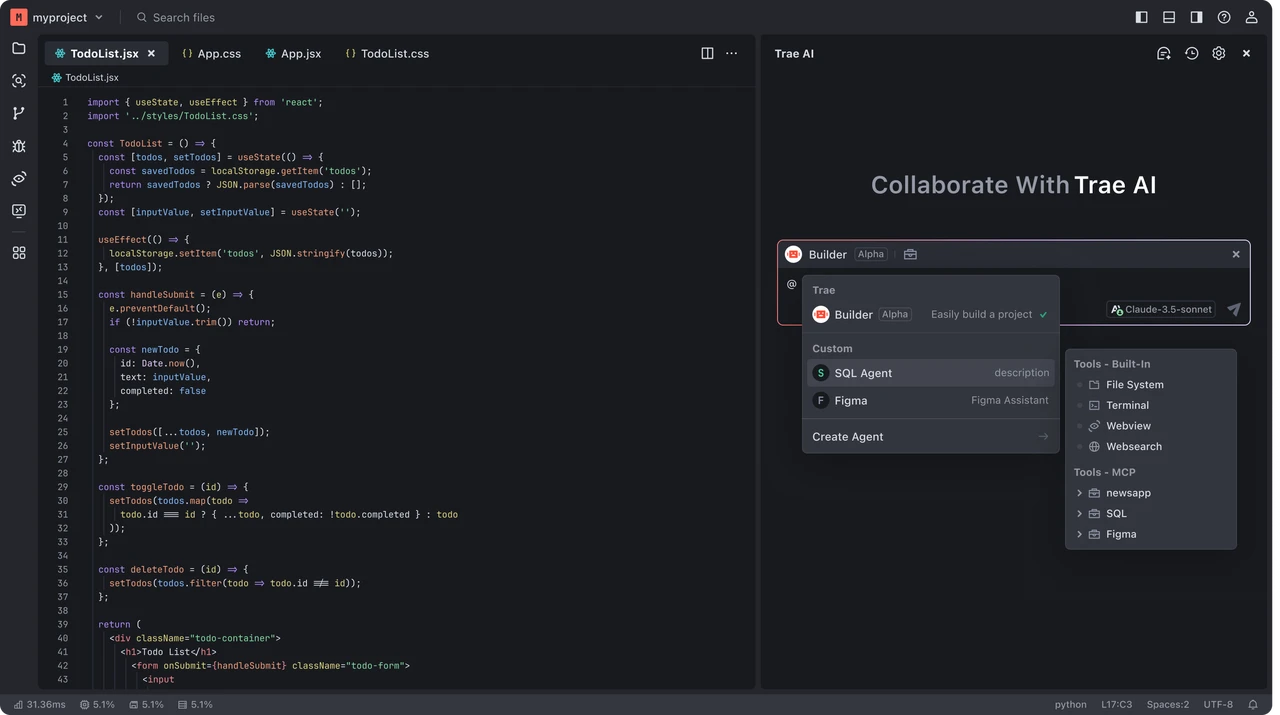
- Through a standardized umbilical cable, you attach a precision bionic robotic arm (local terminal manipulation to run compilers, execute shell commands, and read file bytes);
- You connect high-definition panoramic sensor cameras (Playwright browser automation to visually verify page rendering and click interactions);
- You hand over the master vault keys to the National Archives (Database MCP servers allowing secure, read-only queries of production schemas and real-time records).
Equipped with MCP, the imprisoned scholar transforms into an empowered field commander capable of directly manipulating reality.
4. Problem Analysis and Root Cause: Why Does Code Derail?
Having established our mental models, we can dissect the deep architectural root causes behind AI agent failures:
1. Attention Dilution and the Lost-in-the-Middle Phenomenon
The self-attention mechanism within Transformer architectures scales quadratically with sequence length. When an uncurated repository dumps hundreds of thousands of tokens into an inference window, the softmax attention distribution inevitably flattens.
In information retrieval terms, the signal-to-noise ratio collapses. If critical user instructions sit at the end of a prompt preceded by massive minified bundles and cache files, the model cannot maintain strong activation paths to true domain contracts. The observable symptom is immediate: the agent experiences memory lapses, ignores instructions, and deletes existing implementations.
2. The Contractual Mismatch Between Determinism and Probability
Software runtime engines operate in a strict Turing-complete, deterministic domain: a missing semicolon, an unhandled rejection, or a dropped lock immediately crashes the host process.
In contrast, large language models are probabilistic token predictors. Expecting a probabilistic engine to maintain 100% architectural rigor through sheer spontaneous alignment is engineering negligence. Robust systems require a closed deterministic evaluation loop: Static Rule Enforcement + Automated Dynamic Assertions + Atomic Git Diffs.
5. How to Solve It: Five Enterprise-Grade Laws for Trae Mastery
Based on rigorous real-world testing, here are the five golden laws for mastering Trae in production:
Law 1: The Dual-Engine Synergy Workflow
Never allow Builder mode to write architectural code without prior specification consensus. Adopt this two-phase rhythm:
- Phase 1: Chat Mode for Specification Convergence
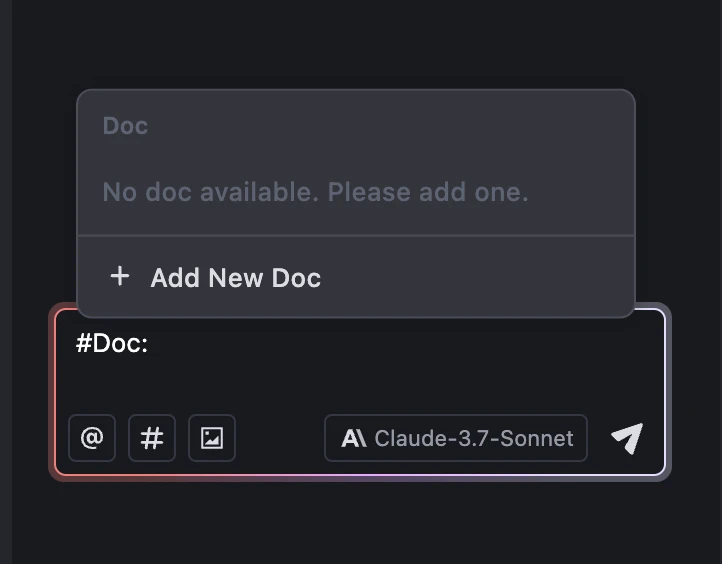
Open Chat in the sidebar, reference key documents (using#Docor explicit files), and interrogate the design: "We need to refactor authentication. Compare session cookies against JWTs given our current multi-tenant architecture, and draft the schema updates." Refine the design until the specification is crisp. - Phase 2: Hand Off to Builder for Autonomous Execution
Once finalized, transition to Builder mode with atomic task definitions: "Implement the JWT middleware insrc/services/auth/according to the approved plan, author integration tests, and run them in the terminal." The agent now builds within verified guardrails.
Law 2: Surgical Context Gatekeeping
- Enforce a rigorous
.traeignore: Place a strict exclusion file at the repository root, ensuringnode_modules, virtual environments, build artifacts (dist/,build/), logs, and.gitinternals are never ingested; - Use
#Fileand#Folderover#Workspace: Reserve whole-workspace queries for broad audits. For feature development, explicitly pass the 2-3 target files and pinpointed functions; - Ground New Frameworks with
#Docand#Web: When building against modern libraries (e.g. Next.js 15, React 19, TailwindCSS 4), bind the official documentation URLs into Trae's Context manager, preventing outdated API hallucinations.
Law 3: Fortify Behavior with Modular .trae/rules/
Organize rules in .trae/rules/ using dedicated Markdown files with declarative YAML Frontmatter:
| Rule File | Scope Strategy | Core Engineering Mandate |
|---|---|---|
01-architecture-invariants.md |
alwaysApply: true |
Forbid unauthorized deletion of production logic; enforce layer boundaries; protect public contracts |
02-testing-guardrails.md |
applyTo: "*.{ts,tsx,py,go}" |
Require unit tests for all modifications; mandate terminal test execution before marking tasks complete |
03-git-safety.md |
applyTo: "*" |
Forbid hardcoding secrets or internal network addresses; enforce Conventional Commits |
Law 4: Maintain Pristine Zero-Noise MCP Channels
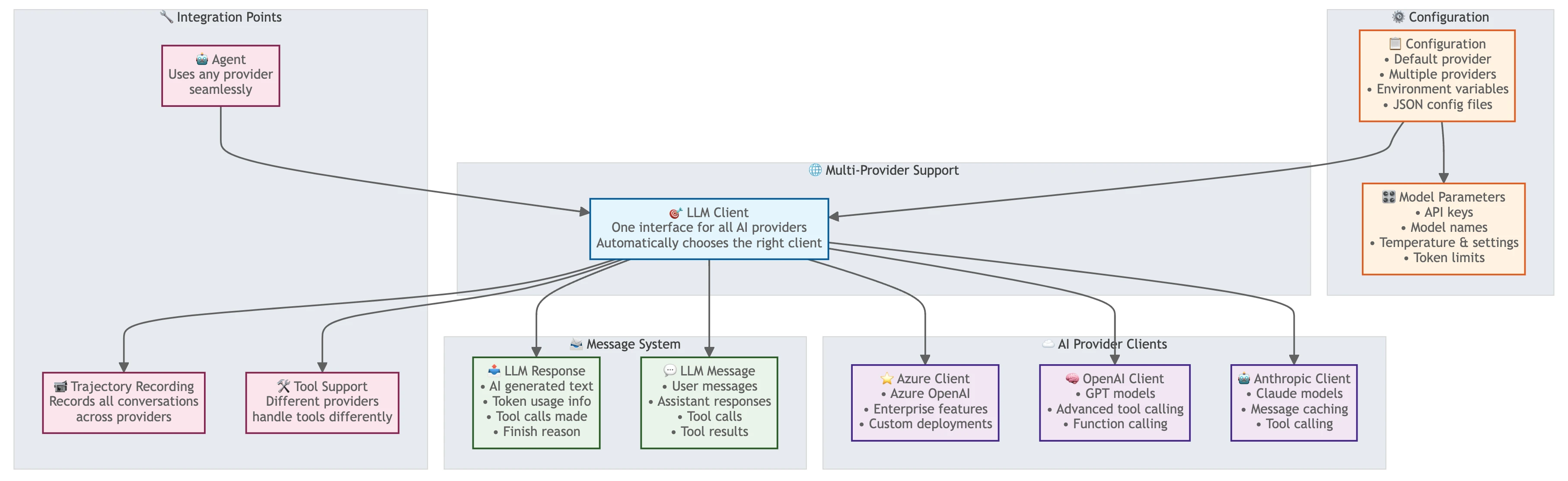
When developing or configuring stdio-based MCP servers, uphold the Strict Standard Output Purity Law:
- Every trace, log, or debug message must be routed to
sys.stderror dedicated log files. Never emit unformattedprint()orconsole.log()statements into stdout; - MCP JSON-RPC framing requires exact byte counts in
Content-Length: ...headers. A single misplaced ASCII byte terminates the connection instantly.{…}
Law 5: Strategic Multi-Model Routing
Leverage Trae's multi-model matrix strategically based on task complexity:
- Claude 3.7 / 3.5 Sonnet: The premier choice for deeply nested multi-file reasoning, intricate concurrency refactoring, and root-cause bug isolation;
- GPT-4o: Exceptional for architectural roadmapping, cross-language syntax translation, and technical documentation synthesis;
- ByteDance Doubao-1.5-Pro: Blazing fast response speeds with zero network latency jitter, ideal for high-volume inline completions and localized CRUD implementations.
6. One-Click Automated Toolkits: Zero-Dependency Cross-Platform Diagnostic Sandbox
To eliminate manual configuration friction, we provide a 100% zero-external-dependency, production-ready diagnostic toolkit natively supporting Windows 11 (PowerShell 7), Ubuntu 26.04 (Bash), and macOS 27 (Zsh)!
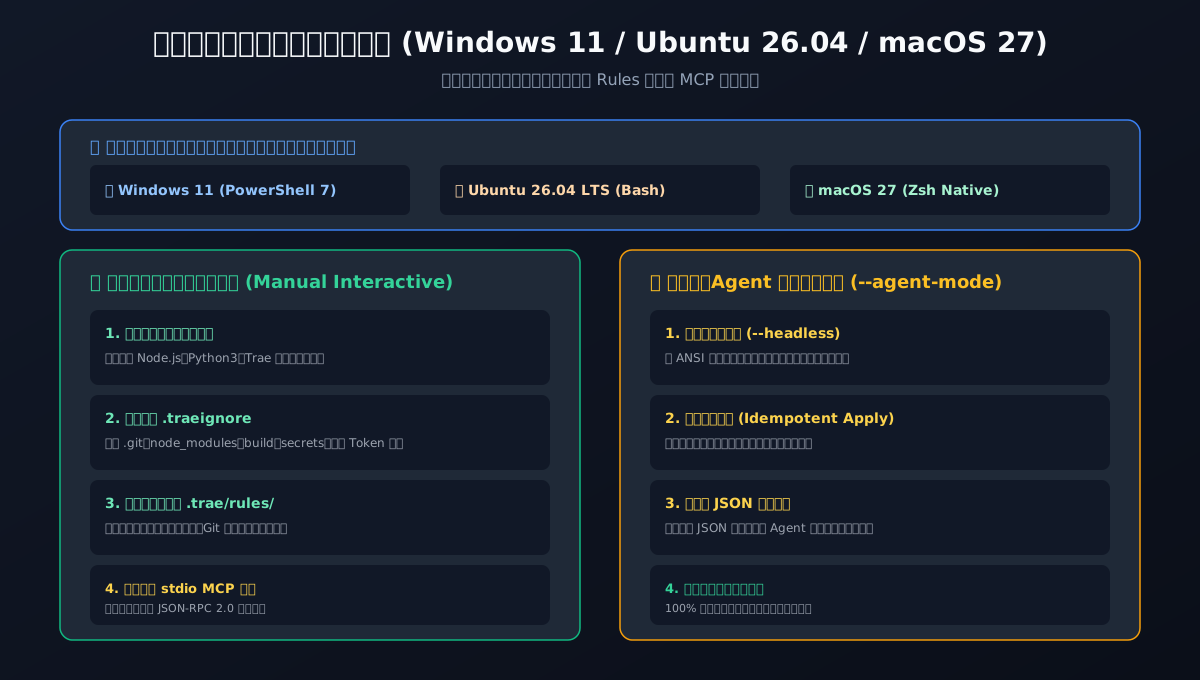
Toolkit Capabilities and Execution Modes:
- Context Hygiene Audit: Scans repository roots and auto-generates optimized
.traeignorefilters; - Production Rule Injection: Installs standard
.trae/rules/templates (architecture invariants, test guardrails, git security); - Zero-Dependency Local MCP Tester: Deploys a self-contained Python stdio MCP server template to verify clean JSON-RPC communication channels;
- Dual Execution Modes:
- Interactive Self-Healing (Manual): Formatted terminal walkthrough with colored progress banners and diagnostic health scores;
- Agent Unattended Mode (--agent-mode / -AgentMode): Headless execution for CI/CD pipelines and AI coding agents, returning structured JSON status payloads.
Download Sandbox Package:
- 📦 Complete Toolkit Archive: trae-workspace-toolkit.zip
- 🛡️ Cryptographic Checksums: SHA256SUMS.txt
1. Windows 11 Native Script: trae_workspace_toolkit_windows11.ps1
Usage:
# Interactive Manual Execution
.	rae_workspace_toolkit_windows11.ps1
Unattended Agent Automation
.	rae_workspace_toolkit_windows11.ps1 -AgentMode -TargetDir .
Complete Script Source:
# ==============================================================================
# Trae AI Workspace & MCP Diagnostic Toolkit (Windows 11 / PowerShell 7+)
# Mode 1: Interactive Manual Inspection & Self-Healing
# Mode 2: Unattended Agent Automation (-AgentMode)
# Zero external dependencies (Uses native PowerShell & standard Python3)
# ==============================================================================
param(
[switch]$AgentMode,
[string]$TargetDir = "."
)
Set-StrictMode -Version Latest
$ErrorActionPreference = “Stop”
$ResolvedTarget = (Resolve-Path $TargetDir).Path
if (-not $AgentMode) {
Write-Host “[TRAE-TOOLKIT] Initializing workspace scan in: $ResolvedTarget” -ForegroundColor Cyan
}
$Results = [ordered]@{
TargetDir = $ResolvedTarget
TraeIgnoreCreated = $false
RulesConfigured = @()
McpConfigured = $false
Status = “OK”
}
function Invoke-EnsureTraeIgnore {
param([string]$Dir)
$IgnorePath = Join-Path $Dir “.traeignore”
$IgnoreTemplate = @"
Trae Context Ignore File - Enforce Clean Token Budget
.git/
.svn/
node_modules/
venv/
.venv/
env/
dist/
build/
out/
target/
*.pyc
pycache/
*.log
.tmp
.DS_Store
Thumbs.db
.env
.env.
*.key
*.pem
*.cert
*.lock
“@
if (-not (Test-Path $IgnorePath)) {
Set-Content -Path $IgnorePath -Value $IgnoreTemplate -Encoding utf8
if (-not $AgentMode) {
Write-Host “[+] Generated standard .traeignore for token security.” -ForegroundColor Green
}
$Results.TraeIgnoreCreated = $true
}
}
function Invoke-EnsureTraeRules {
param([string]$Dir)
$RulesDir = Join-Path $Dir “.trae
ules”
if (-not (Test-Path $RulesDir)) {
New-Item -ItemType Directory -Path $RulesDir -Force | Out-Null
}
$Rule1 = Join-Path $RulesDir "01-architecture-invariants.md"
$Rule1Content = @"
alwaysApply: true
description: “Enforce architectural invariants, strict types, and non-destructive modifications”
Architecture & Safety Invariants
-
Do NOT delete or comment out existing production business logic without explicit user instruction.
-
Maintain strict typing (e.g. TypeScript interfaces, Python type annotations). Avoid ‘any’ types.
-
Modular Boundary: Keep business controllers thin; isolate domain logic in services.
-
Always verify file paths and directory existence before creating new files.
“@
if (-not (Test-Path $Rule1)) {
Set-Content -Path $Rule1 -Value $Rule1Content -Encoding utf8
$Results.RulesConfigured += “01-architecture-invariants.md”
}
$Rule2 = Join-Path $RulesDir “02-testing-guardrails.md”
$Rule2Content = @”
applyTo: “*.{ts,tsx,js,jsx,py,go,rs}”
description: “Require automated test execution and regression assertions before marking tasks complete”
Testing & Verification Guardrails
-
Every newly introduced feature or critical bug fix must have a corresponding automated test.
-
Before finishing a Builder/SOLO task, run project test suite via terminal.
-
If tests fail, analyze error logs systematically rather than blind guess patching.
“@
if (-not (Test-Path $Rule2)) {
Set-Content -Path $Rule2 -Value $Rule2Content -Encoding utf8
$Results.RulesConfigured += “02-testing-guardrails.md”
}
$Rule3 = Join-Path $RulesDir “03-git-safety.md”
$Rule3Content = @”
applyTo: “*”
description: “Prevent secret leaks and ensure atomic conventional commits”
Git & Secret Safety Guidelines
-
Never commit API keys, private tokens, passwords, or internal network endpoints.
-
Stage only intentional diffs; do not run ‘git add .’ indiscriminately.
-
Adhere to Conventional Commits: feat(…), fix(…), refactor(…), chore(…).
“@
if (-not (Test-Path $Rule3)) {
Set-Content -Path $Rule3 -Value $Rule3Content -Encoding utf8
$Results.RulesConfigured += “03-git-safety.md”
}
if (-not $AgentMode) {
Write-Host “[+] Verified .trae/rules directory with standard guardrails.” -ForegroundColor Green
}
}
function Invoke-EnsureLocalMcp {
param([string]$Dir)
$McpDir = Join-Path $Dir “.trae\mcp”
if (-not (Test-Path $McpDir)) {
New-Item -ItemType Directory -Path $McpDir -Force | Out-Null
}
$McpServerScript = Join-Path $McpDir "local_audit_mcp.py"
$ServerCode = @'
import sys, json
def send_response(res):
payload = json.dumps(res, ensure_ascii=False)
sys.stdout.write(f"Content-Length: {len(payload.encode(‘utf-8’))}
{payload}”)
sys.stdout.flush()
def main():
while True:
header = sys.stdin.readline()
if not header:
break
if header.lower().startswith(“content-length:”):
length = int(header.split(”:")[1].strip())
sys.stdin.readline()
body = sys.stdin.read(length)
req = json.loads(body)
req_id = req.get(“id”)
method = req.get(“method”)
if method == “initialize”:
send_response({“jsonrpc”: “2.0”, “id”: req_id, “result”: {“protocolVersion”: “2024-11-05”, “capabilities”: {“tools”: {}}, “serverInfo”: {“name”: “local-trae-audit”, “version”: “1.0.0”}}})
elif method == “tools/list”:
send_response({“jsonrpc”: “2.0”, “id”: req_id, “result”: {“tools”: [{“name”: “audit_workspace”, “description”: “Audit local workspace health”, “inputSchema”: {“type”: “object”, “properties”: {}}}]}})
elif method == “tools/call”:
send_response({“jsonrpc”: “2.0”, “id”: req_id, “result”: {“content”: [{“type”: “text”, “text”: “Trae local workspace audit: PASSED. Zero stdio contamination.”}]}})
else:
send_response({“jsonrpc”: “2.0”, “id”: req_id, “result”: {}})
if name == “main”:
main()
‘@
Set-Content -Path $McpServerScript -Value $ServerCode -Encoding utf8
$Results.McpConfigured = $true
if (-not $AgentMode) {
Write-Host “[+] Generated zero-dependency local stdio MCP server template.” -ForegroundColor Green
}
}
Invoke-EnsureTraeIgnore -Dir $ResolvedTarget
Invoke-EnsureTraeRules -Dir $ResolvedTarget
Invoke-EnsureLocalMcp -Dir $ResolvedTarget
if ($AgentMode) {
Write-Host (ConvertTo-Json $Results -Compress)
} else {
Write-Host “`n======================================================” -ForegroundColor Green
Write-Host " TRAE WORKSPACE HARDENING COMPLETED SUCCESSFULLY " -ForegroundColor Green
Write-Host “======================================================” -ForegroundColor Green
Write-Host “- .traeignore: Token pollution prevented.”
Write-Host “- .trae/rules/: 3 production guardrail files active.”
Write-Host “- .trae/mcp/: Zero-dependency stdio server created.”
}
2. Ubuntu 26.04 LTS Native Script: trae_workspace_toolkit_ubuntu2604.sh
Usage:
# Set executable permissions
chmod +x trae_workspace_toolkit_ubuntu2604.sh
Interactive Manual Execution
./trae_workspace_toolkit_ubuntu2604.sh
Unattended Agent Automation
./trae_workspace_toolkit_ubuntu2604.sh –agent-mode –target-dir .
Complete Script Source:
#!/usr/bin/env bash
# ==============================================================================
# Trae AI Workspace & MCP Diagnostic Toolkit (Ubuntu 26.04 LTS / Bash)
# Mode 1: Interactive Manual Inspection & Self-Healing
# Mode 2: Unattended Agent Automation (--agent-mode)
# Zero external dependencies (Uses native Bash & standard Python3)
# ==============================================================================
set -euo pipefail
AGENT_MODE=0
TARGET_DIR="."
while [[ $# -gt 0 ]]; do
case “$1” in
–agent-mode|–headless)
AGENT_MODE=1
shift
;;
–target-dir|-t)
TARGET_DIR="$2"
shift 2
;;
*)
TARGET_DIR="$1"
shift
;;
esac
done
TARGET_DIR="$(cd “$TARGET_DIR” && pwd)"
log_info() {
if [[ $AGENT_MODE -eq 0 ]]; then
echo -e “[1;36m[TRAE-TOOLKIT][0m $*”
fi
}
log_success() {
if [[ $AGENT_MODE -eq 0 ]]; then
echo -e “[1;32m[+][0m $*”
fi
}
1. Ensure .traeignore
TRAE_IGNORE="$TARGET_DIR/.traeignore"
IGNORE_CREATED=“false”
if [[ ! -f “$TRAE_IGNORE” ]]; then
cat « ‘EOF’ > “$TRAE_IGNORE”
Trae Context Ignore File - Enforce Clean Token Budget
.git/
.svn/
node_modules/
venv/
.venv/
env/
dist/
build/
out/
target/
*.pyc
pycache/
*.log
.tmp
.DS_Store
Thumbs.db
.env
.env.
*.key
*.pem
*.cert
*.lock
EOF
log_success “Generated standard .traeignore for token security.”
IGNORE_CREATED=“true”
fi
2. Ensure .trae/rules/
RULES_DIR="$TARGET_DIR/.trae/rules"
mkdir -p “$RULES_DIR”
RULE1="$RULES_DIR/01-architecture-invariants.md"
if [[ ! -f “$RULE1” ]]; then
cat « ‘EOF’ > “$RULE1”
alwaysApply: true
description: “Enforce architectural invariants, strict types, and non-destructive modifications”
Architecture & Safety Invariants
- Do NOT delete or comment out existing production business logic without explicit user instruction.
- Maintain strict typing (e.g. TypeScript interfaces, Python type annotations). Avoid ‘any’ types.
- Modular Boundary: Keep business controllers thin; isolate domain logic in services.
- Always verify file paths and directory existence before creating new files.
EOF
fi
RULE2="$RULES_DIR/02-testing-guardrails.md"
if [[ ! -f “$RULE2” ]]; then
cat « ‘EOF’ > “$RULE2”
applyTo: “*.{ts,tsx,js,jsx,py,go,rs}”
description: “Require automated test execution and regression assertions before marking tasks complete”
Testing & Verification Guardrails
- Every newly introduced feature or critical bug fix must have a corresponding automated test.
- Before finishing a Builder/SOLO task, run project test suite via terminal.
- If tests fail, analyze error logs systematically rather than blind guess patching.
EOF
fi
RULE3="$RULES_DIR/03-git-safety.md"
if [[ ! -f “$RULE3” ]]; then
cat « ‘EOF’ > “$RULE3”
applyTo: “*”
description: “Prevent secret leaks and ensure atomic conventional commits”
Git & Secret Safety Guidelines
- Never commit API keys, private tokens, passwords, or internal network endpoints.
- Stage only intentional diffs; do not run ‘git add .’ indiscriminately.
- Adhere to Conventional Commits: feat(…), fix(…), refactor(…), chore(…).
EOF
fi
log_success “Verified .trae/rules directory with standard guardrails.”
3. Ensure Local Stdio MCP Template
MCP_DIR="$TARGET_DIR/.trae/mcp"
mkdir -p “$MCP_DIR”
MCP_SCRIPT="$MCP_DIR/local_audit_mcp.py"
cat « ‘EOF’ > “$MCP_SCRIPT”
import sys, json
def send_response(res):
payload = json.dumps(res, ensure_ascii=False)
sys.stdout.write(f"Content-Length: {len(payload.encode(‘utf-8’))}
{payload}")
sys.stdout.flush()
def main():
while True:
header = sys.stdin.readline()
if not header:
break
if header.lower().startswith(“content-length:”):
length = int(header.split(":")[1].strip())
sys.stdin.readline()
body = sys.stdin.read(length)
req = json.loads(body)
req_id = req.get(“id”)
method = req.get(“method”)
if method == “initialize”:
send_response({“jsonrpc”: “2.0”, “id”: req_id, “result”: {“protocolVersion”: “2024-11-05”, “capabilities”: {“tools”: {}}, “serverInfo”: {“name”: “local-trae-audit”, “version”: “1.0.0”}}})
elif method == “tools/list”:
send_response({“jsonrpc”: “2.0”, “id”: req_id, “result”: {“tools”: [{“name”: “audit_workspace”, “description”: “Audit local workspace health”, “inputSchema”: {“type”: “object”, “properties”: {}}}]}})
elif method == “tools/call”:
send_response({“jsonrpc”: “2.0”, “id”: req_id, “result”: {“content”: [{“type”: “text”, “text”: “Trae local workspace audit: PASSED. Zero stdio contamination.”}]}})
else:
send_response({“jsonrpc”: “2.0”, “id”: req_id, “result”: {}})
if name == “main”:
main()
EOF
chmod +x “$MCP_SCRIPT”
log_success “Generated zero-dependency local stdio MCP server template.”
if [[ $AGENT_MODE -eq 1 ]]; then
python3 -c “import json, sys; print(json.dumps({‘status’: ‘OK’, ’target_dir’: sys.argv[1], ’traeignore_created’: sys.argv[2] == ’true’, ‘rules_count’: 3, ‘mcp_configured’: True}))” “$TARGET_DIR” “$IGNORE_CREATED”
else
echo ""
echo -e “[1;32m======================================================[0m”
echo -e “[1;32m TRAE WORKSPACE HARDENING COMPLETED SUCCESSFULLY [0m”
echo -e “[1;32m======================================================[0m”
echo “- .traeignore: Token pollution prevented.”
echo “- .trae/rules/: 3 production guardrail files active.”
echo “- .trae/mcp/: Zero-dependency stdio server created.”
fi
3. macOS 27 Native Script: trae_workspace_toolkit_macos27.zsh
Usage:
# Set executable permissions
chmod +x trae_workspace_toolkit_macos27.zsh
Interactive Manual Execution
./trae_workspace_toolkit_macos27.zsh
Unattended Agent Automation
./trae_workspace_toolkit_macos27.zsh –agent-mode –target-dir .
Complete Script Source:
#!/usr/bin/env zsh
# ==============================================================================
# Trae AI Workspace & MCP Diagnostic Toolkit (macOS 27 Native / Zsh)
# Mode 1: Interactive Manual Inspection & Self-Healing
# Mode 2: Unattended Agent Automation (--agent-mode)
# Zero external dependencies (Uses native Zsh & standard Python3)
# ==============================================================================
set -e
AGENT_MODE=0
TARGET_DIR="."
while [[ $# -gt 0 ]]; do
case “$1” in
–agent-mode|–headless)
AGENT_MODE=1
shift
;;
–target-dir|-t)
TARGET_DIR="$2"
shift 2
;;
*)
TARGET_DIR="$1"
shift
;;
esac
done
TARGET_DIR="$(cd “$TARGET_DIR” && pwd)"
log_info() {
if [[ $AGENT_MODE -eq 0 ]]; then
print -P “%F{cyan}[TRAE-TOOLKIT]%f $*”
fi
}
log_success() {
if [[ $AGENT_MODE -eq 0 ]]; then
print -P “%F{green}[+]%f $*”
fi
}
1. Ensure .traeignore
TRAE_IGNORE="$TARGET_DIR/.traeignore"
IGNORE_CREATED=“false”
if [[ ! -f “$TRAE_IGNORE” ]]; then
cat « ‘EOF’ > “$TRAE_IGNORE”
Trae Context Ignore File - Enforce Clean Token Budget
.git/
.svn/
node_modules/
venv/
.venv/
env/
dist/
build/
out/
target/
*.pyc
pycache/
*.log
.tmp
.DS_Store
Thumbs.db
.env
.env.
*.key
*.pem
*.cert
*.lock
EOF
log_success “Generated standard .traeignore for token security.”
IGNORE_CREATED=“true”
fi
2. Ensure .trae/rules/
RULES_DIR="$TARGET_DIR/.trae/rules"
mkdir -p “$RULES_DIR”
RULE1="$RULES_DIR/01-architecture-invariants.md"
if [[ ! -f “$RULE1” ]]; then
cat « ‘EOF’ > “$RULE1”
alwaysApply: true
description: “Enforce architectural invariants, strict types, and non-destructive modifications”
Architecture & Safety Invariants
- Do NOT delete or comment out existing production business logic without explicit user instruction.
- Maintain strict typing (e.g. TypeScript interfaces, Python type annotations). Avoid ‘any’ types.
- Modular Boundary: Keep business controllers thin; isolate domain logic in services.
- Always verify file paths and directory existence before creating new files.
EOF
fi
RULE2="$RULES_DIR/02-testing-guardrails.md"
if [[ ! -f “$RULE2” ]]; then
cat « ‘EOF’ > “$RULE2”
applyTo: “*.{ts,tsx,js,jsx,py,go,rs}”
description: “Require automated test execution and regression assertions before marking tasks complete”
Testing & Verification Guardrails
- Every newly introduced feature or critical bug fix must have a corresponding automated test.
- Before finishing a Builder/SOLO task, run project test suite via terminal.
- If tests fail, analyze error logs systematically rather than blind guess patching.
EOF
fi
RULE3="$RULES_DIR/03-git-safety.md"
if [[ ! -f “$RULE3” ]]; then
cat « ‘EOF’ > “$RULE3”
applyTo: “*”
description: “Prevent secret leaks and ensure atomic conventional commits”
Git & Secret Safety Guidelines
- Never commit API keys, private tokens, passwords, or internal network endpoints.
- Stage only intentional diffs; do not run ‘git add .’ indiscriminately.
- Adhere to Conventional Commits: feat(…), fix(…), refactor(…), chore(…).
EOF
fi
log_success “Verified .trae/rules directory with standard guardrails.”
3. Ensure Local Stdio MCP Template
MCP_DIR="$TARGET_DIR/.trae/mcp"
mkdir -p “$MCP_DIR”
MCP_SCRIPT="$MCP_DIR/local_audit_mcp.py"
cat « ‘EOF’ > “$MCP_SCRIPT”
import sys, json
def send_response(res):
payload = json.dumps(res, ensure_ascii=False)
sys.stdout.write(f"Content-Length: {len(payload.encode(‘utf-8’))}
{payload}")
sys.stdout.flush()
def main():
while True:
header = sys.stdin.readline()
if not header:
break
if header.lower().startswith(“content-length:”):
length = int(header.split(":")[1].strip())
sys.stdin.readline()
body = sys.stdin.read(length)
req = json.loads(body)
req_id = req.get(“id”)
method = req.get(“method”)
if method == “initialize”:
send_response({“jsonrpc”: “2.0”, “id”: req_id, “result”: {“protocolVersion”: “2024-11-05”, “capabilities”: {“tools”: {}}, “serverInfo”: {“name”: “local-trae-audit”, “version”: “1.0.0”}}})
elif method == “tools/list”:
send_response({“jsonrpc”: “2.0”, “id”: req_id, “result”: {“tools”: [{“name”: “audit_workspace”, “description”: “Audit local workspace health”, “inputSchema”: {“type”: “object”, “properties”: {}}}]}})
elif method == “tools/call”:
send_response({“jsonrpc”: “2.0”, “id”: req_id, “result”: {“content”: [{“type”: “text”, “text”: “Trae local workspace audit: PASSED. Zero stdio contamination.”}]}})
else:
send_response({“jsonrpc”: “2.0”, “id”: req_id, “result”: {}})
if name == “main”:
main()
EOF
chmod +x “$MCP_SCRIPT”
log_success “Generated zero-dependency local stdio MCP server template.”
if [[ $AGENT_MODE -eq 1 ]]; then
python3 -c “import json, sys; print(json.dumps({‘status’: ‘OK’, ’target_dir’: sys.argv[1], ’traeignore_created’: sys.argv[2] == ’true’, ‘rules_count’: 3, ‘mcp_configured’: True}))” “$TARGET_DIR” “$IGNORE_CREATED”
else
print ""
print -P “%F{green}======================================================%f”
print -P “%F{green} TRAE WORKSPACE HARDENING COMPLETED SUCCESSFULLY %f”
print -P “%F{green}======================================================%f”
print “- .traeignore: Token pollution prevented.”
print “- .trae/rules/: 3 production guardrail files active.”
print “- .trae/mcp/: Zero-dependency stdio server created.”
fi
7. In-Depth Technical Q&A
Q1: What is Trae's core competitive moat compared to Cursor, Windsurf, or Claude Code?
Answer: Trae differentiates itself across three core pillars:
- Dual-Model Ecosystem Harmony: Trae uniquely integrates premier global models (Claude 3.7 and GPT-4o) alongside ByteDance's proprietary Doubao models. For teams operating across international and domestic ecosystems, this yields native Chinese business comprehension, robust localized library knowledge, and high-speed regional networking without VPN proxy friction;
- Zero-Cost Tier with High Quotas: While competing IDEs impose expensive monthly subscriptions, Trae offers generous free quotas, substantially lowering the barrier for individual developers and startups entering agentic development;
- Seamless Native Extension Compatibility: Built directly on the VS Code core while pioneering multi-agent architectures (Selector Agent on SWE-bench) and native MCP extensibility, Trae provides a frictionless transition for seasoned VS Code users.
Q2: Why does the AI occasionally ignore directives defined in .trae/rules/?
Answer: This failure almost always stems from three pitfalls:
- Monolithic, Contradictory Rule Files: If a single rule spans hundreds of lines with conflicting directives, self-attention becomes diluted. Keep rules modular and concise (under 30 lines per file);
- Missing or Malformed YAML Frontmatter: Trae relies on
alwaysApplyandapplyTometadata to scope rules appropriately. Without valid frontmatter headers, rules may fail to trigger; - Absence of Actionable Assertions: Passive warnings (e.g. "Please write clean code") are easily ignored. Bind instructions to deterministic command assertions (e.g. "Execute npm test and ensure all suites pass before declaring completion").
Q3: How do I debug sudden "connection closed" errors when connecting a custom MCP server?
Answer: Follow this three-step triage protocol:
- Use Absolute Binary Paths: Avoid generic
pythonornodecommands in MCP configuration blocks. Always supply the absolute path to the virtualenv binary (e.g./home/user/app/venv/bin/python) to eliminate PATH drift; - Audit for Standard Output Contamination: This accounts for 90% of failures. Ensure zero unbuffered
print()orconsole.log()statements execute during startup. Redirect all diagnostics tosys.stderr; - Perform a Manual Stdio Handshake: Pipe an
initializeJSON-RPC frame directly into the script via terminal and verify the output structure.
Q4: How do I prevent Trae from exhausting token quotas on legacy monoliths with hundreds of thousands of lines?
Answer:
- Deploy the toolkit's
.traeignorefile to immediately blind the IDE to third-party packages, caches, compiled binaries, and git internals; - Avoid triggering
#Workspacequeries across the entire repository. Adopt targeted scoping: reference sub-directories using#Folderor specify the exact entry points with#File; - Periodically prune chat session history. Never allow a single thread to accumulate more than 15 complex back-and-forth code generations.
Q5: How do we safeguard enterprise intellectual property and confidential credentials inside Trae?
Answer:
- Leverage Trae's Ignore Files security barrier to blacklist all
.env*,*.pem,*.key, and credential stores, preventing the IDE from ever transmitting sensitive payloads to inference APIs; - Enforce
03-git-safety.mdacross repositories to forbid agents from generating unredacted internal IP addresses, staff IDs, or private internal hostnames; - For regulated enterprise deployments, utilize Trae Enterprise edition with private network gateways to audit and monitor all outbound communication channels.
8. Conclusion: Embracing the Shift from Typist to Chief Digital Director
From punch cards to assembly, and from monolithic text terminals to graphical IDEs, the history of computer science is a story of steadily rising abstraction layers delegating repetitive labor to superior tools.
The arrival of Trae does not threaten the engineering craft; it liberates us from mundane syntax typing, boilerplate plumbing, and repetitive CRUD tasks. What defines elite software engineers in this new era is no longer how many esoteric API signatures they have memorized, nor their typing speed, but rather:
- Their architectural intuition to spot concurrency deadlocks and structural vulnerabilities at a glance;
- Their ability to tame and orchestrate autonomous AI agents through rigorous specifications and deterministic guardrails;
- Their readiness to command systems with the rigor of a Michelin executive chef and the precision of an F1 chief race strategist!
Stop using Trae like a mechanical typewriter. Configure your .trae/rules/, activate your MCP nervous system, and step into the future as a true Chief Project Director!